Sample Management Contract With Owner In Hennepin
Description


Get your form ready online
Our built-in tools help you complete, sign, share, and store your documents in one place.
Make edits, fill in missing information, and update formatting in US Legal Forms—just like you would in MS Word.
Download a copy, print it, send it by email, or mail it via USPS—whatever works best for your next step.
Sign and collect signatures with our SignNow integration. Send to multiple recipients, set reminders, and more. Go Premium to unlock E-Sign.
If this form requires notarization, complete it online through a secure video call—no need to meet a notary in person or wait for an appointment.
We protect your documents and personal data by following strict security and privacy standards.

Make edits, fill in missing information, and update formatting in US Legal Forms—just like you would in MS Word.

Download a copy, print it, send it by email, or mail it via USPS—whatever works best for your next step.

Sign and collect signatures with our SignNow integration. Send to multiple recipients, set reminders, and more. Go Premium to unlock E-Sign.

If this form requires notarization, complete it online through a secure video call—no need to meet a notary in person or wait for an appointment.

We protect your documents and personal data by following strict security and privacy standards.
Looking for another form?

Form popularity
FAQ
Regardless of organization type, one consistency is that contract managers are the primary individuals responsible for the creation and management of all contracts those organizations use. To successfully oversee contracts from drafting all the way to execution, contract managers need to be skilled in numerous areas.
Most Commonly: The Finance Team. This is the most common way of handling contract management in small companies. Typically the finance department is responsible for collecting contracts from vendors and customers, making sure that they are filled out correctly, and that they are filed appropriately.
How to implement contract management activities Step 1: Transition activities, if any. Step 2: Review the draft contract management plan. Step 3: Review the contract's budget. Step 4: Resources to support contract management. Step 5: Finalise and implement the contract management plan.
Most Commonly: The Finance Team. This is the most common way of handling contract management in small companies. Typically the finance department is responsible for collecting contracts from vendors and customers, making sure that they are filled out correctly, and that they are filed appropriately.
A contract manager is an individual in a company responsible for the management and administration of contracts, as well as the process by which they are created and agreed. They typically collaborate with other departments to ensure contracts progress quickly, are handled efficiently, and remain compliant.
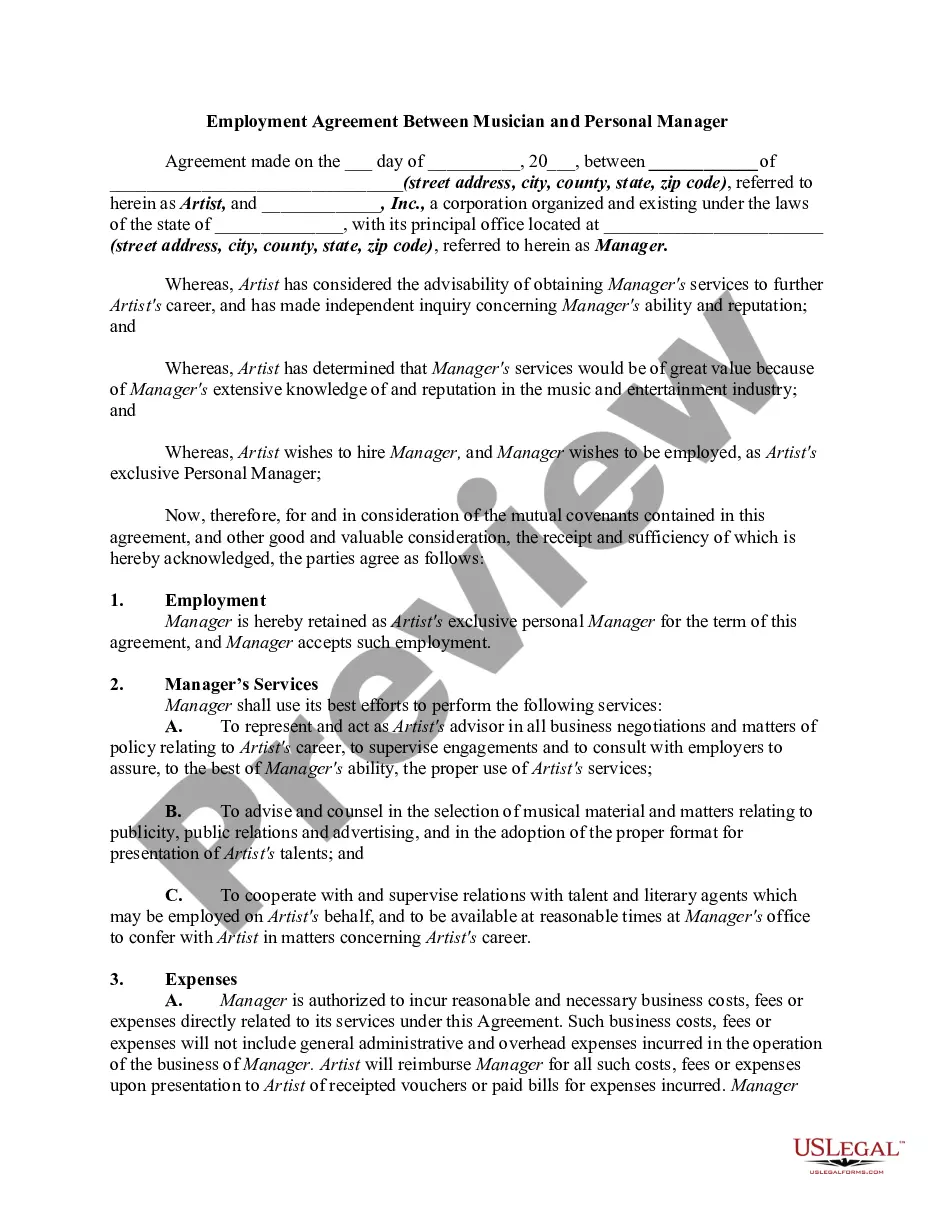
A business management agreement formalizes the working relationship between a business and its manager. The contract will include information such as budgeting, the percentage of business revenue owed to the manager, and confidentiality requirements.
Chief Financial Officer (CFO) & Finance Team: Roles & Responsibilities. Your finance team plays a crucial role in contract management, as they manage all the financial aspects of your company's contracts. From budgeting to invoicing, they're focused on avoiding financial risk and dips in revenue.
Some examples of Contract Management activities are: Phone calls with suppliers; Meetings with suppliers; Score carding of suppliers; Site visits; Analysing performance information; Problem solving; Benchmarking against other similar contracts/suppliers; Analysing management information.
Career path for a contract manager Earn a bachelor's degree (mandatory). Get relevant work experience. Go to law school (optional). As previously mentioned, not all companies looking for a contract manager require candidates with law degrees. Become a certified contract manager (optional in most cases)
