Artist Agreement Form Contract With Agency In Kings
Description






Form popularity
FAQ
Following this step-by-step checklist will mean that you can write your contract with confidence: Know your parties. Agree on the terms. Set clear boundaries. Spell out the consequences. Specify how you will resolve disputes. Cover confidentiality. Check the legality of the contract. Open it up to negotiation.
Typically, the term of a Talent Agency Agreement will range anywhere between six months to three years. For Talent engaging their first Agency, it is advisable for Talent to try to negotiate a relatively short initial term (e.g., a one-year initial term).
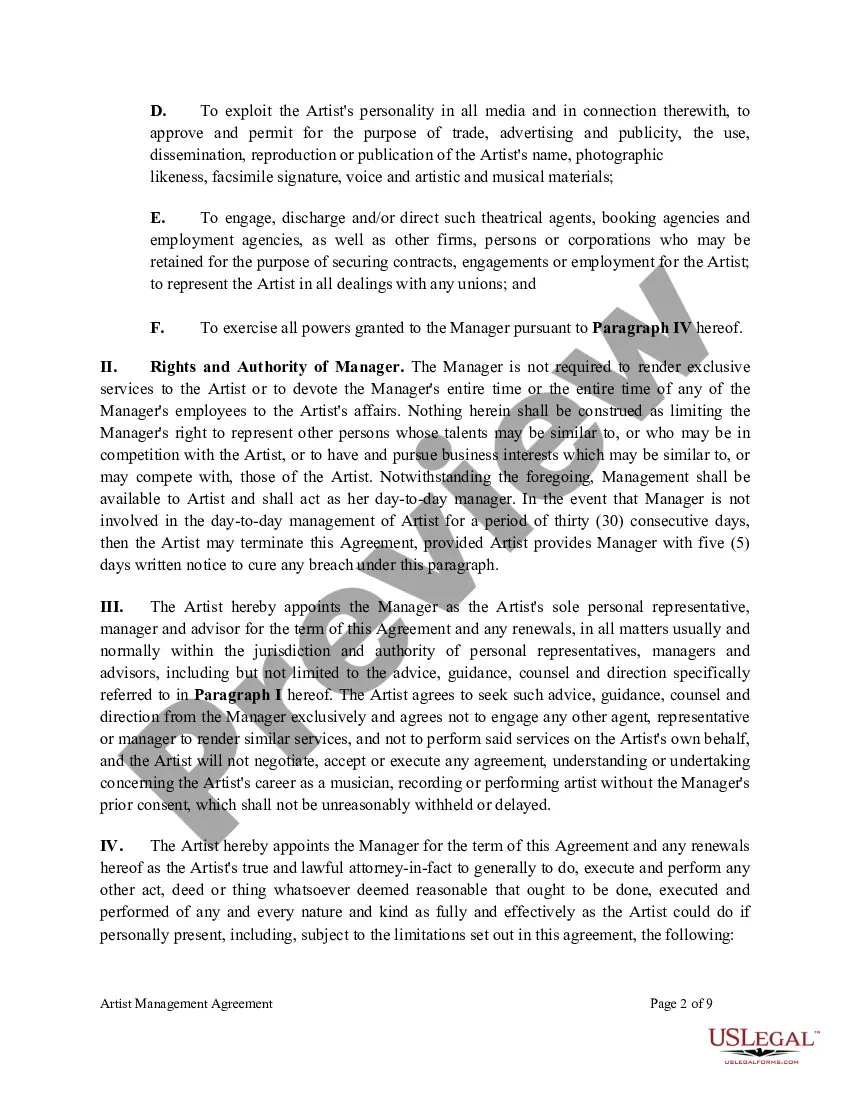
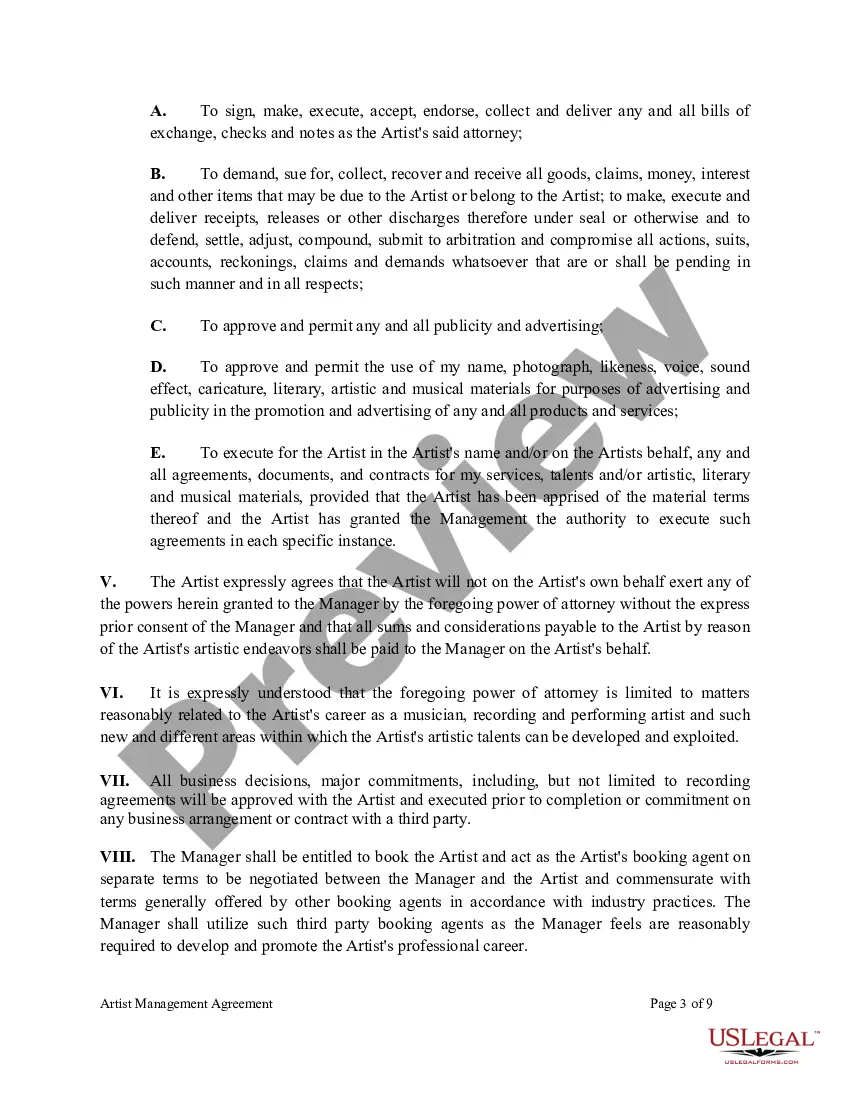
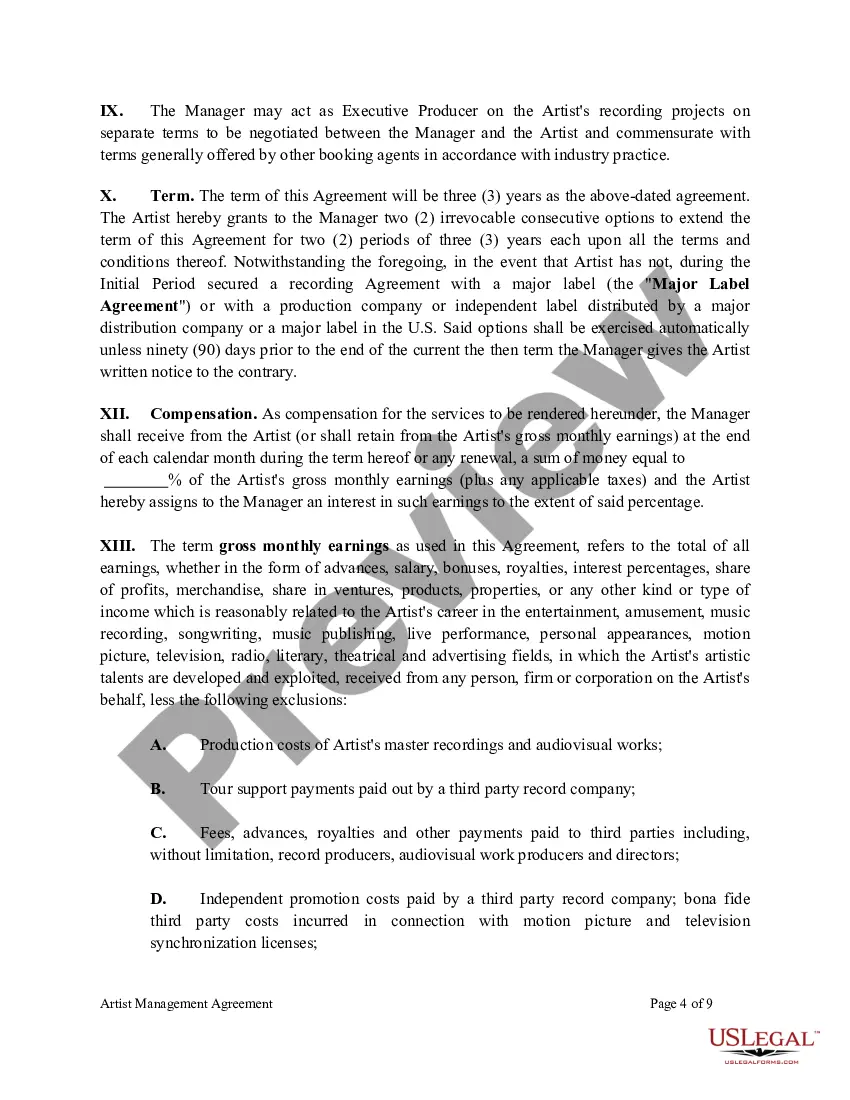
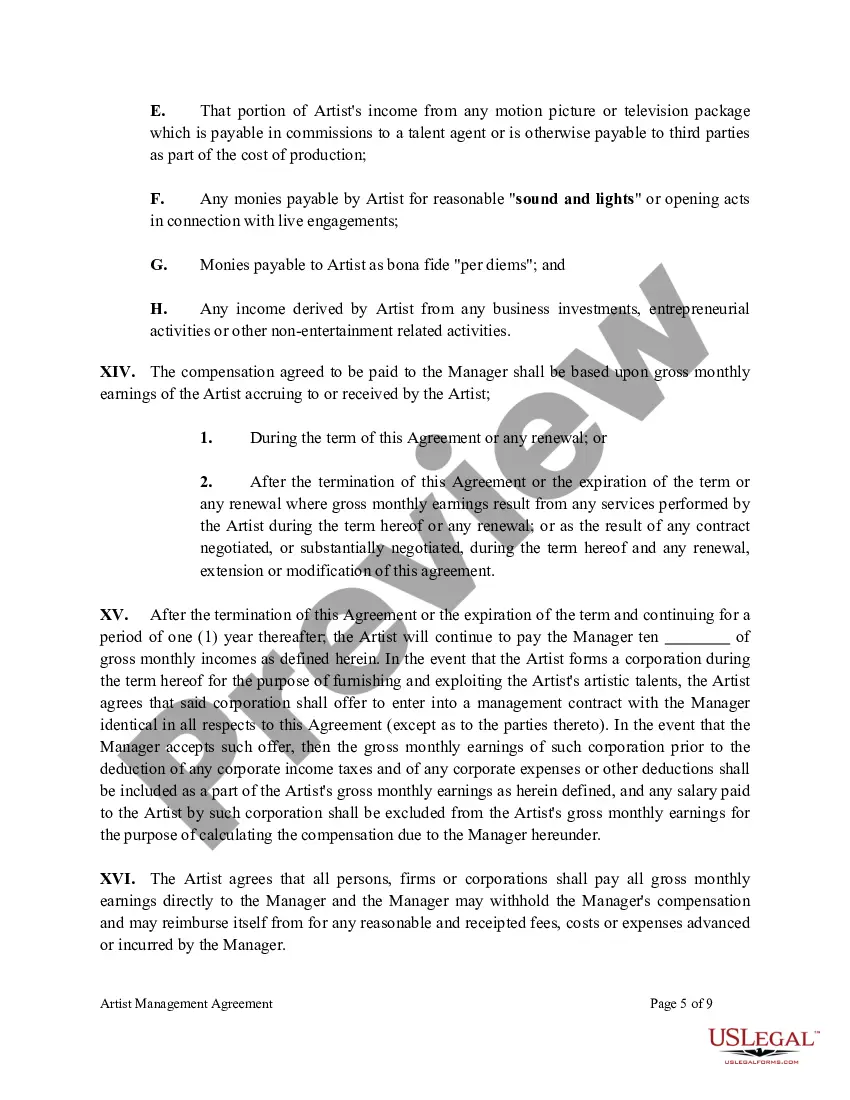
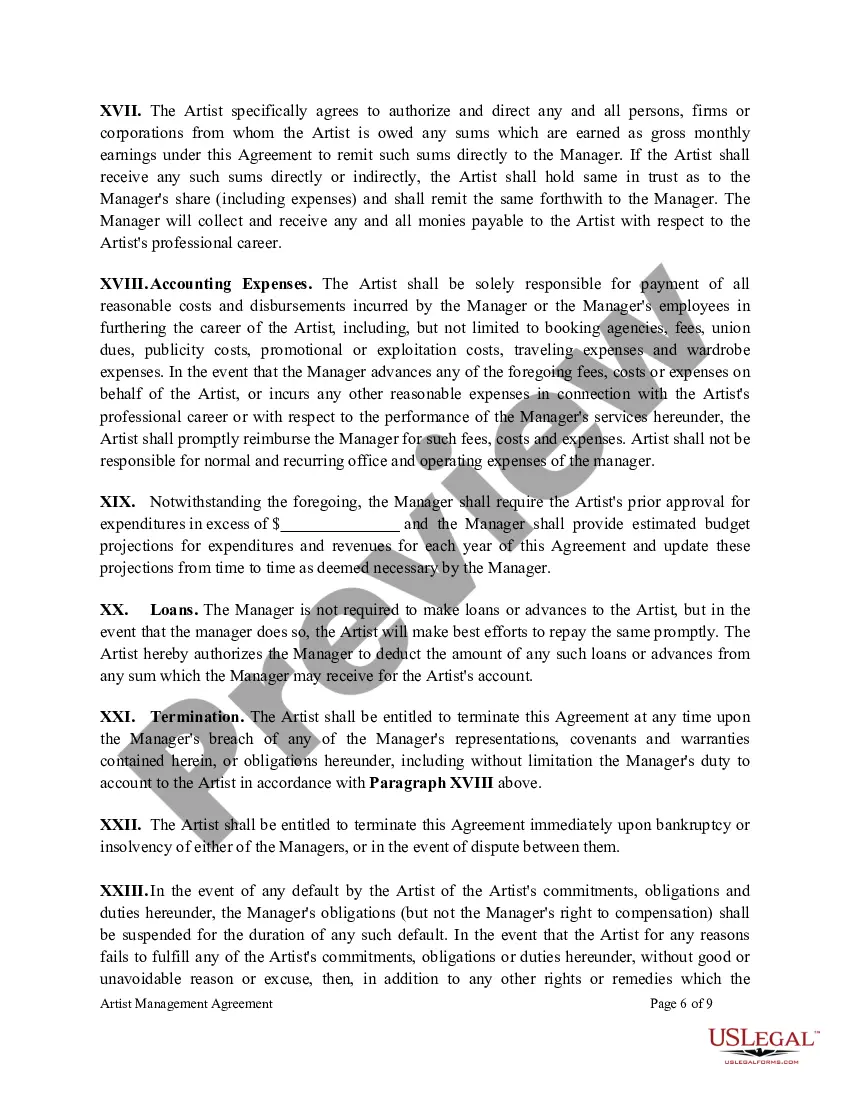
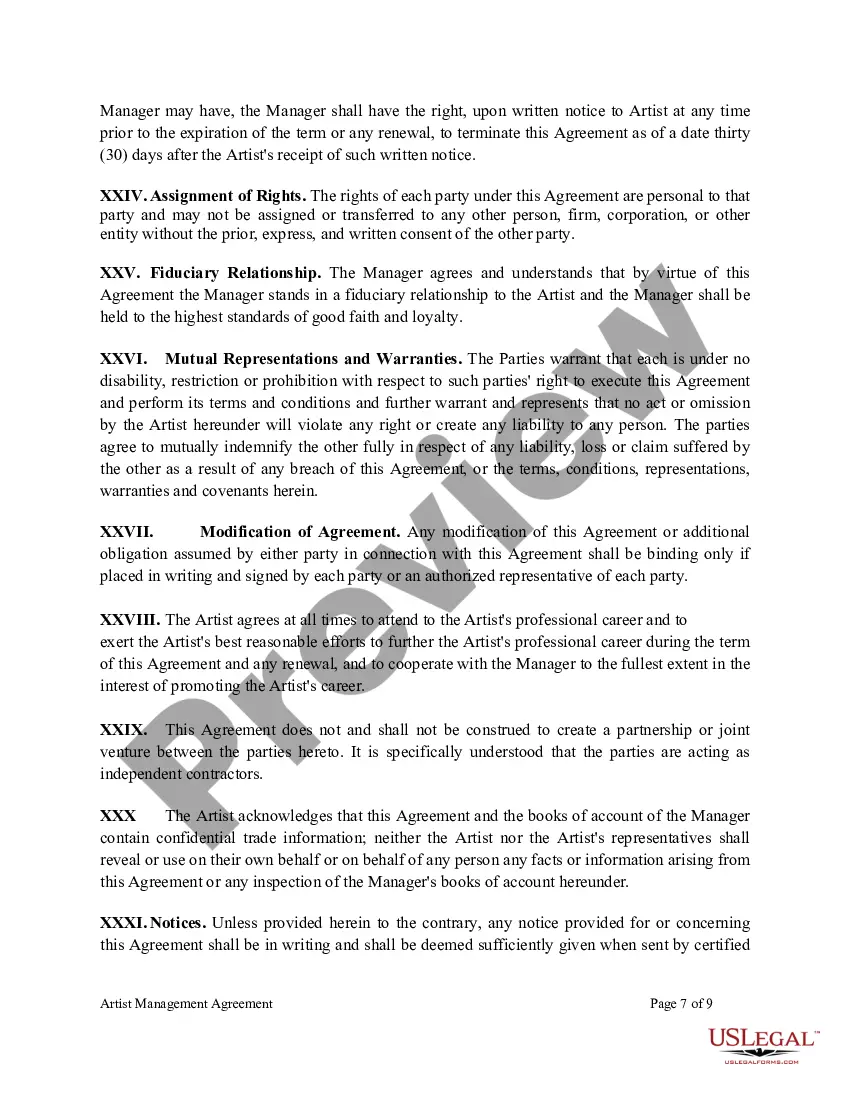
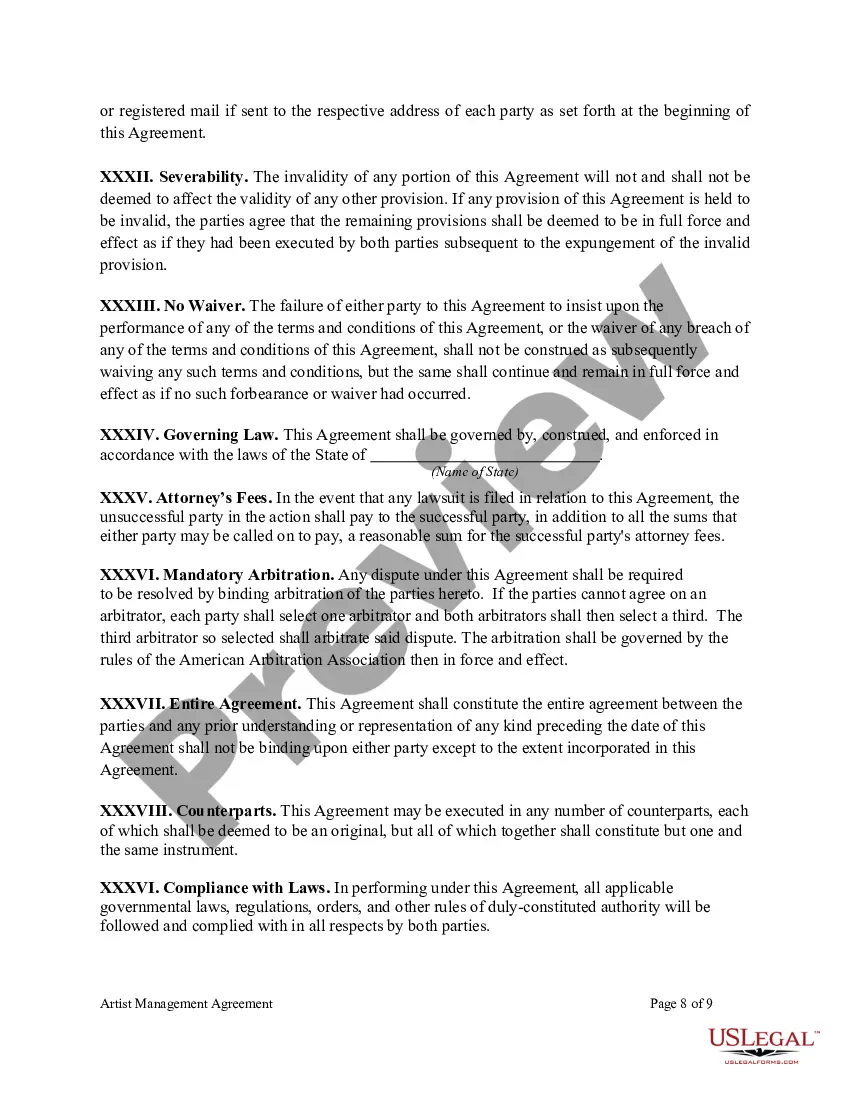
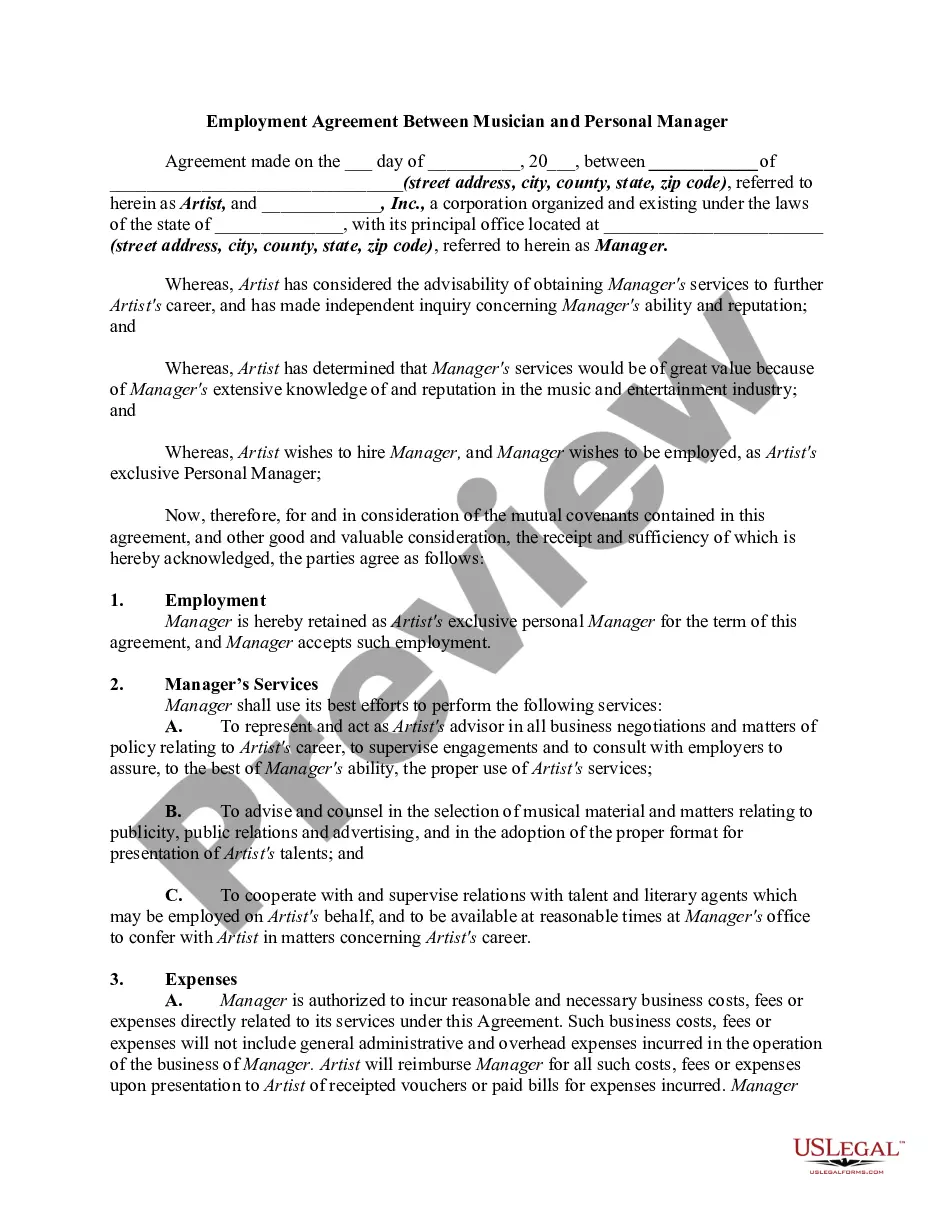
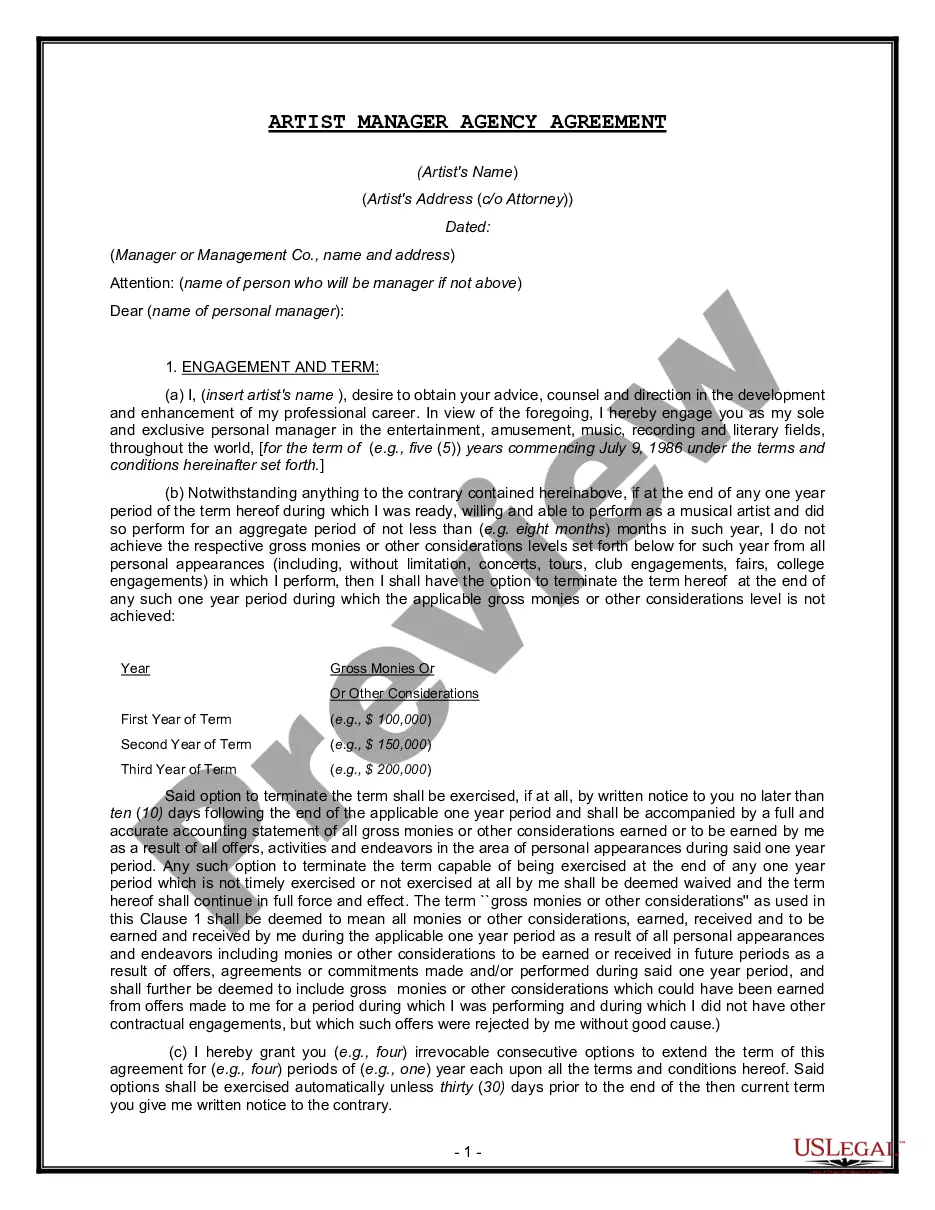
An Artist Agent Agreement is a legal contract between an artist and their agent that defines the terms of their professional relationship. It covers aspects such as the scope of work, responsibilities, commission structure, and duration of the agreement.
This exclusive contract outlines the professional agreement between an artist and a talent agency. It includes terms for negotiation, compensation, and employment conditions. Ideal for artists seeking representation in entertainment fields.
It is a legal agreement that binds the Artist and the Company to fulfill all the terms and conditions contained in it. All Individual Artist Agreements must be in compliance with the respective Collective Bargaining Agreement.
Generally, to be legally valid, most contracts must contain two elements: All parties must agree about an offer made by one party and accepted by the other. Something of value must be exchanged for something else of value.
Contracts like an artist agreement help avoid miscommunications and confusion over the rights and responsibilities of both parties involved. Artist agreements typically include availability expectations, performance markers, and licensing or ownership rights of the works created during the partnership.
An agency relationship is created when one person (the principal) consents to another person (the agent) acting on his behalf, subject to the P's control, and the A agrees to do so. Agency most often comes up in relationship to business matters of some sort.
To establish an agency, there must be consent of both the principal and the agent, although such consent may be implied rather than expressed.
