Basic Artist Management Contract For Music Artist In Pennsylvania
Description





Form popularity
FAQ
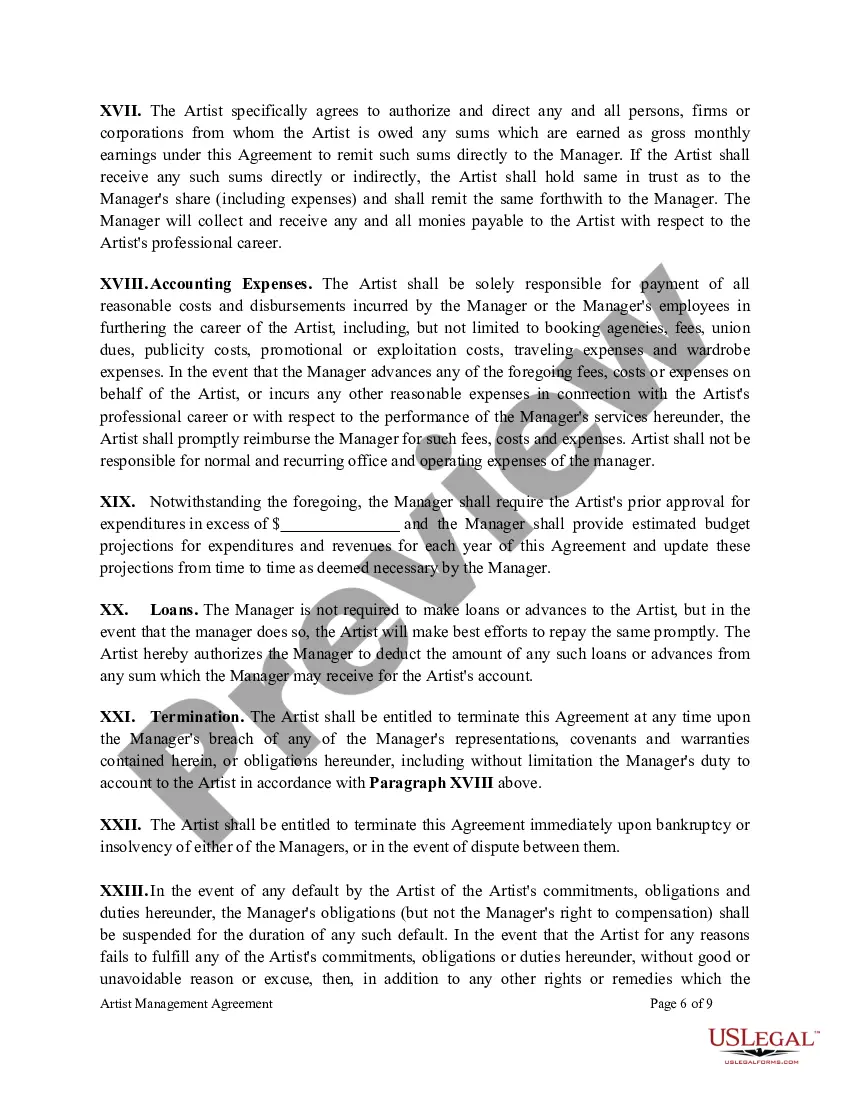
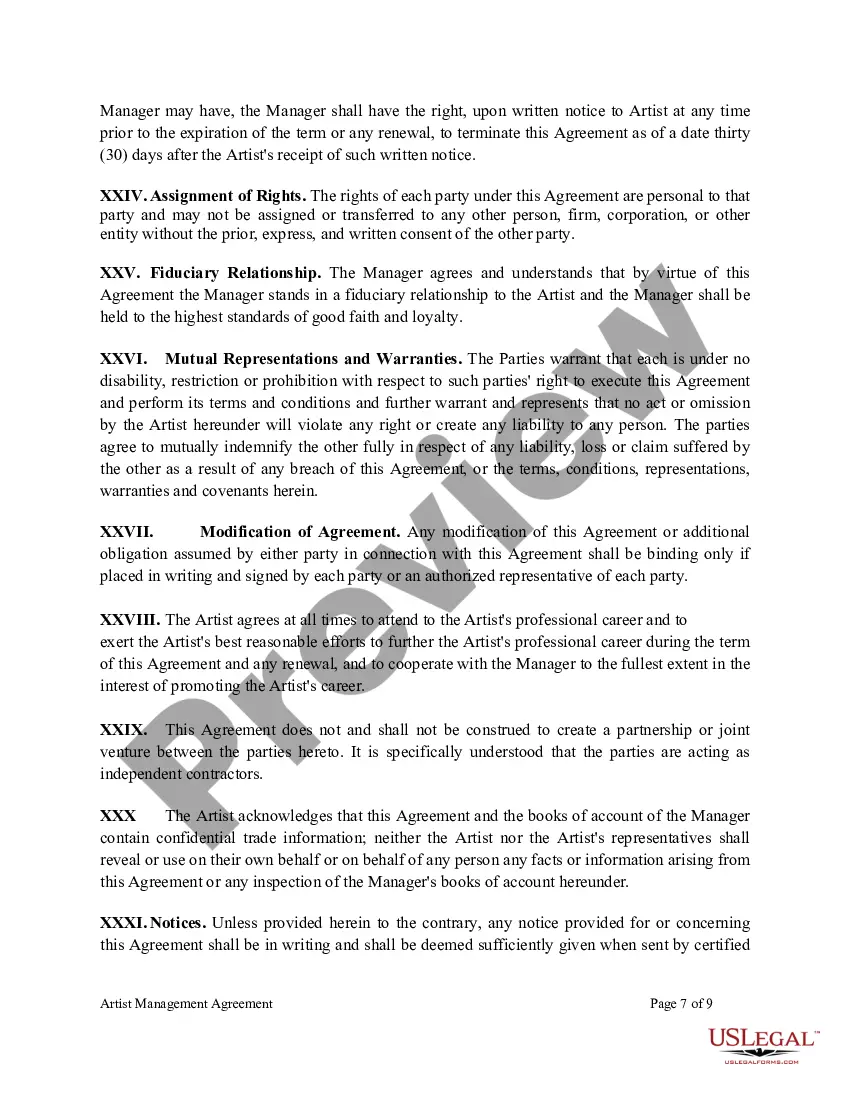
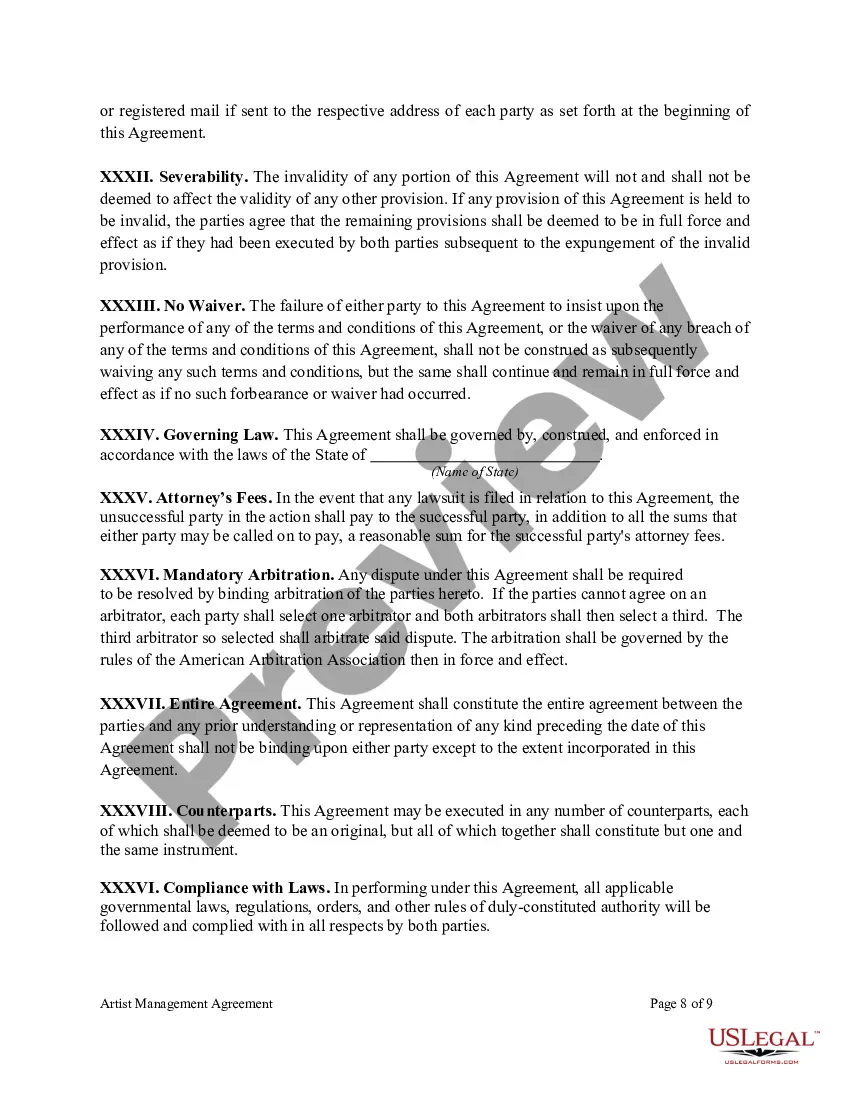
Can anyone make a legally binding contract? Yes, almost anyone can make a legally binding contract between two parties if all the abovementioned conditions are met. The contract must involve legal subject matter, and both parties must freely consent to the terms.
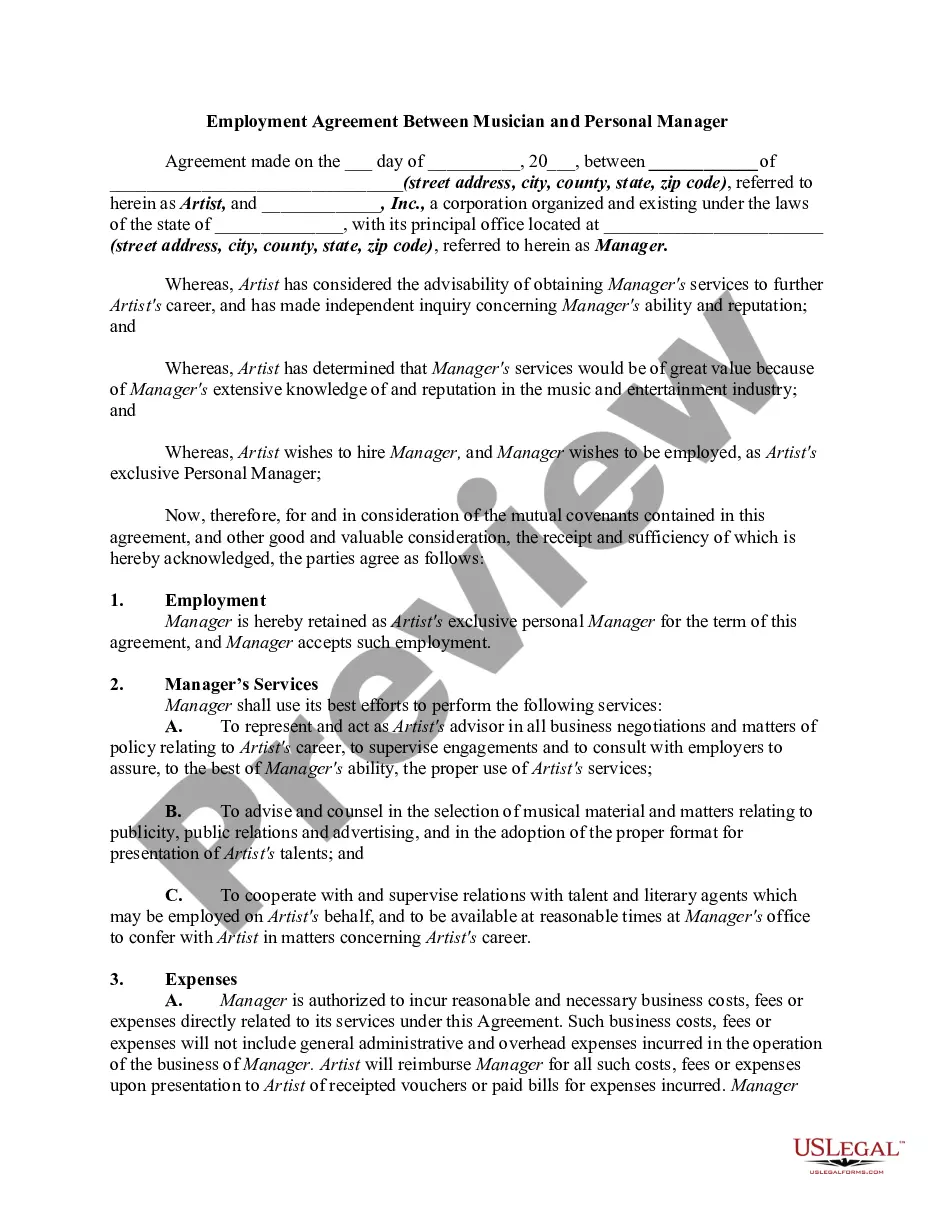
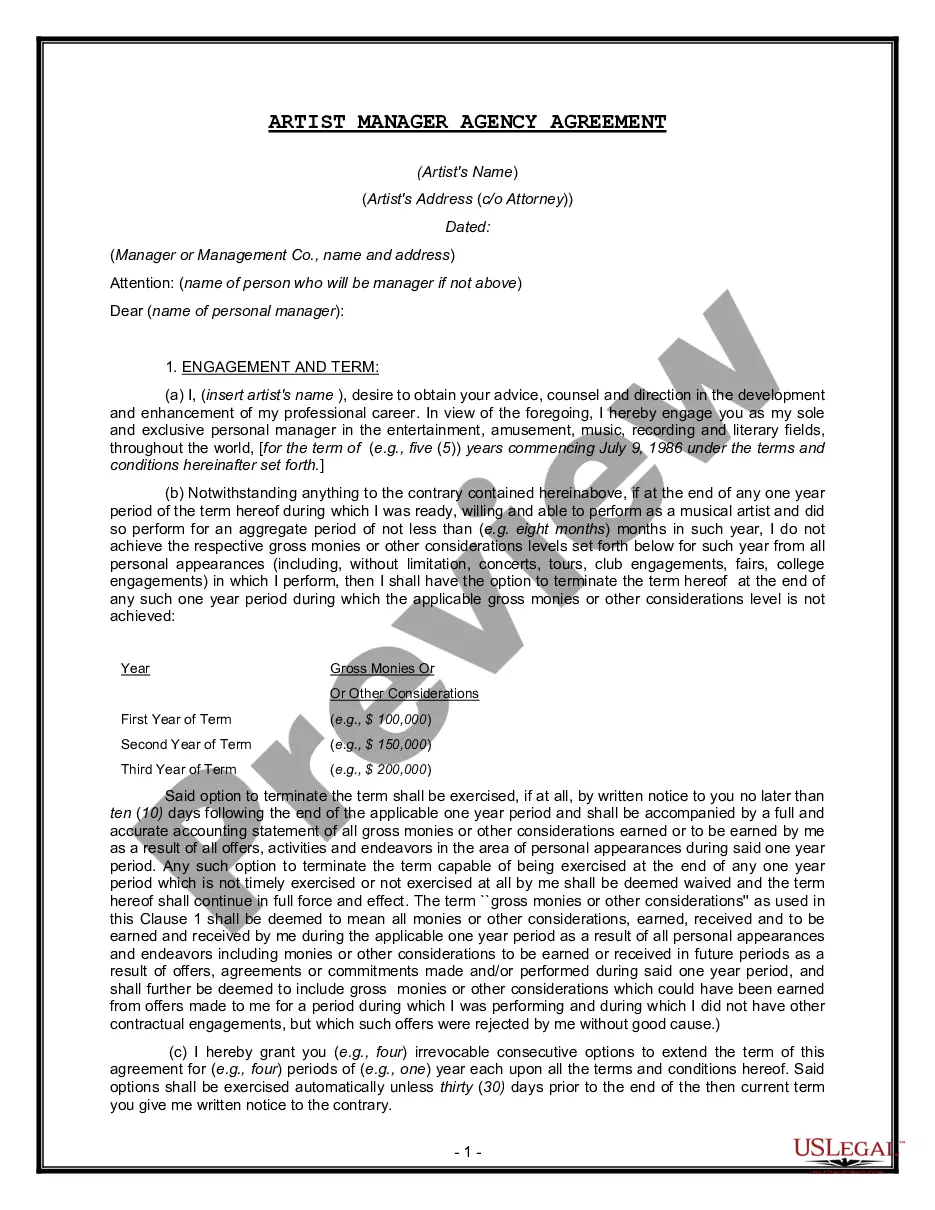
Steps To Starting An Artist Management Company Build Your Artist Roster. Sign A Contract. Don't Quit Your Day Job Just Yet. Draft an Artist Management Company Business Plan. Make a Name for Yourself. Get Organized. Work With an Entertainment Accountant. Hire an Entertainment Lawyer.
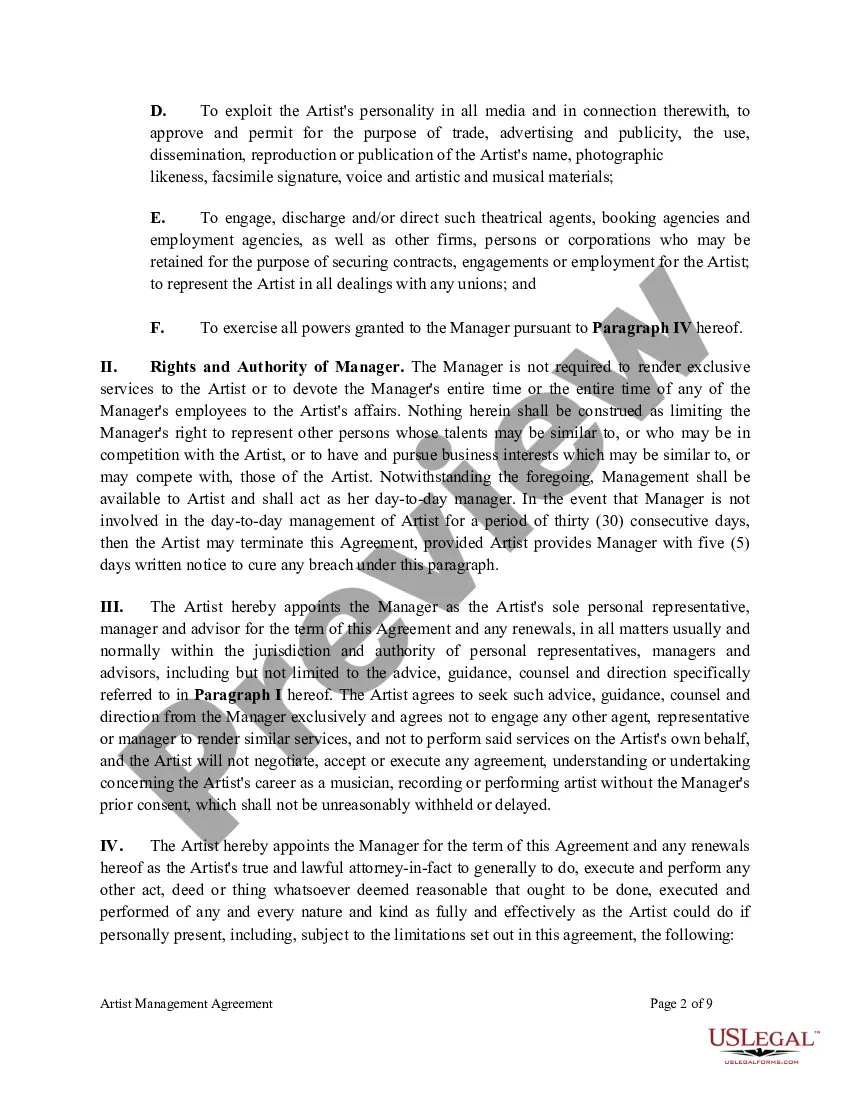
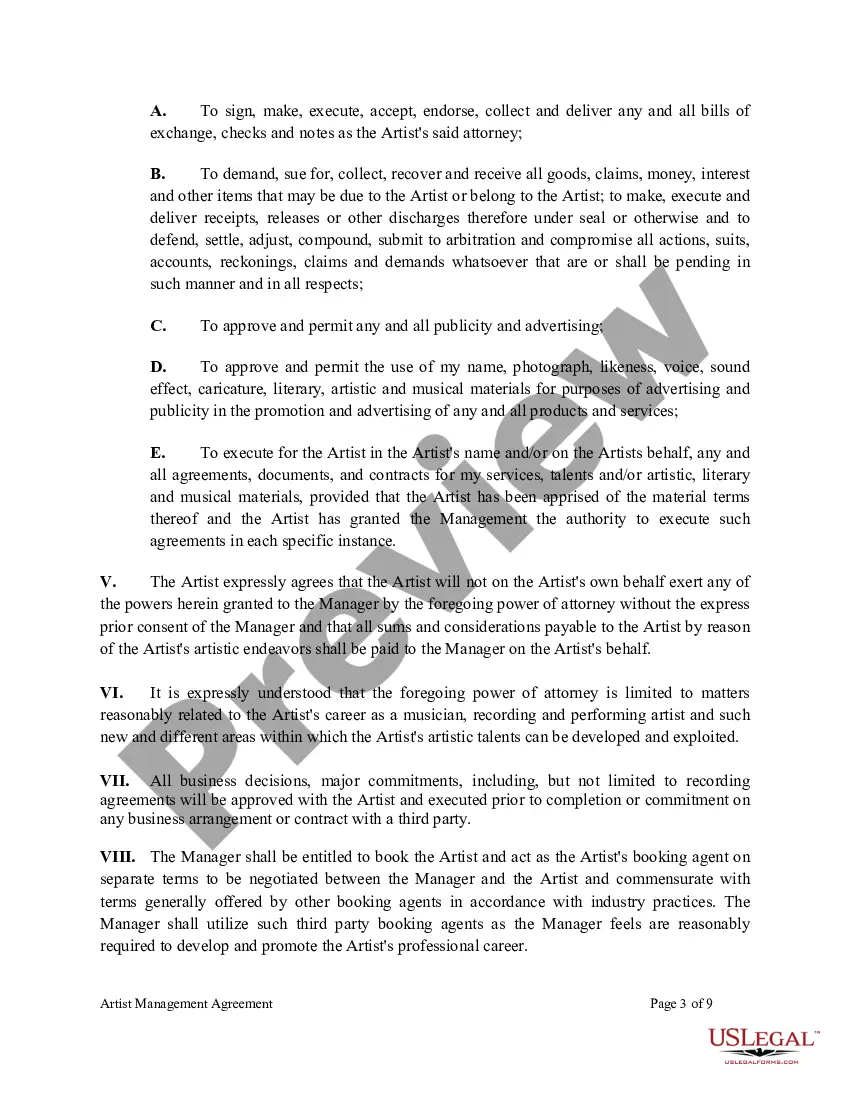
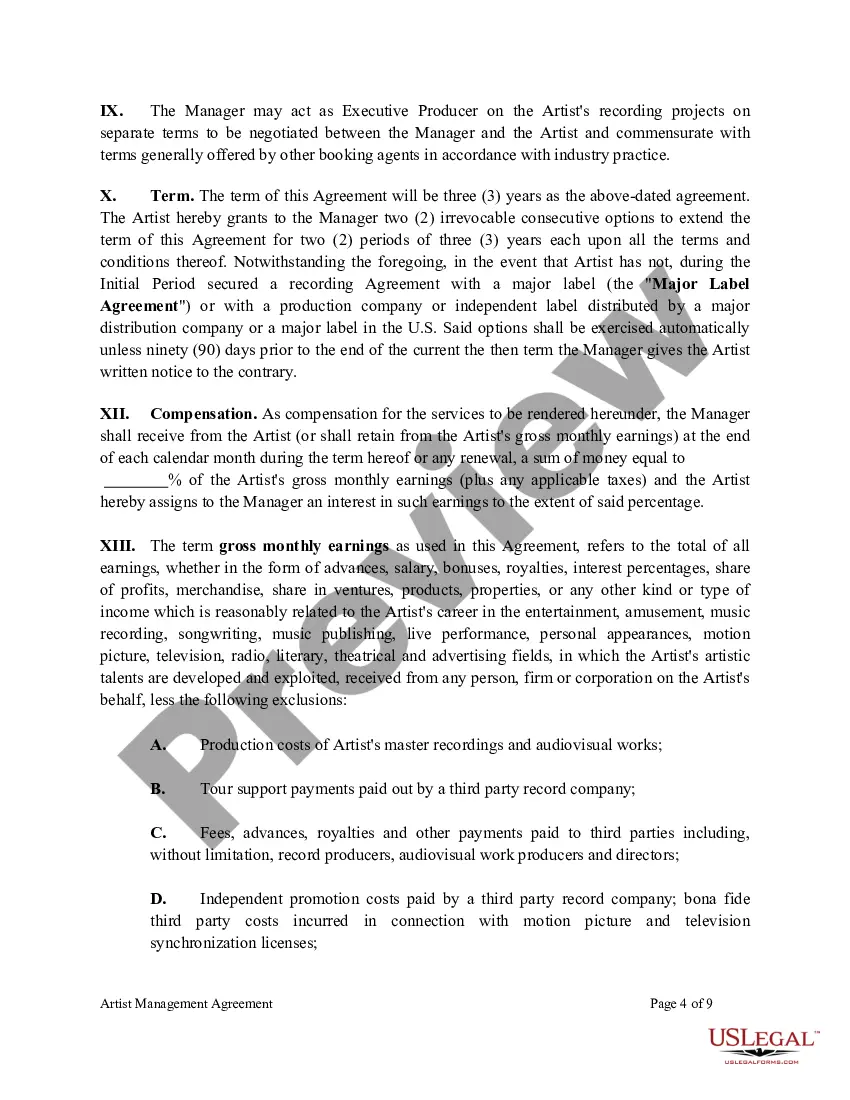
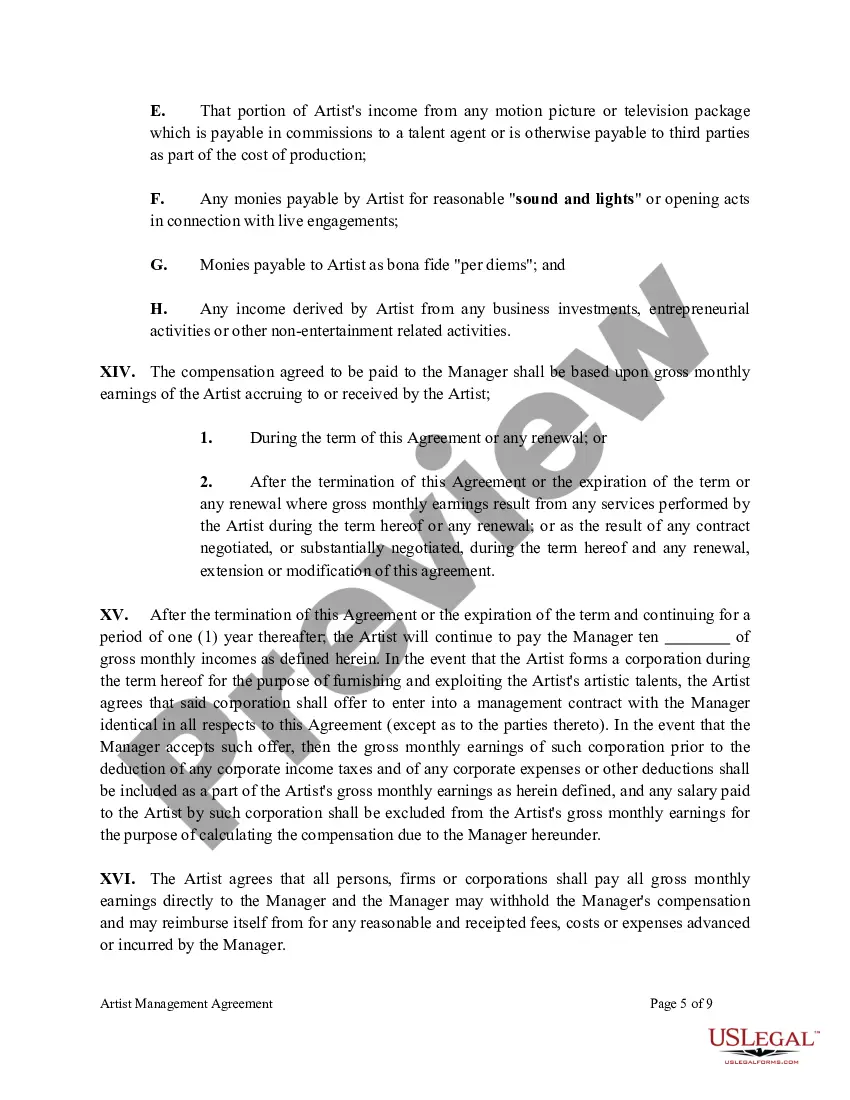
As a general rule, managers take a percentage of all income generated by the artist in exchange for their management services. Commission rates typically range from 15-25% of the artist's gross income from: Recording royalties: Sales, streaming and licensing of recorded music.
Contract Overview. Briefly outline. Objectives. List objectives and desired outcomes here. Transitional arrangements and mobilisation. Briefly outline. Performance management. Briefly outline. Finance. Briefly outline. Governance arrangements. Communication with provider. Briefly outline. Communication with stakeholders.
Managers typically receive 15% to 20% of the artist's gross earnings (before any expenses are deducted), but this figure can vary from contract to contract. For example, a manager might start at 20% and decrease his or her cut to 15% after a period of time or once the artist achieves a certain level in their career.
Comments Section Networking: Attend industry events, music conferences, and shows to meet people in the industry. Research: Look for managers who work with artists in your genre and have a track record of success. Referrals: Ask fellow musicians and industry contacts for recommendations.
Artist Manager Salary Annual SalaryHourly Wage Top Earners $400,000 $192 75th Percentile $400,000 $192 Average $246,250 $118 25th Percentile $92,500 $44
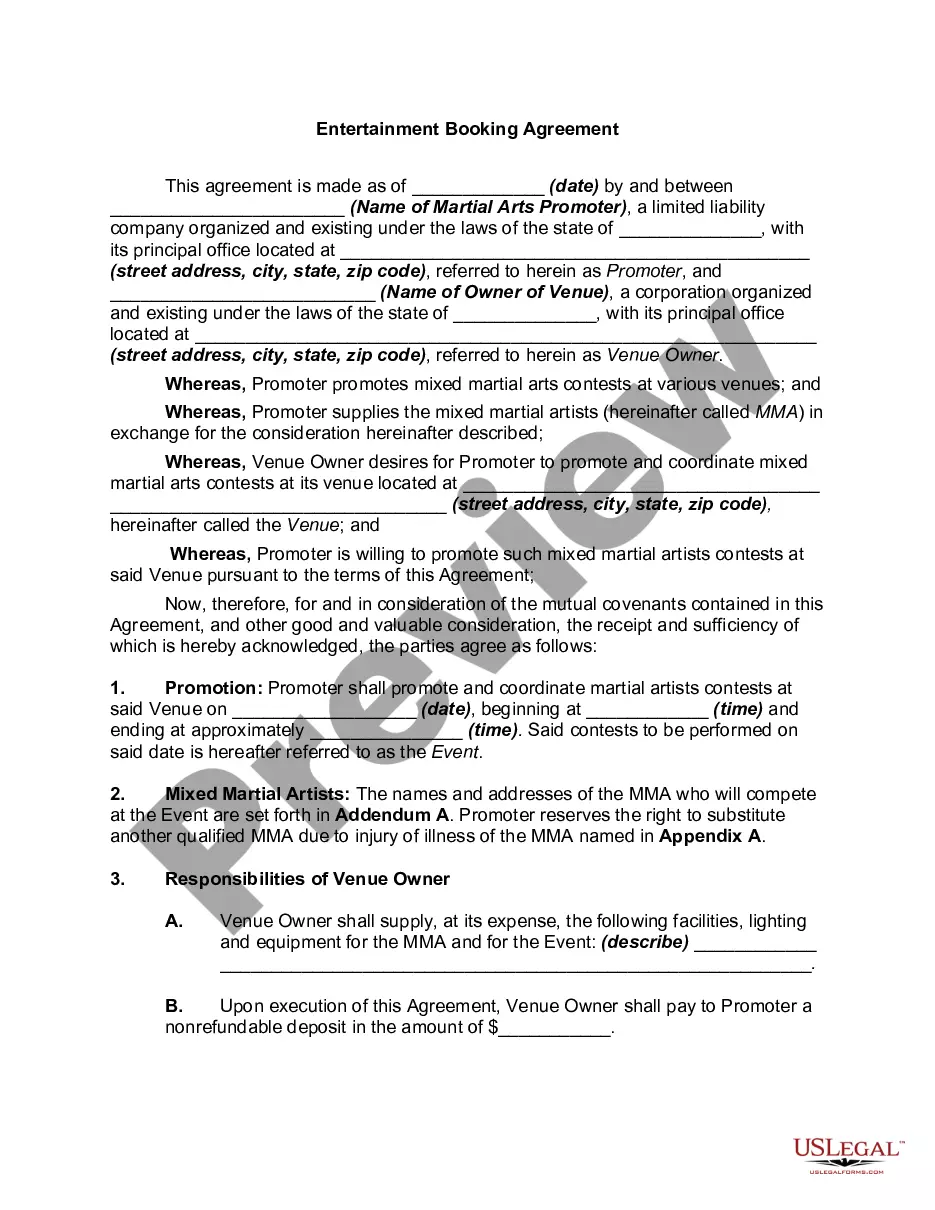
Out of all of the types of music contracts, co-publishing (co-pub) agreements are the most frequently used. Under this agreement, the music publishing company and the artist are partners, and both parties co-own the copyrights to the music. Terms can vary widely, but a 50/50 split is common.
