Artist Agreement Form Sample For Patient In Queens
Description










Form popularity
FAQ
How to Write an Artistic Statement Brainstorm. The first hurdle is to figure out what to write about. Freewrite. The process of writing without judgment or self-editing can help artists get at their basic philosophy. Rewrite what stands out. In general, be specific. Be clear and concise. Proofread. Use your own voice.
A. The Client is of the opinion that the Artist has the necessary qualifications, experience, and abilities to provide services to the Client. B. The Artist is agreeable to providing such services to the Client on the terms and conditions set out in this Agreement.
Yes, you can write your own contract. However, including all necessary elements is crucial to make it legally binding.
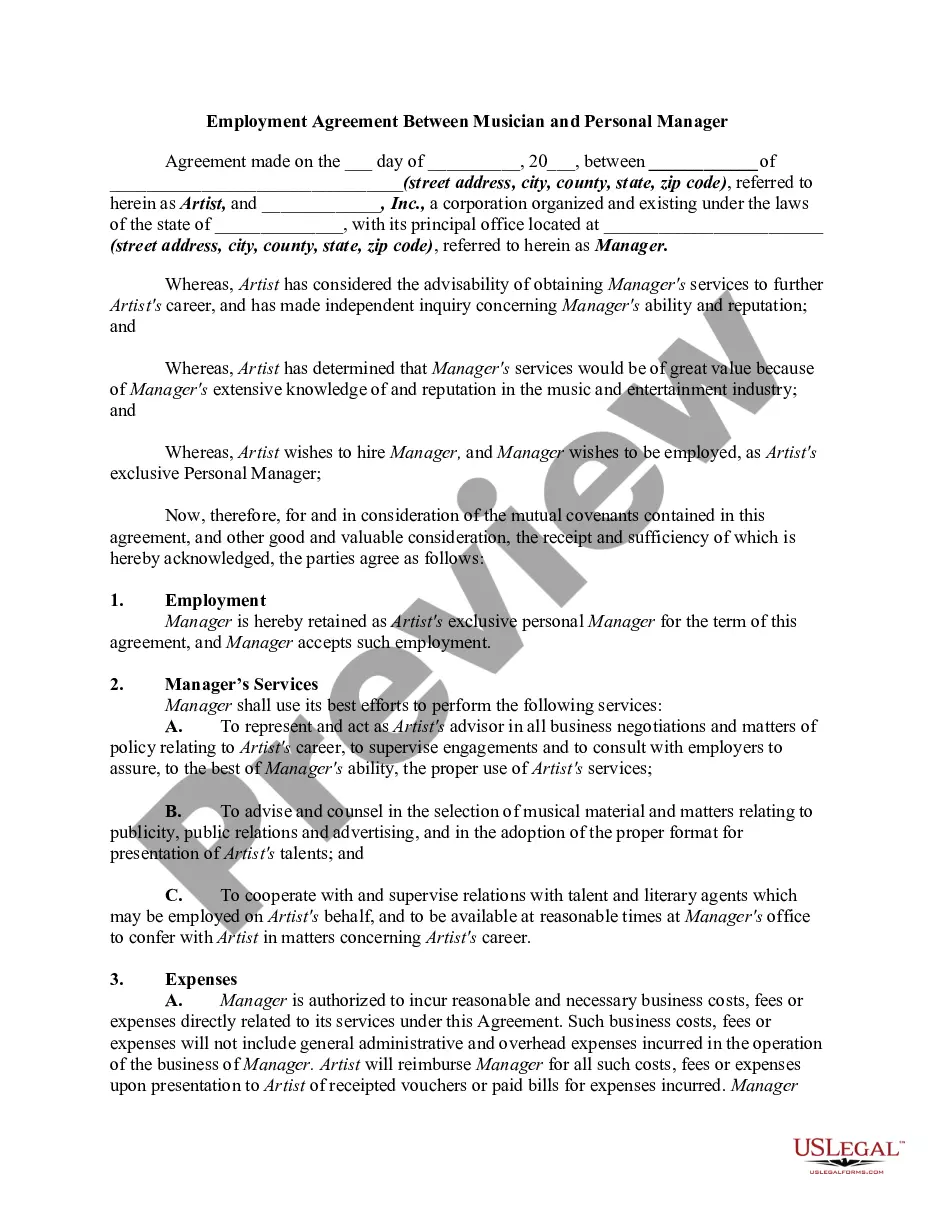
As a general rule, managers take a percentage of all income generated by the artist in exchange for their management services. Commission rates typically range from 15-25% of the artist's gross income from: Recording royalties: Sales, streaming and licensing of recorded music.
It is a legal agreement that binds the Artist and the Company to fulfill all the terms and conditions contained in it. All Individual Artist Agreements must be in compliance with the respective Collective Bargaining Agreement.
Contracts like an artist agreement help avoid miscommunications and confusion over the rights and responsibilities of both parties involved. Artist agreements typically include availability expectations, performance markers, and licensing or ownership rights of the works created during the partnership.
Individual Artist Agreement. The Individual Artist Agreement is a contract entered into between the Artist and the AGMA signatory company for which they are working. It is a legal agreement that binds the Artist and the Company to fulfill all the terms and conditions contained in it.
An artist statement is a not-too-long series of sentences that describe what you make and why you make it. It's a stand-in for you, the artist, talking to someone about your work in a way that adds to their experience of viewing that work.
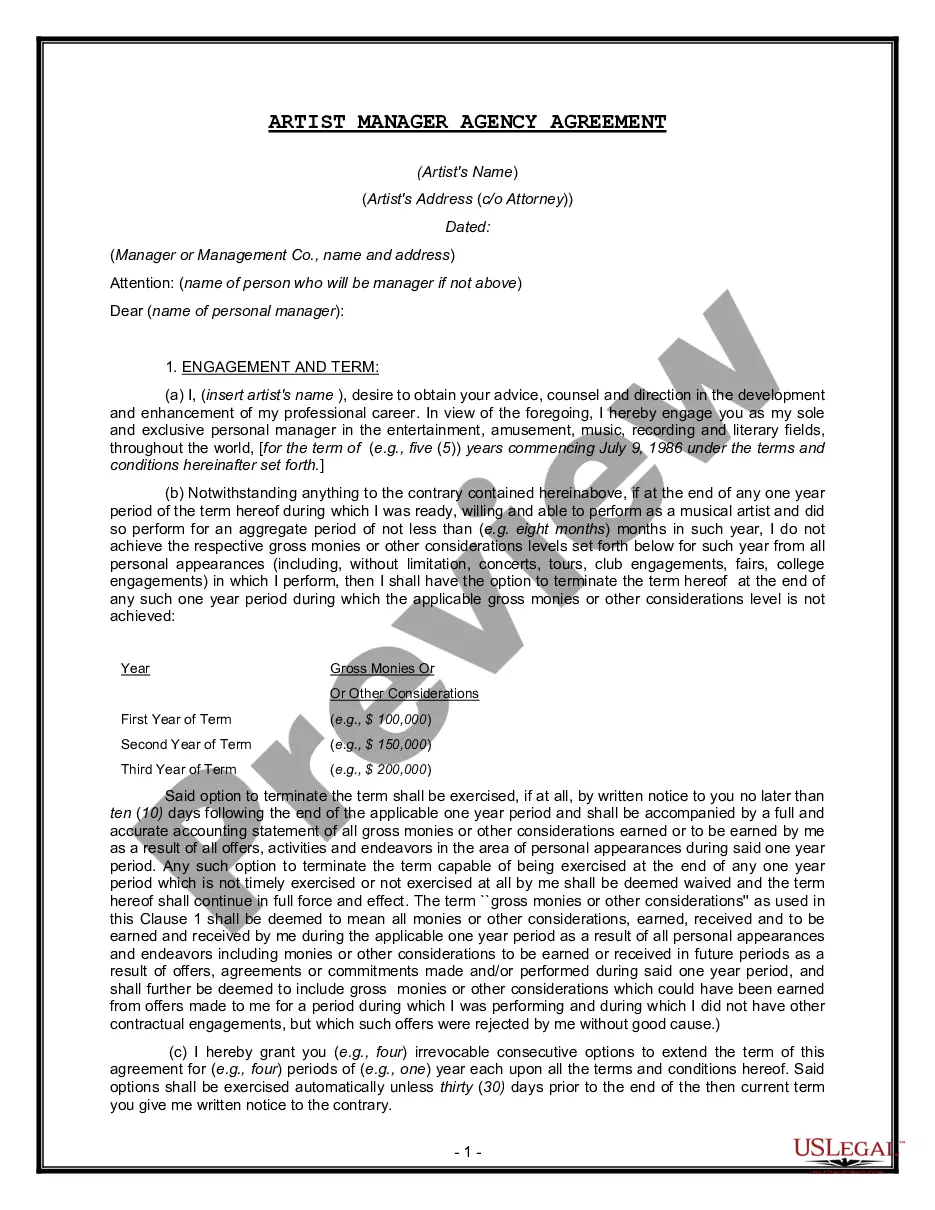
(a) The artist will be bound to the label for a specified period to produce an album (or single or EP.) as well as be forbidden from working with other labels. (b) The label will exclusively own the copyright to those songs for the duration of copyright (or an agreed shorter period –often called 'Rights Period').
