Judgment Note Form For Tenant In Philadelphia
Description




Get your form ready online
Our built-in tools help you complete, sign, share, and store your documents in one place.
Make edits, fill in missing information, and update formatting in US Legal Forms—just like you would in MS Word.
Download a copy, print it, send it by email, or mail it via USPS—whatever works best for your next step.
Sign and collect signatures with our SignNow integration. Send to multiple recipients, set reminders, and more. Go Premium to unlock E-Sign.
If this form requires notarization, complete it online through a secure video call—no need to meet a notary in person or wait for an appointment.
We protect your documents and personal data by following strict security and privacy standards.
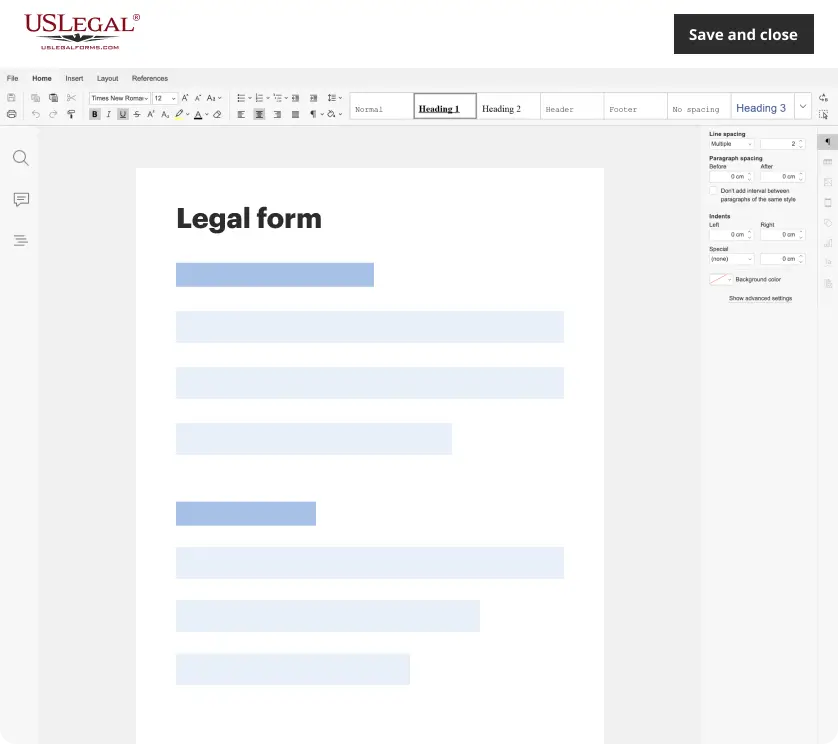
Make edits, fill in missing information, and update formatting in US Legal Forms—just like you would in MS Word.
Download a copy, print it, send it by email, or mail it via USPS—whatever works best for your next step.
Sign and collect signatures with our SignNow integration. Send to multiple recipients, set reminders, and more. Go Premium to unlock E-Sign.

If this form requires notarization, complete it online through a secure video call—no need to meet a notary in person or wait for an appointment.
We protect your documents and personal data by following strict security and privacy standards.
Looking for another form?






Form popularity
FAQ
Landlord-tenant trials are heard on the 6th Floor of 1339 Chestnut Street. The courtroom, date and time will be on the complaint. Continuance requests should be made in writing at least ten (10) days before the scheduled trial. All requests should be addressed to John J.
Typically, a sheriff will serve the writ to the tenant and a law enforcement officer supervises the eviction, and lock change to ensure the property is secure.
Timeline for Evictions StepAverage Timeline Issuing an Official Notice 10-30 days Filing and Serving the Complaint A few days to weeks Court Hearing and Judgment 7-10 days Obtaining a Writ of Possession 5-11 days1 more row •
The typical eviction process in Pennsylvania will take between 35-45 days to remove the tenant but may involve another thirty days in managing the tenant's personal property. Few Landlord/Tenant Complaints make it all the way to eviction. Oftentimes the goal is to be an attention-getter to correct a lease violation.
Yes, even without a written lease, a landlord can evict a tenant in Pennsylvania as long as they follow the proper legal eviction process. This includes providing the required notice period and obtaining a court order for eviction from the local district court.
Rule 1013 - Prompt Trial-Municipal Court (A) (1) Trial in a Municipal Court case shall commence no later than 180 days from the date on which the preliminary arraignment is held.
A Writ of Summons is an unusual mechanism in the Commonwealth of Pennsylvania that allows a Plaintiff (the individual or company who is bringing a lawsuit) to start their lawsuit against a Defendant without filing a Complaint.
Timeline for Evictions StepAverage Timeline Issuing an Official Notice 10-30 days Filing and Serving the Complaint A few days to weeks Court Hearing and Judgment 7-10 days Obtaining a Writ of Possession 5-11 days1 more row •
Interested persons may find case information for criminal court records through the Unified Judicial System of Pennsylvania web portal. This portal lets searchers lookup court cases by several parameters, including the docket number, case filing date, and litigants' names.

