Define Habeas Corpus In In Arizona
Description

Form popularity
FAQ
If an inmate meets all the requirements to file a petition for writ of habeas corpus, they will file their petition in the superior court in the court of conviction. Within 60 days, the court will review the petition to determine if the inmate raised a prima facie case entitling them to relief.
During any Arizona criminal case, there may be a point when it is necessary to file a writ of Habeas Corpus. This Latin term simply translates to, “that you have the body” and is used in instances where there is concern that a defendant's imprisonment may be against the law.
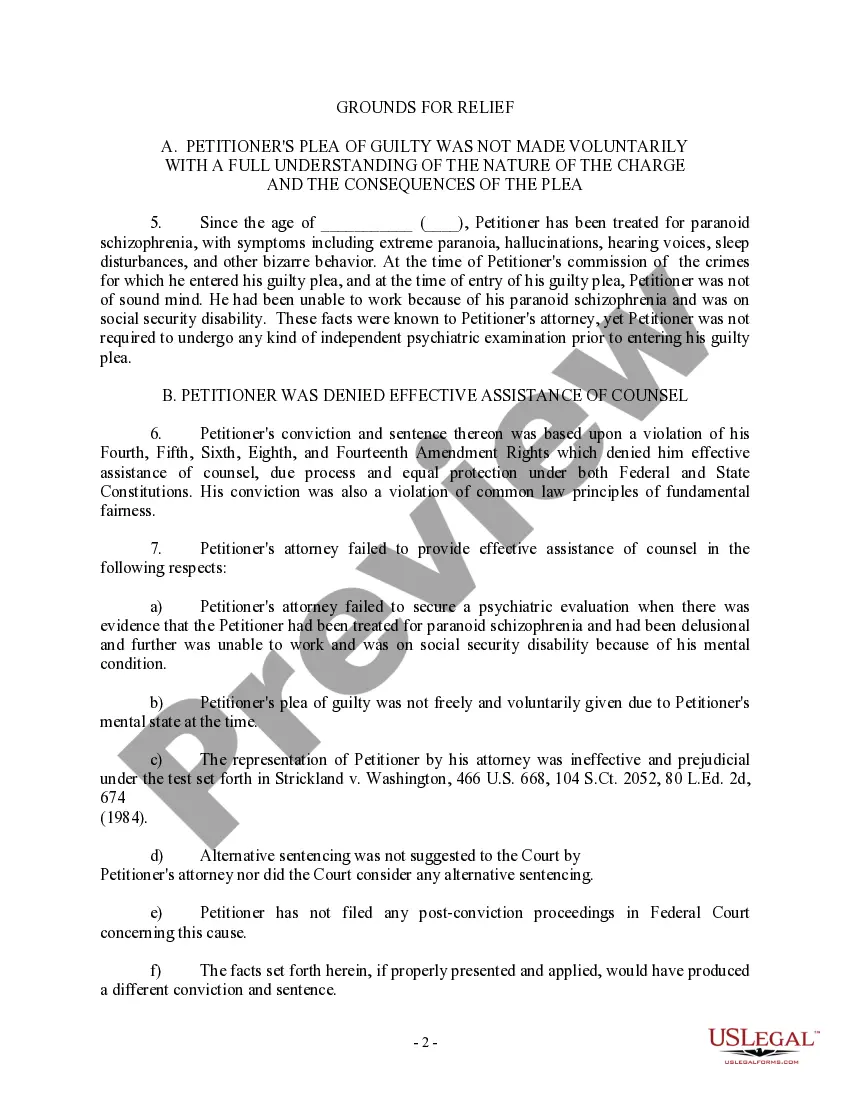
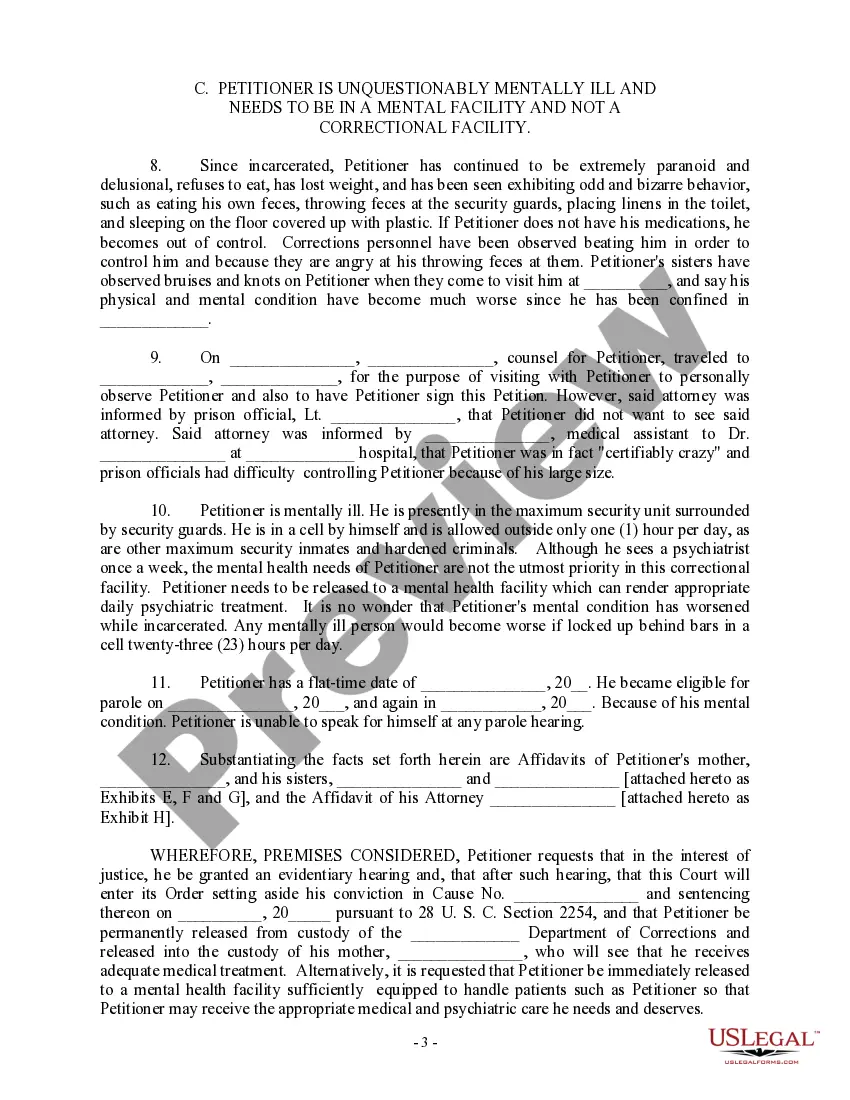
Typical examples where a court has granted a habeas corpus petition include claims of new evidence discovered in the case, ineffective assistance of counsel, prosecutorial misconduct, incompetence to stand trial, and challenging conditions of confinement.
The right to file a petition for writ of habeas corpus is guaranteed by the California constitution. In order to be eligible to petition for such relief, the petitioner must be “in custody,” either actually or constructively.
Generally, a habeas petition must allege: (1) the identity of the petitioner and the location of his custody; (2) the court order which led to the petitioner's restraint; (3) an illegal restraint on the petitioner's liberty; (4) why the petition is being filed in the appellate court; (5) there is no plain, speedy, and ...
Personal integrity and physical liberty are well protected by the law, for example by habeas corpus and the criminal law. Can he issue a writ of habeas corpus? If he was brought before a court, he could apply for habeas corpus and be released.
The habeas petition must be in writing and signed and verified either by the petitioner seeking relief or by someone acting on his or her behalf. The petition must name the custodian as the respondent and state the facts concerning the applicant's custody and include the legal basis for the request.
Habeas corpus has certain limitations. The petitioner must present a prima facie case that a person has been unlawfully restrained. As a procedural remedy, it applies when detention results from neglect of legal process, but not when the lawfulness of the process itself is in question.
State every ground (reason) that supports your claim that you are being held in violation of the Constitution, laws, or treaties of the United States. Attach additional pages if you have more than four grounds. State the facts supporting each ground. Any legal arguments must be submitted in a separate memorandum.
For example, if an individual was convicted on the basis that their skin color matched that of the perpetrator ing to eyewitnesses, but there is no other evidence against them, then the individual can appeal for habeas corpus in order to be freed from imprisonment.
