Define Habeas Corpus In Government In California

State:
Multi-State
Control #:
US-00277
Format:
Word; 
Rich Text
Instant download

Description

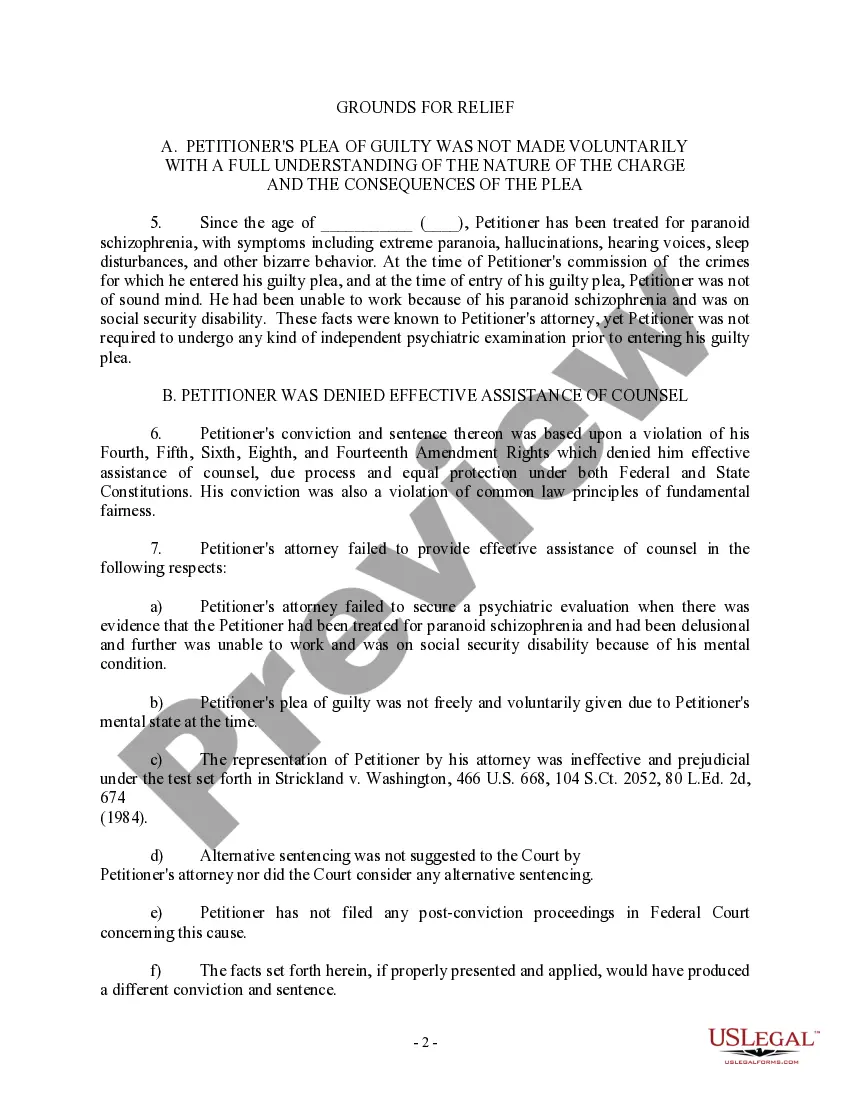
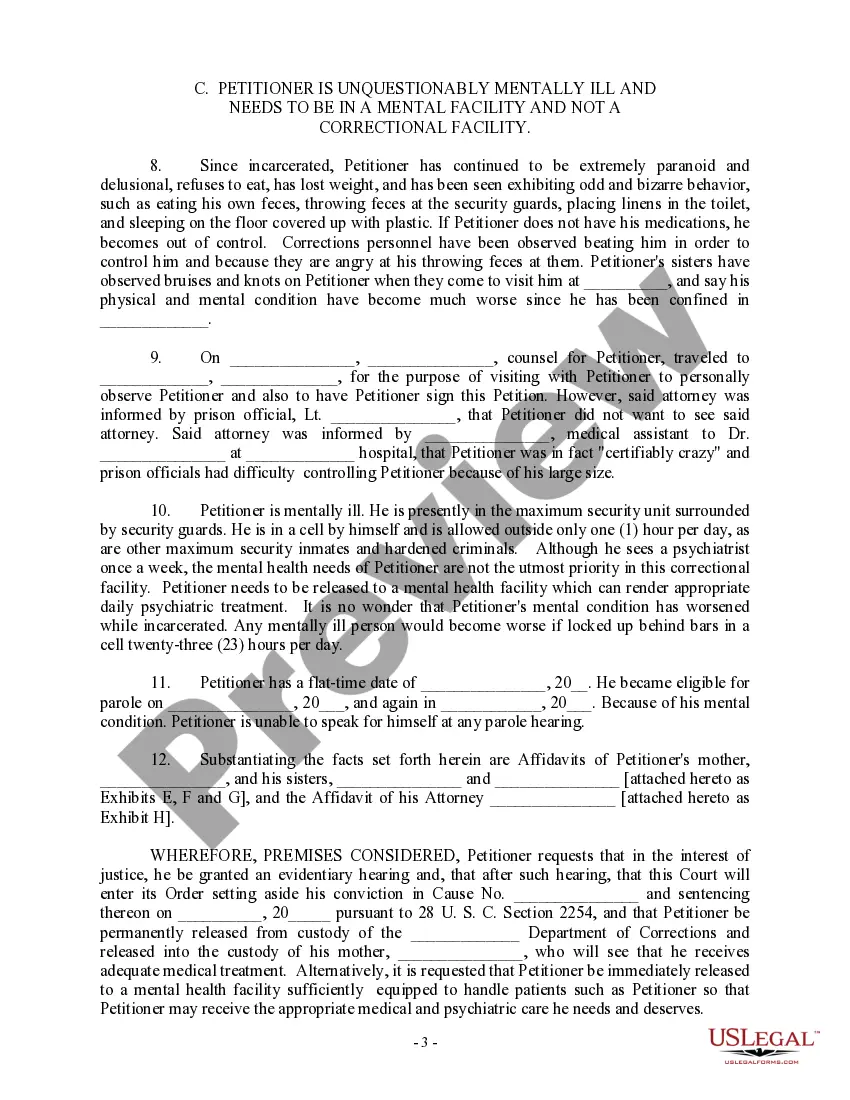
Habeas corpus is a legal remedy that enables individuals in state custody, particularly in California, to seek relief from unlawful imprisonment. The form titled 'Petition for Writ of Habeas Corpus By A Person in State Custody' facilitates this process under 28 U.S.C. Section 2254. Key features of the form include sections for the petitioner’s personal information, details of their conviction, and the specific grounds for relief claimed, such as ineffective assistance of counsel and issues of mental health. Users can fill the form by providing accurate personal data and evidentiary support for their claims, ensuring that each section of the petition is thoroughly completed. This form can be vital for attorneys, paralegals, and legal assistants representing clients who may have been wrongfully convicted or who have not received adequate representation. Target audiences, including associates and partners in law firms, can utilize this document to advocate for their clients' rights and seek justice effectively. Proper understanding and execution of this form can lead to evidentiary hearings that might overturn wrongful convictions and secure the necessary treatment for mentally ill petitioners.
Free preview
  • Preview Petition for Writ of Habeas Corpus by a Person in State Custody
  • Preview Petition for Writ of Habeas Corpus by a Person in State Custody
  • Preview Petition for Writ of Habeas Corpus by a Person in State Custody
  • Preview Petition for Writ of Habeas Corpus by a Person in State Custody

Form popularity

FAQ

Petition for writ of habeas corpus filed by an attorney for a party. (1) A petition for habeas corpus filed by an attorney need not be filed on Petition for Writ of Habeas Corpus (form HC-001) but must contain the information requested in that form and must be verified.

Thus, to effectively file a writ of habeas corpus in California state court, an inmate must have been convicted and either serving a sentence of incarceration, probation or parole. They must have also filed a direct appeal to the appellate court and then to the California Supreme Court.

Filing the appeal; certificate of probable cause. (1) To appeal from a judgment or an appealable order of the superior court in a felony case-other than a judgment imposing a sentence of death-the defendant or the People must file a notice of appeal in that superior court.

Rule of Court, rule 8.78(a).) Under the rule, counsel who register to use the TF system are automatically deemed to have agreed to accept electronic service. ingly, the counsel list that pre-populates your case entry in TF have agreed to accept eService.

(A) If a party serves an acceptance of the additur or remittitur within the time for accepting the additur or remittitur, the time to appeal from the judgment is extended for all parties until 30 days after the date the party serves the acceptance.

Opposition and amicus curiae briefs. (1) Within 10 days after the petition is filed, the respondent or any real party in interest, separately or jointly, may serve and file a preliminary opposition.

Trusted and secure by over 3 million people of the world’s leading companies

Define Habeas Corpus In Government In California