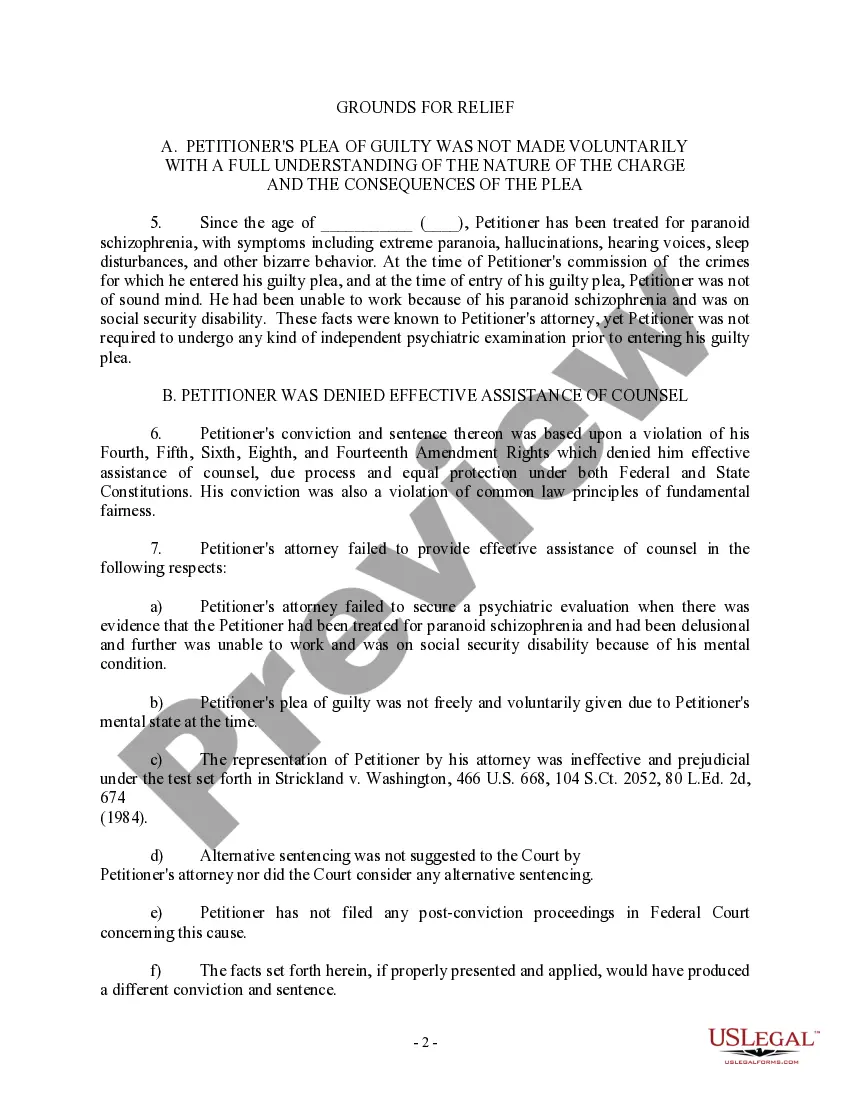
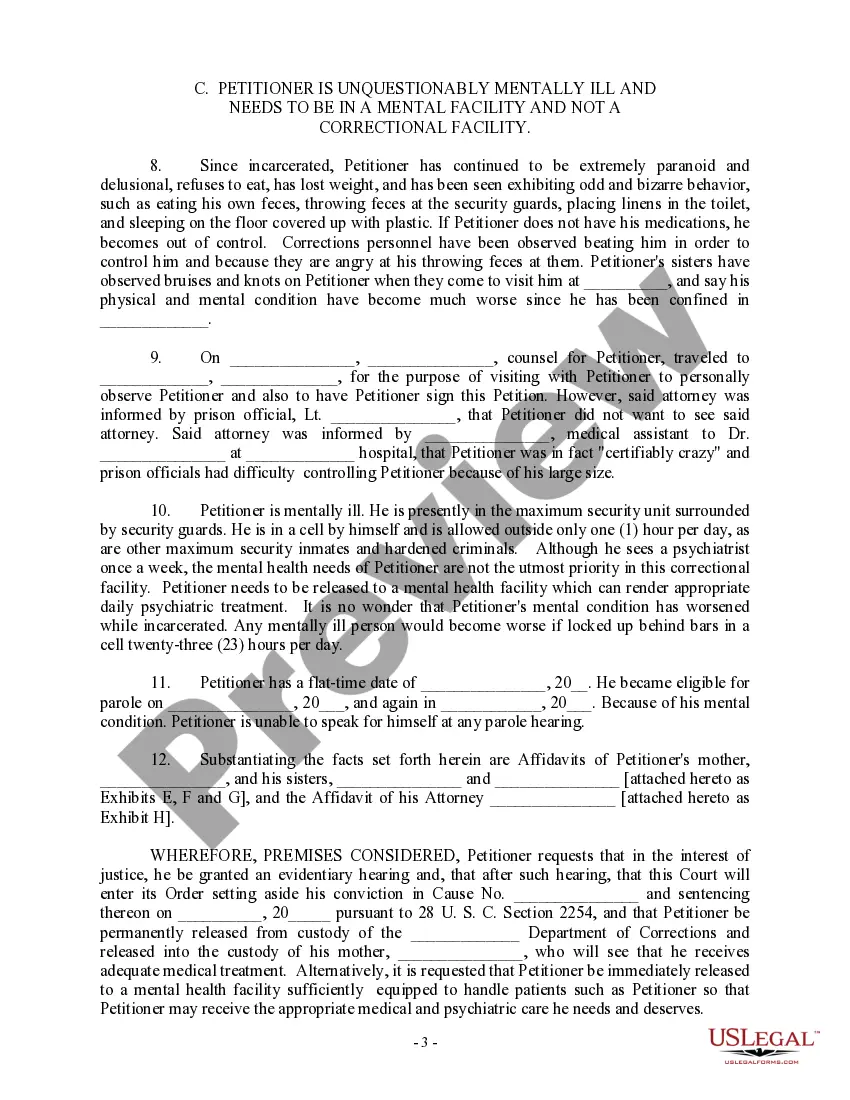
Petition For Writ Of Habeas Corpus Example In Franklin
Description

Get your form ready online
Our built-in tools help you complete, sign, share, and store your documents in one place.
Make edits, fill in missing information, and update formatting in US Legal Forms—just like you would in MS Word.
Download a copy, print it, send it by email, or mail it via USPS—whatever works best for your next step.
Sign and collect signatures with our SignNow integration. Send to multiple recipients, set reminders, and more. Go Premium to unlock E-Sign.
If this form requires notarization, complete it online through a secure video call—no need to meet a notary in person or wait for an appointment.
We protect your documents and personal data by following strict security and privacy standards.

Make edits, fill in missing information, and update formatting in US Legal Forms—just like you would in MS Word.

Download a copy, print it, send it by email, or mail it via USPS—whatever works best for your next step.

Sign and collect signatures with our SignNow integration. Send to multiple recipients, set reminders, and more. Go Premium to unlock E-Sign.

If this form requires notarization, complete it online through a secure video call—no need to meet a notary in person or wait for an appointment.

We protect your documents and personal data by following strict security and privacy standards.
Looking for another form?

Form popularity
FAQ
For example, if an individual was convicted on the basis that their skin color matched that of the perpetrator ing to eyewitnesses, but there is no other evidence against them, then the individual can appeal for habeas corpus in order to be freed from imprisonment.
Typical examples where a court has granted a habeas corpus petition include claims of new evidence discovered in the case, ineffective assistance of counsel, prosecutorial misconduct, incompetence to stand trial, and challenging conditions of confinement.
Today, habeas corpus is mainly used as a post-conviction remedy for state or federal prisoners who challenge the legality of the application of federal laws that were used in the judicial proceedings that resulted in their detention.
Generally, a habeas petition must allege: (1) the identity of the petitioner and the location of his custody; (2) the court order which led to the petitioner's restraint; (3) an illegal restraint on the petitioner's liberty; (4) why the petition is being filed in the appellate court; (5) there is no plain, speedy, and ...
Personal integrity and physical liberty are well protected by the law, for example by habeas corpus and the criminal law. Can he issue a writ of habeas corpus? If he was brought before a court, he could apply for habeas corpus and be released.
The habeas corpus petition must be typewritten or legibly handwritten. All questions must be answered clearly and concisely in the appropriate space on the form. You do not need to cite law. You may submit additional pages if necessary.
During their presidencies, Abraham Lincoln and George W. Bush both suspended the writ of habeas corpus; while these two situations appear to be similar, the facts surrounding each president's suspension are vastly different.
Decision: In 1963, the Supreme Court ruled unanimously in favor of Gideon, guaranteeing the right to legal counsel for criminal defendants in federal and state courts. Following the decision, Gideon was given another trial with an appointed lawyer and was acquitted of the charges.
For example, if an individual was convicted on the basis that their skin color matched that of the perpetrator ing to eyewitnesses, but there is no other evidence against them, then the individual can appeal for habeas corpus in order to be freed from imprisonment.
For example, if an individual was convicted on the basis that their skin color matched that of the perpetrator ing to eyewitnesses, but there is no other evidence against them, then the individual can appeal for habeas corpus in order to be freed from imprisonment.
