Independent Contractor Agreement Requirements In Broward
Description








Form popularity
FAQ
If the employer does not have the right to control the details of how the services are performed, then the worker is probably an independent contractor.
You should consider all evidence of the degree of control and independence in this relationship. The facts that provide this evidence fall into three categories – behavioral control, financial control, and relationship of the parties.
The new rule, which becomes effective March 11, 2024, rescinds the 2021 independent contractor rule issued under former President Donald Trump and replaces it with a six-factor test that considers: 1) opportunity for profit or loss depending on managerial skill; 2) investments by the worker and the potential employer; ...
The general rule is that an individual is an independent contractor if the person for whom the services are performed has the right to control or direct only the result of the work and not what will be done and how it will be done.
Factors that show you are an independent contractor include working with multiple clients instead of just one, not receiving detailed instructions from hiring firms, paying your own business expenses such as office and equipment expenses, setting your own schedule, marketing your services to the public, having all ...
Paying Taxes as an Independent Contractor You'll need to file a tax return with the IRS if your net earnings from self-employment are $400 or more. Along with your Form 1040, you'll file a Schedule C to calculate your net income or loss for your business.
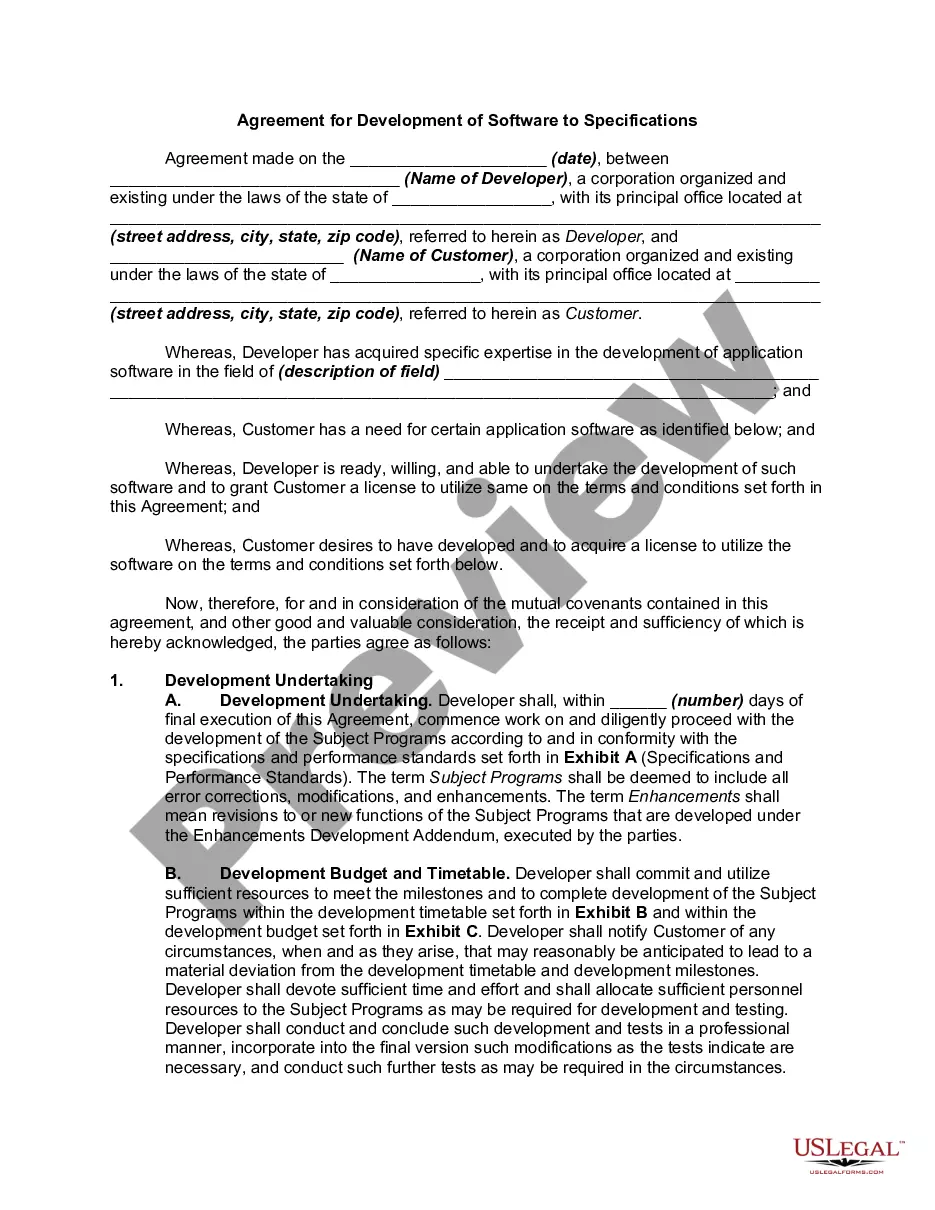
What to Include Party Details. The agreement will name the contractor and the client and provide the mailing addresses where invoices and correspondence can be sent. Term. The one-page contract must state the dates the contractual relationship begins and ends. Services. Compensation. Expenses. Signatures.
Structure payments on a per-project basis, and require the contractor to submit invoices. Avoid salary payments, hourly payments, or any guaranteed “retainer” that is not tracked to performance. Specify the conditions for termination of the relationship—and do not make the arrangement terminable at will.
Details of the parties to the contract, including any sub-contracting arrangements. duration or period of the contract. definitions of key terms used within the contract. a description of the goods and/or services that your business will receive or provide, including key deliverables.
