Sublease Requirements In Miami-Dade
Description


Form popularity
FAQ
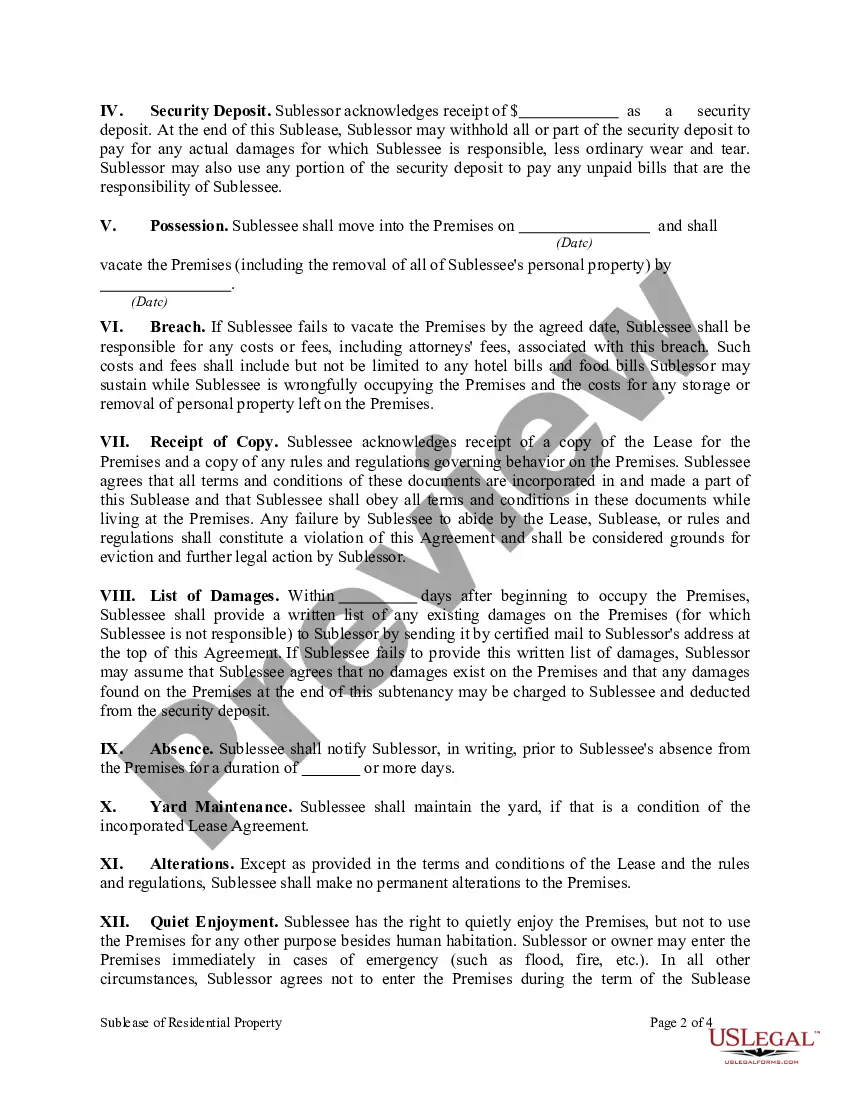
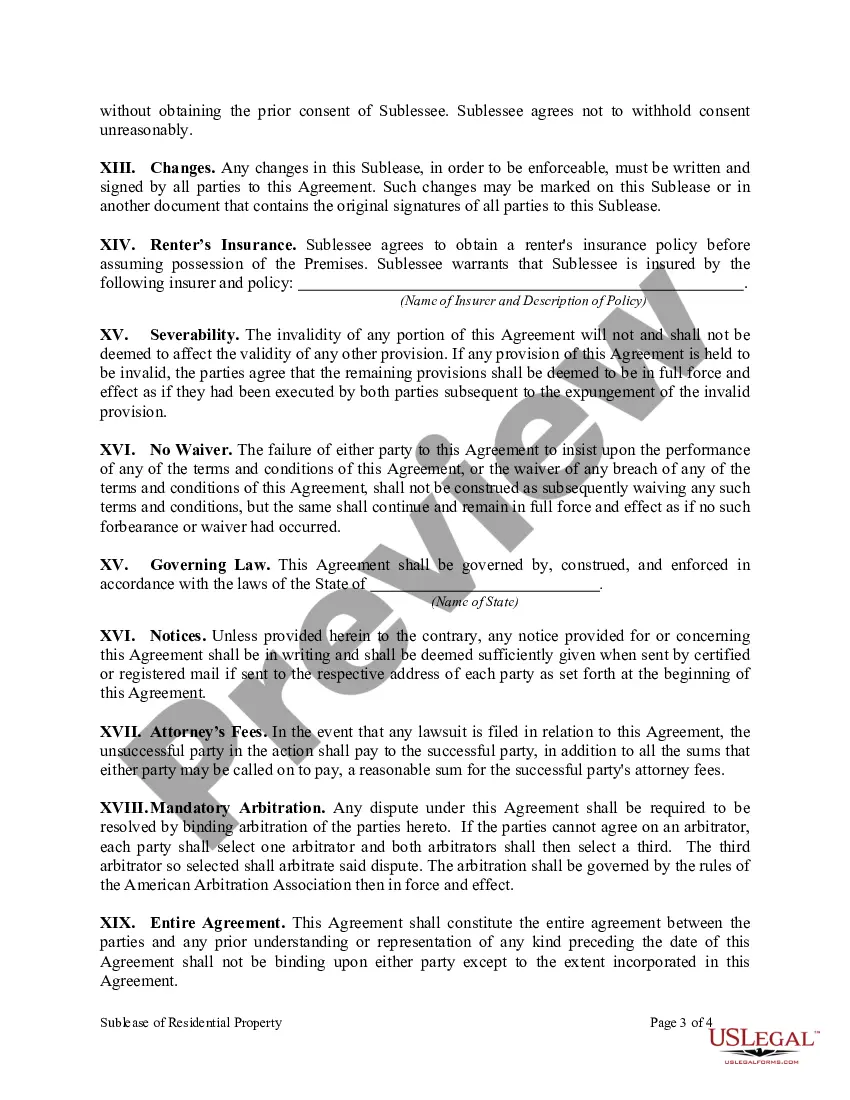
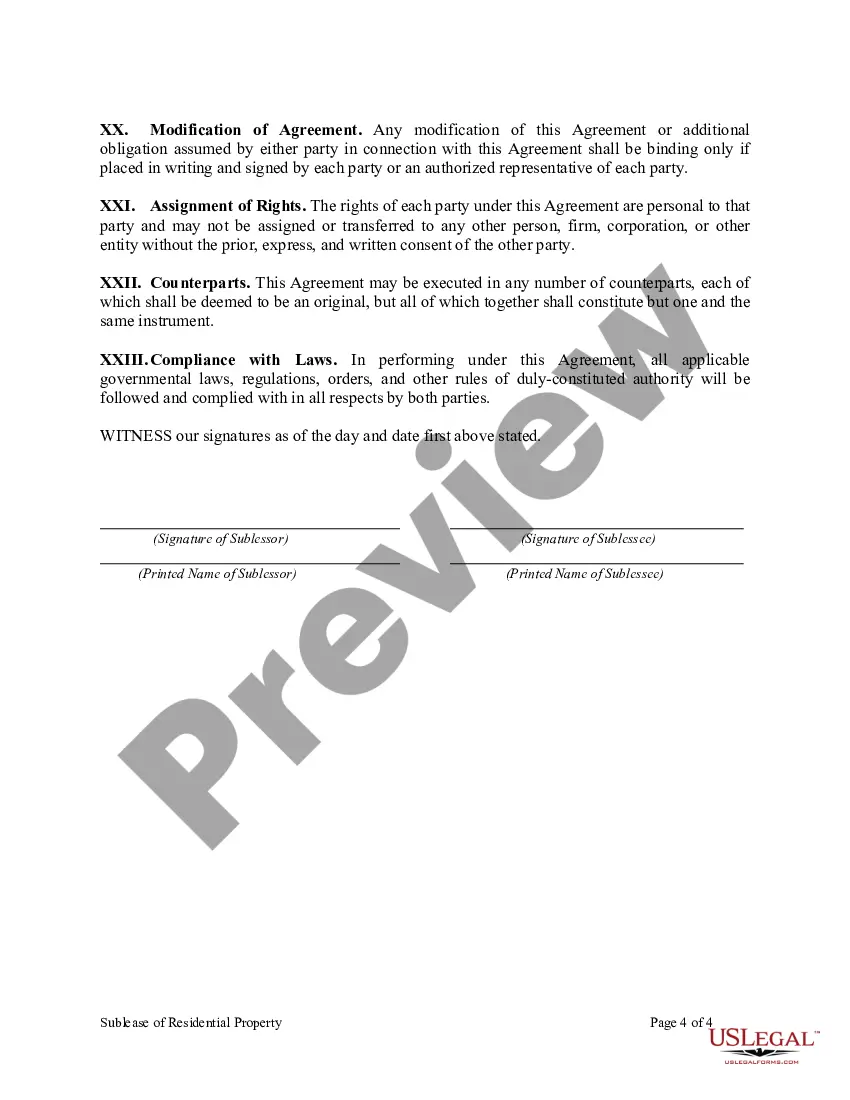
How to Write One Identify all parties to the contract. Define the lease term. Identify the terms and rent amount. Address any other financial responsibilities. Discuss the terms of the security deposit. List any other restrictions. Date and sign the agreement. Attach a copy of the original lease.
Lessee shall not assign this Lease or sublet any portion of the Premises without prior written consent of the Lessor, which shall not be unreasonably withheld. Any such assignment or subletting without consent shall be void and, at the option of the Lessor, may terminate this Lease.
Tenants in Florida can sublease their rental property, but they need explicit written consent from their landlord. The Florida subleasing laws require that the original lease or a separate agreement provides this consent.
The Landlord hereby consents to the Tenant's sublease of the Lease to the New Tenant on the terms of the sublease of the Lease, a copy of which is attached as Exhibit B (the "Sublease"). The Landlord's consent to the sublease does not constitute consent to any subsequent subleases or assignments of the Property.
How to Write One Identify all parties to the contract. Define the lease term. Identify the terms and rent amount. Address any other financial responsibilities. Discuss the terms of the security deposit. List any other restrictions. Date and sign the agreement. Attach a copy of the original lease.
Subletting Can Impact Property Values Parking becomes difficult, there are higher utility costs, and the neighborhood won't be as appealing to prospective buyers.
The terms sublet and sublease are often used synonymously, but they have very different meanings. The gist is that a sublet occurs when you find a new renter for the property who will sign a new lease with the landlord, while a sublease occupies the space without signing a lease directly with the landlord.
Is subletting legal in Florida? In Florida, subletting is allowed. However, a tenant will not be permitted to sublet a rental apartment if the primary lease agreement forbids it. If subletting is permitted, tenants must ensure that it complies with all applicable housing and occupancy laws.
5 Pros and Cons of Allowing Properties to be Subleased Pro #1: Financial Stability is Practically Guaranteed. Cons #1: No Control Over the Sublease Agreement. Pro #2: You Don't Have to Find Your Own Tenants. Con #2: Original Tenants May Not be Trustworthy. Pro #3: Increased Property Maintenance Potential.
