Sublease Requirements In North Carolina
Description


Get your form ready online
Our built-in tools help you complete, sign, share, and store your documents in one place.
Make edits, fill in missing information, and update formatting in US Legal Forms—just like you would in MS Word.
Download a copy, print it, send it by email, or mail it via USPS—whatever works best for your next step.
Sign and collect signatures with our SignNow integration. Send to multiple recipients, set reminders, and more. Go Premium to unlock E-Sign.
If this form requires notarization, complete it online through a secure video call—no need to meet a notary in person or wait for an appointment.
We protect your documents and personal data by following strict security and privacy standards.

Make edits, fill in missing information, and update formatting in US Legal Forms—just like you would in MS Word.

Download a copy, print it, send it by email, or mail it via USPS—whatever works best for your next step.

Sign and collect signatures with our SignNow integration. Send to multiple recipients, set reminders, and more. Go Premium to unlock E-Sign.

If this form requires notarization, complete it online through a secure video call—no need to meet a notary in person or wait for an appointment.

We protect your documents and personal data by following strict security and privacy standards.
Looking for another form?
Form popularity
FAQ
Your Step-by-Step Guide to Subletting in California Read Your Lease Carefully. Obtain Pre-Approval to Sublet. Find and Screen a Subletter. Send a Written Request for Approval. Wait Patiently (but Not Too Patiently). Collect and Store Security Deposit and Rent. Enjoy Your Freedom:
Step 1: Check your lease Check your rental agreement or lease documentation for specific rules on subletting your apartment. Step 2: Send landlord a letter Send your landlord or building manager a certified letter asking permission to sublet, and wait for approval. Keep copies of all communications.
Step 1: Check your lease Check your rental agreement or lease documentation for specific rules on subletting your apartment. Step 2: Send landlord a letter Send your landlord or building manager a certified letter asking permission to sublet, and wait for approval. Keep copies of all communications.
Consent from the landlord A tenant must get a landlord's written permission to sub-let or transfer any part of the property. If a tenant does this without consent, they are breaching the terms of the tenancy agreement.
Your Step-by-Step Guide to Subletting in California Read Your Lease Carefully. Obtain Pre-Approval to Sublet. Find and Screen a Subletter. Send a Written Request for Approval. Wait Patiently (but Not Too Patiently). Collect and Store Security Deposit and Rent. Enjoy Your Freedom. Subletting Laws in California.
The terms sublet and sublease are often used synonymously, but they have very different meanings. The gist is that a sublet occurs when you find a new renter for the property who will sign a new lease with the landlord, while a sublease occupies the space without signing a lease directly with the landlord.
The terms sublet and sublease are often used synonymously, but they have very different meanings. The gist is that a sublet occurs when you find a new renter for the property who will sign a new lease with the landlord, while a sublease occupies the space without signing a lease directly with the landlord.
There are some things to consider to protect your interests if you will be subleasing someone's property. Research the lessee. Check with the landlord about the lessee's account history. Include a mandatory notification clause. Consider a direct relationship with the landlord. Ask for a copy of the master record.
Screen your subletter. If the subletter is a total stranger—or anyone you don't totally trust—you'll want to look into their background to feel secure about their ability and likelihood of paying the rent. If your landlord is involved, they may have their own rental application and background check process.
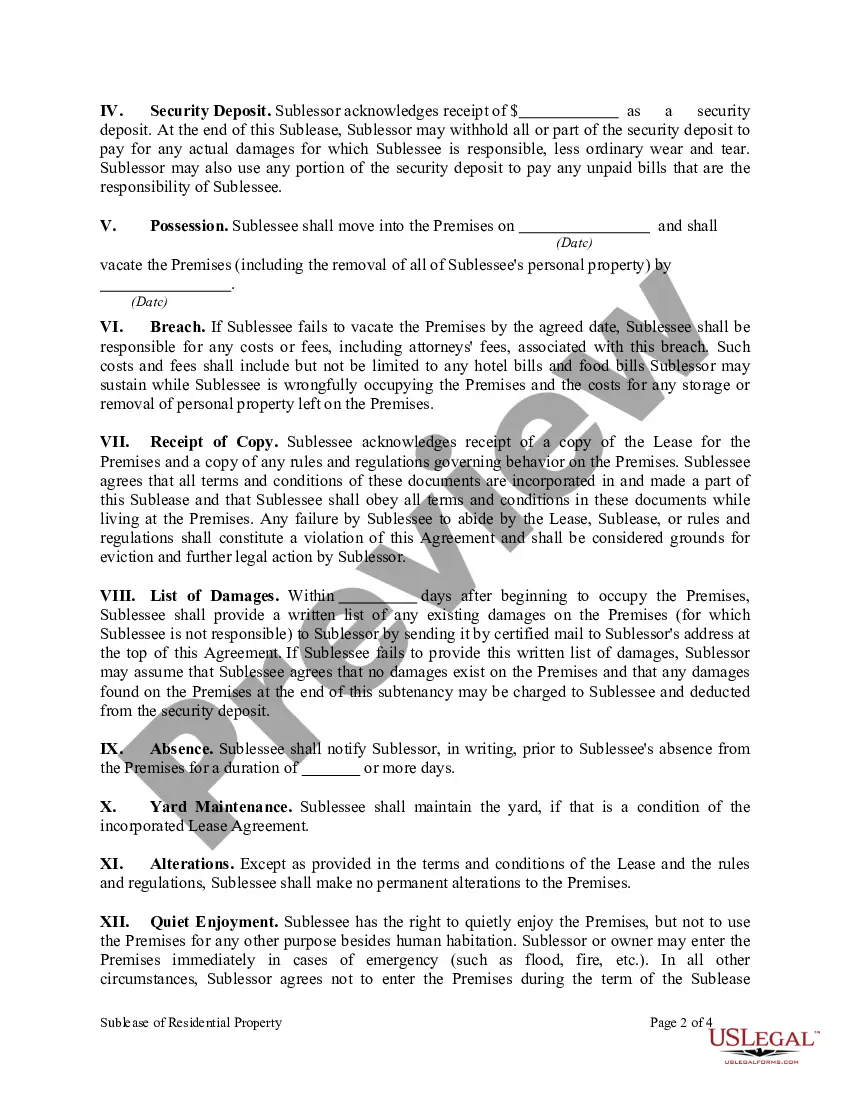
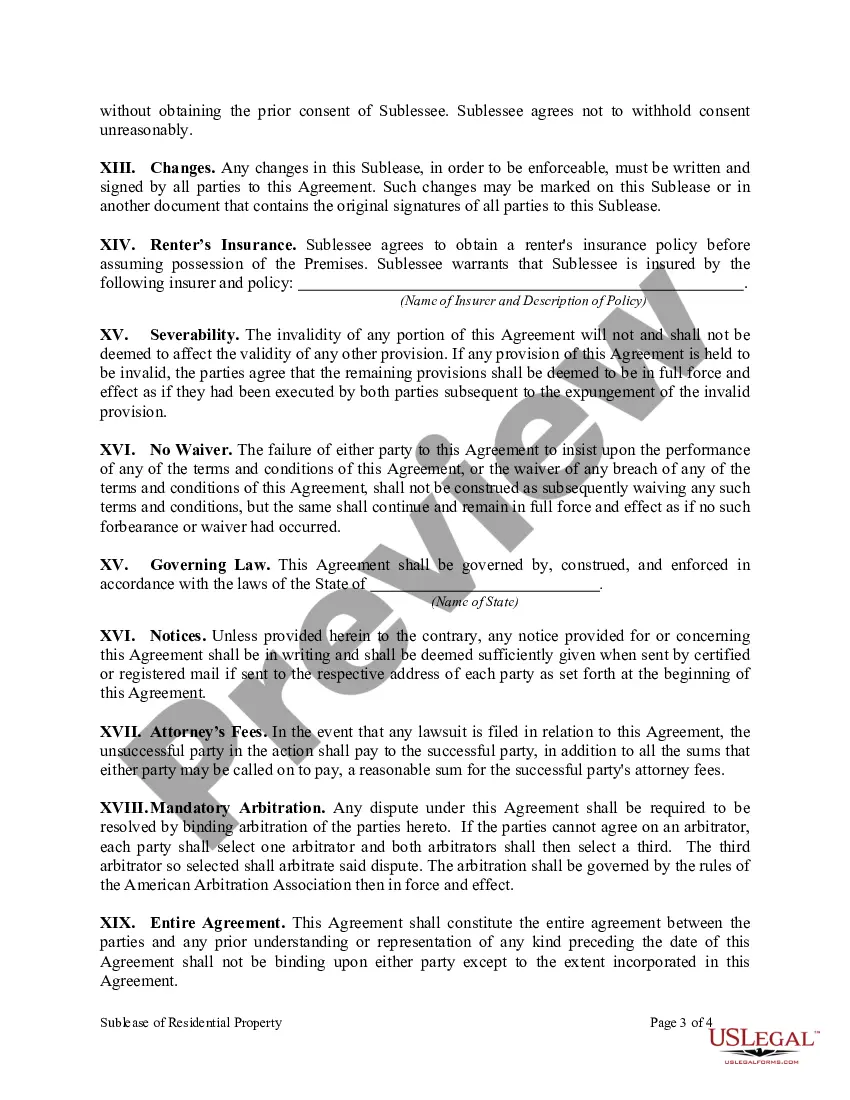
A North Carolina sublease agreement is a legal contract that allows a tenant to act as a "sublessor" and rent their leased property to another tenant, also known as a "sublessee." In other words, it's an arrangement that allows the subtenant to gain full or partial access to a property in exchange for rent payments.
