Sublease Of Property Definition In Suffolk
Description






Form popularity
FAQ
Subletting Can Impact Property Values Parking becomes difficult, there are higher utility costs, and the neighborhood won't be as appealing to prospective buyers.
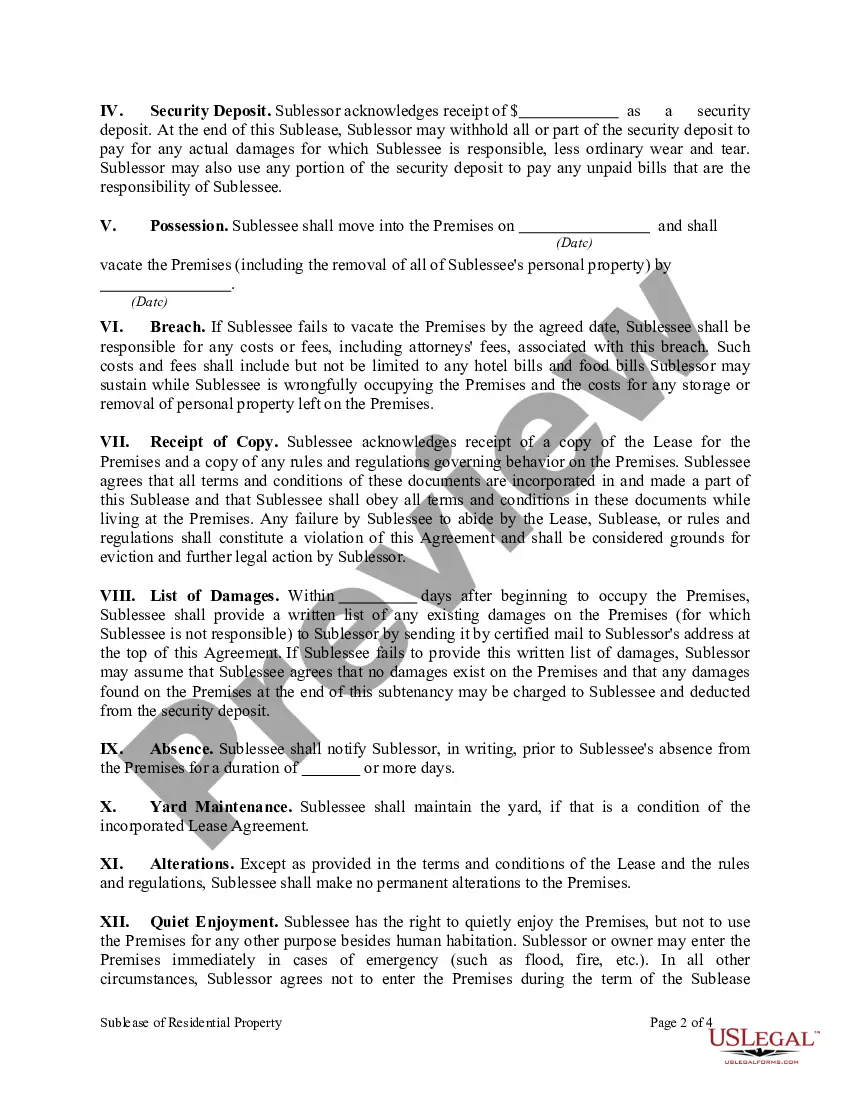
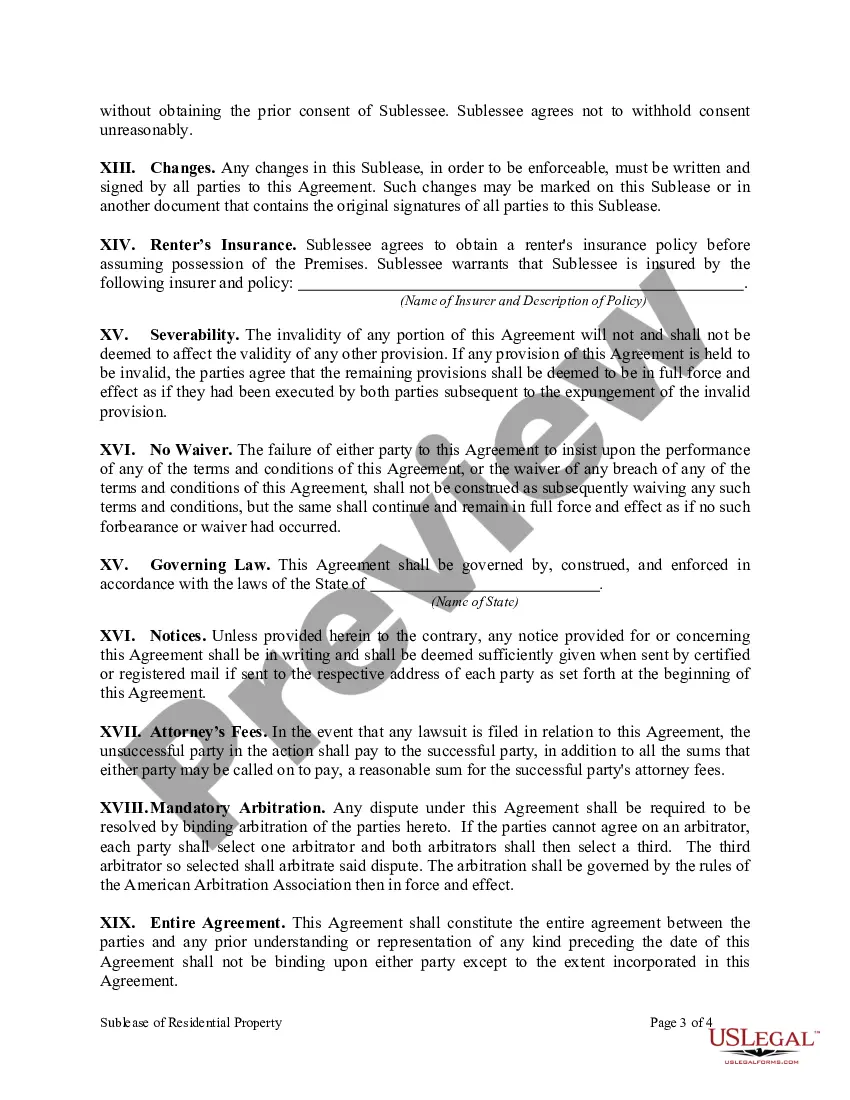
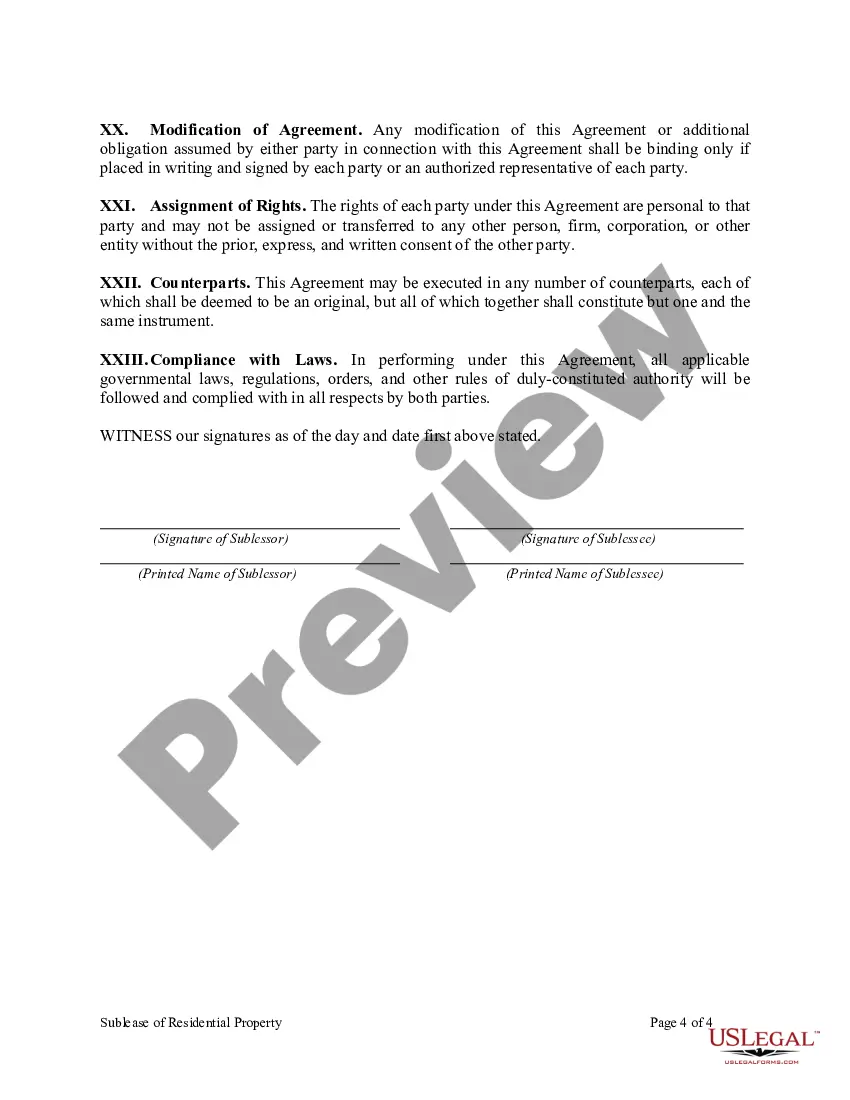
A lease is a rental contract between a landlord and a tenant, whereas a sublease is a contract between a tenant and a sub-tenant who has assumed obligations of the tenant's lease.
A sublease is the re-renting of property by an existing tenant to a new third party for a portion of the tenant's existing lease contract.
San Francisco, Oakland and Berkeley passed laws to protect renters in roommate/subletting situations. If you live in one of these cities, your landlord can neither deny you the right to nor evict you for replacing a roommate or subletting a room without their consent.
Cons of Subleasing Subleasing can get legally tricky. Many lease agreements have strict rules about subletting, often requiring landlord approval. Be sure to look over your lease agreement and have a conversation with your landlord or property manager to avoid disputes and penalties.
Landlords restrict subletting because they want control of who's in their properties. You wanna sublet so you can get out of a lease, so your standards are somewhat reduced. You might not care about security of the place, you might not care about the subletters background, he has a lease with you not the landlord.
If you sublet your apartment, you are still responsible for the lease. This means any damages or missed rent payments are your responsibility. Finding a reliable subtenant is crucial; be sure to screen carefully to avoid any complications like property damage that could leave you liable.
A sublet, or sublease agreement, adds someone new to an existing lease. Usually the new person (subletter) replaces someone who is moving out (sublessor or sublessee) but it can also happen with any new person being added to a lease.
Subletting is risky. It comes with the same risks as taking on a roommate, except both people won't be there to deal with problems as they arise. If a tenant's subletter skips town or damages the apartment, the tenant is jointly and severally liable with them and could get stuck with the bill.
(a) A tenant renting a residence pursuant to an existing lease in a dwelling having four or more residential units shall have the right to sublease his premises subject to the written consent of the landlord in advance of the subletting. Such consent shall not be unreasonably withheld.
