Labor Laws For California Lunch Breaks In Collin
Description
















Get your form ready online
Our built-in tools help you complete, sign, share, and store your documents in one place.
Make edits, fill in missing information, and update formatting in US Legal Forms—just like you would in MS Word.
Download a copy, print it, send it by email, or mail it via USPS—whatever works best for your next step.
Sign and collect signatures with our SignNow integration. Send to multiple recipients, set reminders, and more. Go Premium to unlock E-Sign.
If this form requires notarization, complete it online through a secure video call—no need to meet a notary in person or wait for an appointment.
We protect your documents and personal data by following strict security and privacy standards.
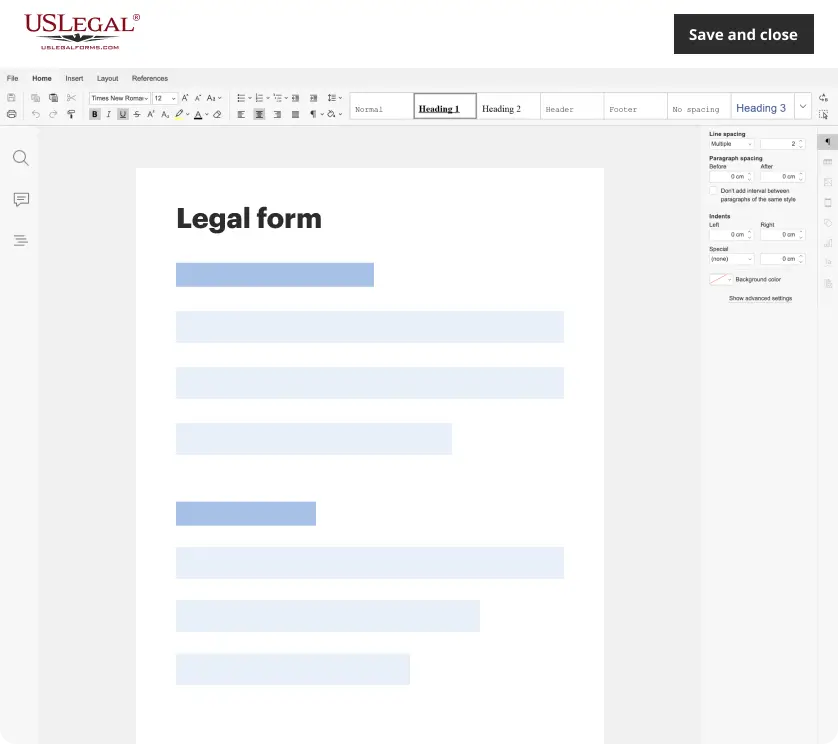
Make edits, fill in missing information, and update formatting in US Legal Forms—just like you would in MS Word.
Download a copy, print it, send it by email, or mail it via USPS—whatever works best for your next step.
Sign and collect signatures with our SignNow integration. Send to multiple recipients, set reminders, and more. Go Premium to unlock E-Sign.
If this form requires notarization, complete it online through a secure video call—no need to meet a notary in person or wait for an appointment.
We protect your documents and personal data by following strict security and privacy standards.
Looking for another form?
Form popularity
FAQ
Yes, you can bring a legal claim associated with the employer not providing you with a reasonable opportunity to take your meal or rest periods.
Employers who make it difficult or impossible for their workers to take these legally-protected breaks owe their workers compensation for forcing them to miss their breaks. Should they fail to provide this compensation, these employers could face a lawsuit based on California law.
First check your state's labor laws to see if breaks are required. If so, you can file a complaint. If the company is not in violation of any of your state's labor laws, then complaining would be useless. If there is a violation, then your company could be investigated and perhaps even fined.
California Meal Break Law Requirements If you work over 5 hours in a day, you are entitled to a meal break of at least 30 minutes that must start before the end of the fifth hour of your shift. BUT, you can agree with your boss to waive this meal period provided you do not work more than 6 hours in the workday.
Yes! ing to the Department of Labor (DOL) and the Fair Labor Standards Act (FLSA), it is legal for employers to automatically deduct lunch time.
Since there are no Texas labor laws on breaks, there's no requirement for a certain number of breaks during a 7- to 8-hour shift. That said, it's common for workplaces to provide one 30-minute meal break and two 15-minute rest breaks in that time.
Yes, you do. In fact, your practice of combining employee rest periods with the lunch break violates California state law. California law states that the statutorily mandated rest breaks must, insofar as practicable, be taken in the middle of each work period.
Requirements for Rest Breaks in California Hours WorkedNumber of 10-Minute Rest Breaks to 6 hours 1 to 10 hours 2 10.01 to 14 hours 3 – 18 hours 41 more row
California Meal Break Law Requirements If you work over 5 hours in a day, you are entitled to a meal break of at least 30 minutes that must start before the end of the fifth hour of your shift. BUT, you can agree with your boss to waive this meal period provided you do not work more than 6 hours in the workday.
