Sc Labor Laws For Breaks In Florida
Description
















Get your form ready online
Our built-in tools help you complete, sign, share, and store your documents in one place.
Make edits, fill in missing information, and update formatting in US Legal Forms—just like you would in MS Word.
Download a copy, print it, send it by email, or mail it via USPS—whatever works best for your next step.
Sign and collect signatures with our SignNow integration. Send to multiple recipients, set reminders, and more. Go Premium to unlock E-Sign.
If this form requires notarization, complete it online through a secure video call—no need to meet a notary in person or wait for an appointment.
We protect your documents and personal data by following strict security and privacy standards.
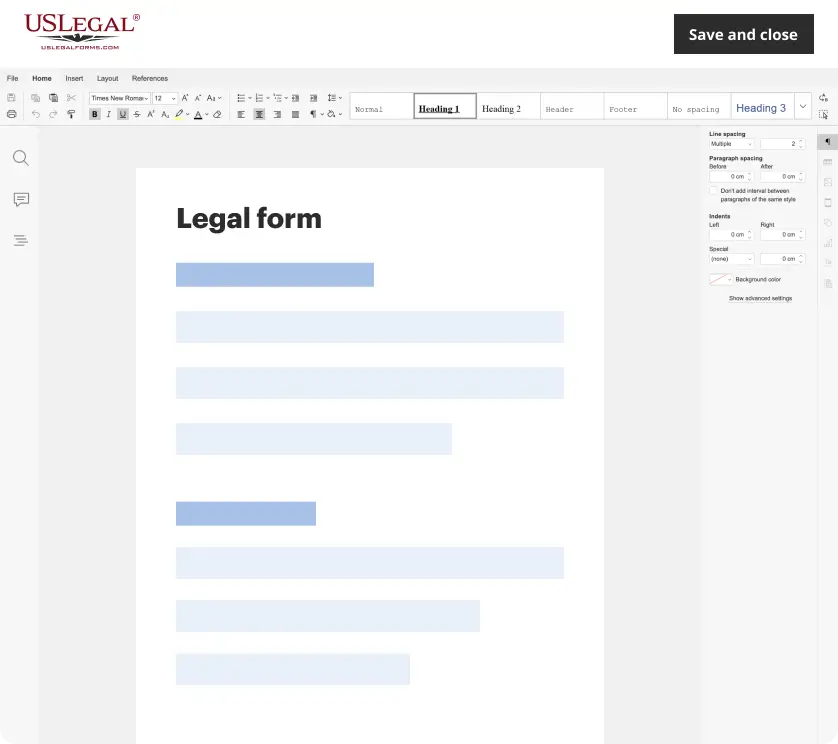
Make edits, fill in missing information, and update formatting in US Legal Forms—just like you would in MS Word.
Download a copy, print it, send it by email, or mail it via USPS—whatever works best for your next step.
Sign and collect signatures with our SignNow integration. Send to multiple recipients, set reminders, and more. Go Premium to unlock E-Sign.
If this form requires notarization, complete it online through a secure video call—no need to meet a notary in person or wait for an appointment.
We protect your documents and personal data by following strict security and privacy standards.
Looking for another form?

Form popularity
FAQ
In most states, breaks are required by law. The employer has to, by law, enforce that employees take those breaks. If they fail to do so, it opens them up to very expensive lawsuits. I recall a decade or two back, The Gap has a massive settlement in the state of California over employees working through breaks.
In the Sunshine State, there is no requirement for an employer to provide a meal period or rest break to its employees aged 18 or older. Instead, employers must adhere to the requirements of the federal Fair Labor Standards Act (FLSA), which also does not mandate a meal or rest break.
Yes, you can bring a legal claim associated with the employer not providing you with a reasonable opportunity to take your meal or rest periods.
There is no requirement under South Carolina law for an employer to provide employees with breaks or a lunch period.
The state of Florida has no daily work hours limit, so employees can work as much as they want. However, if an employee works more than 40 hours in a workweek, they are entitled to overtime compensation — unless they are exempt.
It is not legal in the US per OSHA regulations for an employer to work an employee 8 hours without a scheduled break. In fact, the OSHA rules are to be posted in every break room.
How many breaks in an 8-hour shift in South Carolina? No break requirement is in place for employees in South Carolina.
How many breaks in an 8-hour shift in South Carolina? No break requirement is in place for employees in South Carolina.