Work State Law For Breaks In King
Description
















Get your form ready online
Our built-in tools help you complete, sign, share, and store your documents in one place.
Make edits, fill in missing information, and update formatting in US Legal Forms—just like you would in MS Word.
Download a copy, print it, send it by email, or mail it via USPS—whatever works best for your next step.
Sign and collect signatures with our SignNow integration. Send to multiple recipients, set reminders, and more. Go Premium to unlock E-Sign.
If this form requires notarization, complete it online through a secure video call—no need to meet a notary in person or wait for an appointment.
We protect your documents and personal data by following strict security and privacy standards.
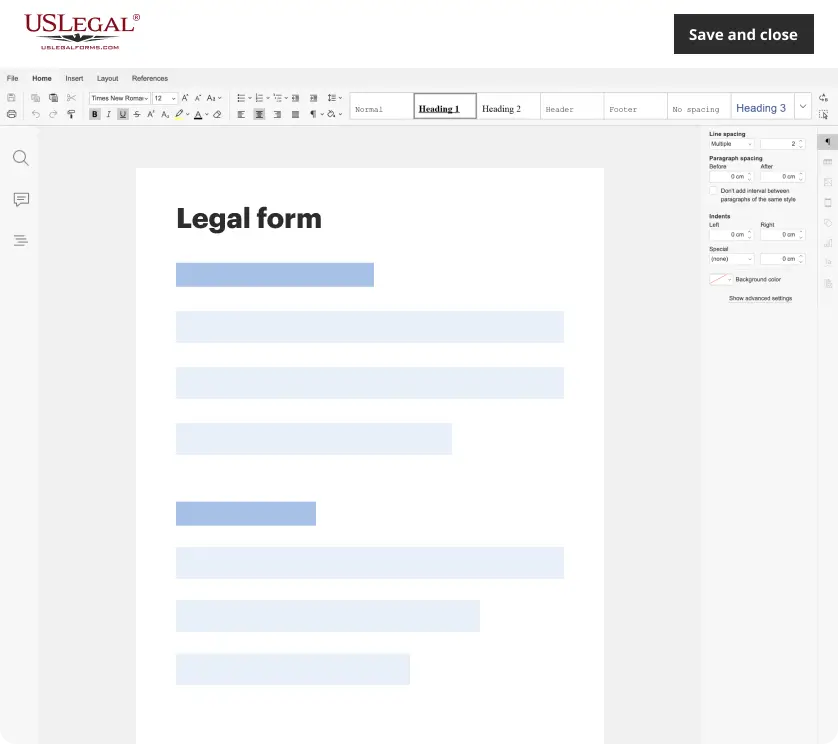
Make edits, fill in missing information, and update formatting in US Legal Forms—just like you would in MS Word.
Download a copy, print it, send it by email, or mail it via USPS—whatever works best for your next step.
Sign and collect signatures with our SignNow integration. Send to multiple recipients, set reminders, and more. Go Premium to unlock E-Sign.
If this form requires notarization, complete it online through a secure video call—no need to meet a notary in person or wait for an appointment.
We protect your documents and personal data by following strict security and privacy standards.
Looking for another form?




Form popularity
FAQ
An employee who works an eight-hour workday will often work five days a week with two days off. This is sometimes known as a full-time job or working a 9-5, which means working 8 hours a day between 9 am and 5 pm.
For an 8-hour work shift, employees are entitled to a minimum 20-minute uninterrupted break if they work more than six hours. The break should not be taken at the beginning or end of the shift, and employees must be allowed to take it away from their workstation.
UK employment law imposes an obligation to provide a continuous break of at least 20 minutes during 6 hours work. Although the UK has three different legal systems, they are all harmonised on the same national set of rules with regard to breaks at work.
No. If you would need to refuse a break, either the break is a legal requirement or part of company policy (so refusal would be a fireable offense). In many situations, such refusal creates liability issues for the employer.
For an 8-hour work shift, employees are entitled to a minimum 20-minute uninterrupted break if they work more than six hours. The break should not be taken at the beginning or end of the shift, and employees must be allowed to take it away from their workstation.
15 minute break for 4-6 consecutive hours or a 30 minute break for more than 6 consecutive hours. If an employee works 8 or more consecutive hours, the employer must provide a 30-minute break and an additional 15 minute break for every additional 4 consecutive hours worked.