Sc Labor Laws For Salaried Employees In Los Angeles
Description


















Form popularity
FAQ
In California, a full-time workweek is typically between 32 and 40 hours, although the Affordable Care Act (ACA) considers an employee at full-time status if they work 30 hours or more. There is no limit as to how many hours an exempt salaried employee can work in any given day or week.
In general, when an individual resides in California, they are subject to California's comprehensive and protective labor laws regardless of where their employer is located. California laws also apply to those who are legal residents of other states but are working in California.
Effective July 1, 2024, the salary threshold will increase to the equivalent of an annual salary of $43,888 and increase to $58,656 on Jan. 1, 2025. The July 1 increase updates the present annual salary threshold of $35,568 based on the methodology used by the prior administration in the 2019 overtime rule update.
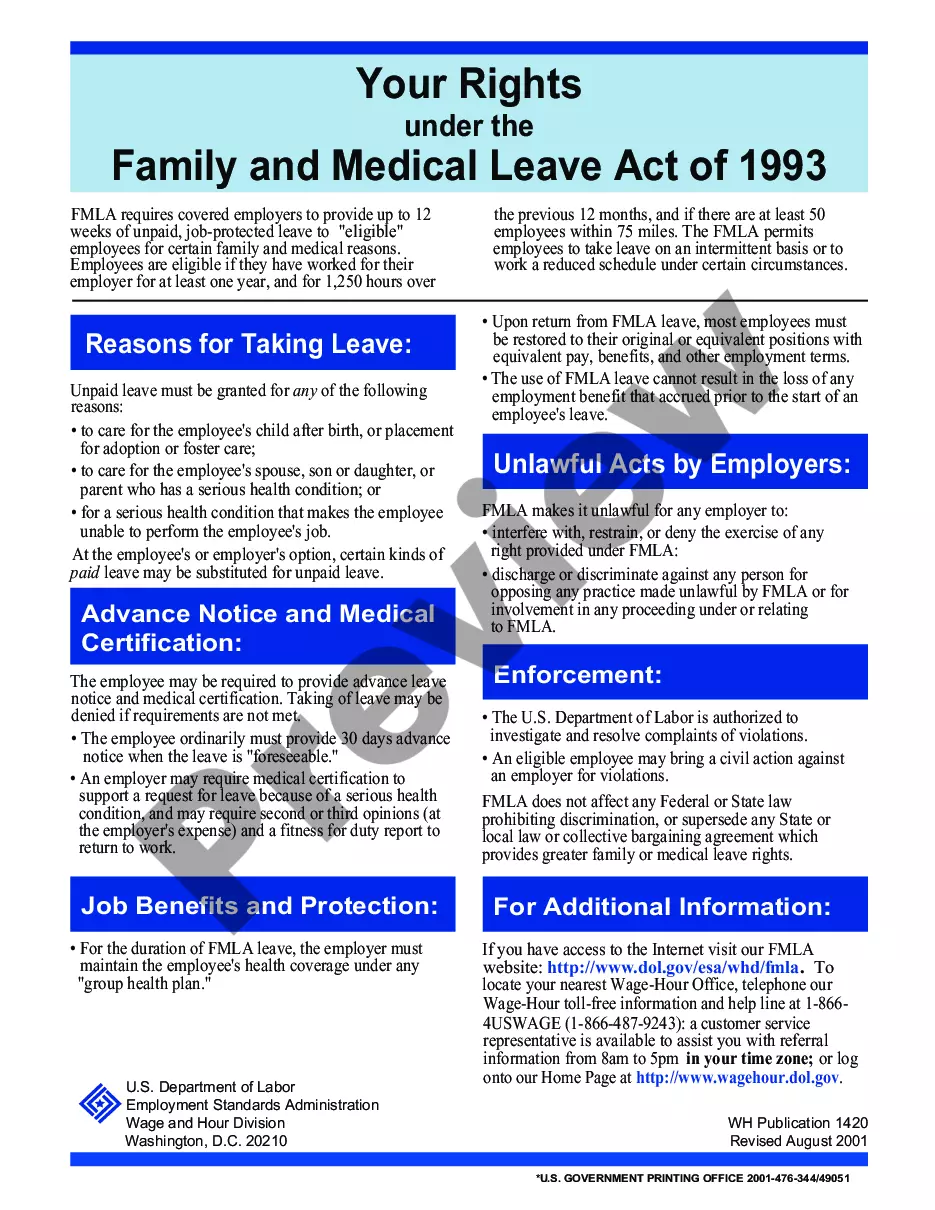
There is no requirement on the number of hours a salaried employee can work in a workweek. However, employees who worked beyond 40 hours in a workweek, qualify for overtime compensation.
WARNING SIGNS OF TOO MUCH OVERTIME One of the first indicators of excessive overtime is your wage bill. If all or most of your employee's actual wages are consistently 30–45% higher than their salary, alarm bells should be going off – especially if it's every month.
Most salaried employees don't often exceed 45-50 hours of work in a given week. If a job regularly requires more than 50 hours of weekly work, then the role is probably poorly designed. The roles, duties and responsibilities may be completed more effectively if distributed across multiple jobs.