Labour Relations Act On Dismissal In Travis
Description
















Get your form ready online
Our built-in tools help you complete, sign, share, and store your documents in one place.
Make edits, fill in missing information, and update formatting in US Legal Forms—just like you would in MS Word.
Download a copy, print it, send it by email, or mail it via USPS—whatever works best for your next step.
Sign and collect signatures with our SignNow integration. Send to multiple recipients, set reminders, and more. Go Premium to unlock E-Sign.
If this form requires notarization, complete it online through a secure video call—no need to meet a notary in person or wait for an appointment.
We protect your documents and personal data by following strict security and privacy standards.
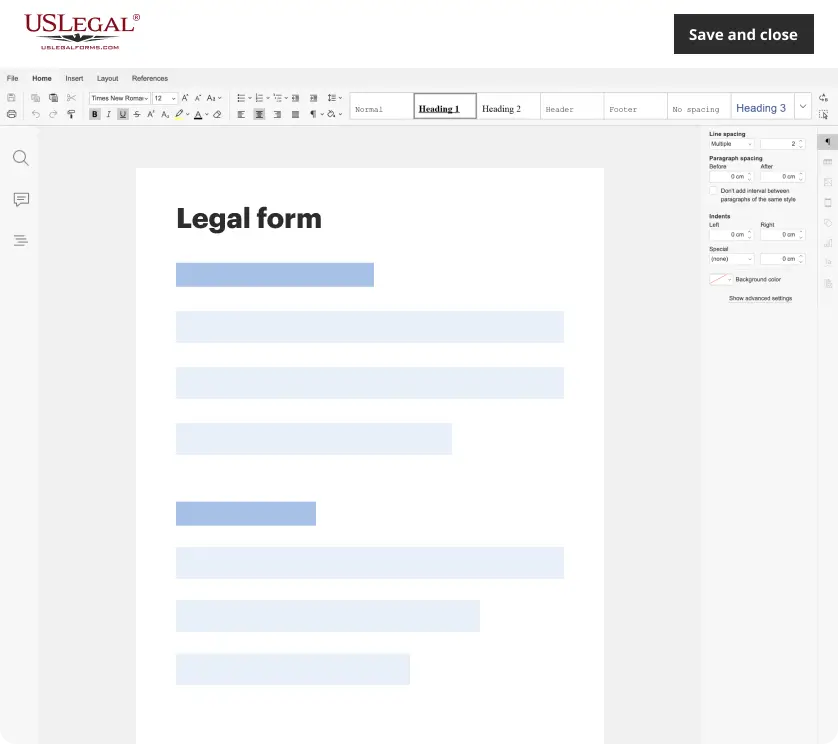
Make edits, fill in missing information, and update formatting in US Legal Forms—just like you would in MS Word.
Download a copy, print it, send it by email, or mail it via USPS—whatever works best for your next step.
Sign and collect signatures with our SignNow integration. Send to multiple recipients, set reminders, and more. Go Premium to unlock E-Sign.
If this form requires notarization, complete it online through a secure video call—no need to meet a notary in person or wait for an appointment.
We protect your documents and personal data by following strict security and privacy standards.
Looking for another form?
Form popularity
FAQ
Ing to the Acas Code, before dismissing for misconduct, an employer should: Investigate the issues. Inform the employee of the issues in writing. Conduct a disciplinary hearing or meeting with the employee.
(1) A person has been dismissed if: (a) the person's employment with his or her employer has been terminated on the employer's initiative; or. (b) the person has resigned from his or her employment, but was forced to do so because of conduct, or a course of conduct, engaged in by his or her employer.
Dismissal due to misconduct – this is the most common form of dismissal. In this instance, the employee has done something wrong. Dismissal due to incapacity – this dismissal can take 2 forms – poor work performance or ill health. Dismissal for operational requirements – retrenchments.
Acceptable Reasons for Termination Incompetence, including lack of productivity or poor quality of work. Insubordination and related issues such as dishonesty or breaking company rules. Attendance issues, such as frequent absences or chronic tardiness. Theft or other criminal behavior including revealing trade secrets.
Section 188 (1) of the LRA states that a dismissal which is not automatically unfair is still unfair if the employer fails to prove – (a) That the reason for the dismissal is a fair reason – (i) Related to the employee's conduct or capacity; or (ii) Based on the employer's operational requirements; and (iii) That the ...
Noun. an act or instance of dismissing. the state of being dismissed. a spoken or written order of discharge from employment, service, enrollment, etc.
Section 186 (1) of the LRA gives the following meaning to the term “dismissal” – An employer has terminated employment with or without notice; An employee employed in terms of a fixed term contract of employment reasonably expected the employer –
