Settlement Confirmation Letter Without Prejudice In Mecklenburg
Description

Get your form ready online
Our built-in tools help you complete, sign, share, and store your documents in one place.
Make edits, fill in missing information, and update formatting in US Legal Forms—just like you would in MS Word.
Download a copy, print it, send it by email, or mail it via USPS—whatever works best for your next step.
Sign and collect signatures with our SignNow integration. Send to multiple recipients, set reminders, and more. Go Premium to unlock E-Sign.
If this form requires notarization, complete it online through a secure video call—no need to meet a notary in person or wait for an appointment.
We protect your documents and personal data by following strict security and privacy standards.
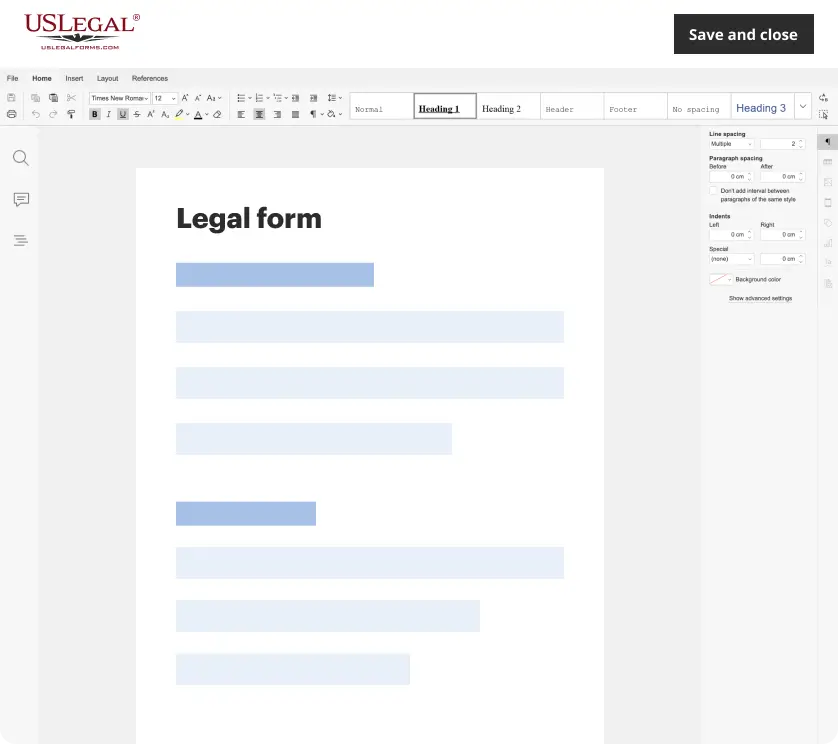
Make edits, fill in missing information, and update formatting in US Legal Forms—just like you would in MS Word.
Download a copy, print it, send it by email, or mail it via USPS—whatever works best for your next step.
Sign and collect signatures with our SignNow integration. Send to multiple recipients, set reminders, and more. Go Premium to unlock E-Sign.
If this form requires notarization, complete it online through a secure video call—no need to meet a notary in person or wait for an appointment.
We protect your documents and personal data by following strict security and privacy standards.
Looking for another form?
Form popularity
FAQ
A without prejudice offer can be used to resolve a legal dispute by enabling parties to make settlement offers without the risk of those offers being used against them in court. This protection encourages parties to engage in genuine negotiations to reach a settlement.
Without Prejudice Meaning The basic meaning of 'without prejudice' is that statements made in the settlement of an existing dispute cannot be relied upon as evidence against the interests of the relevant party if negotiations fail and the parties then have to formally engage in a dispute resolution procedure.
My client accepts the formal apology without prejudice to any further legal action she may decide to take. We asked for the motion to be withdrawn without prejudice to it being renewed at a future date.
Mediation privilege is a proposed extension of without prejudice privilege, which would, for example, prevent an ADR mediator from being compelled to give evidence on the mediation process. This form of the privilege would be absolute, in that it cannot be waived even where both parties agree.
The without prejudice (WP) rule will generally prevent statements made in a genuine attempt to settle an existing dispute, whether made in writing or orally, from being put before the court as evidence of admissions against the interests of the party which made them.
In the context of mediation, “without prejudice” means that the parties are able to propose and explore possible solutions to the dispute under consideration without having to worry that their discussions will in some way be regarded as an admission should the parties not reach an agreement.
The purpose of the without prejudice rule is to encourage parties to a dispute to try and reach a settlement by allowing them and their legal advisers to speak freely and make concessions knowing that their words cannot be used against them later in court if the negotiations fail to achieve settlement.