Nonprofit Profit Board Resolution Template For Responsibilities In San Antonio
Description

Form popularity
FAQ
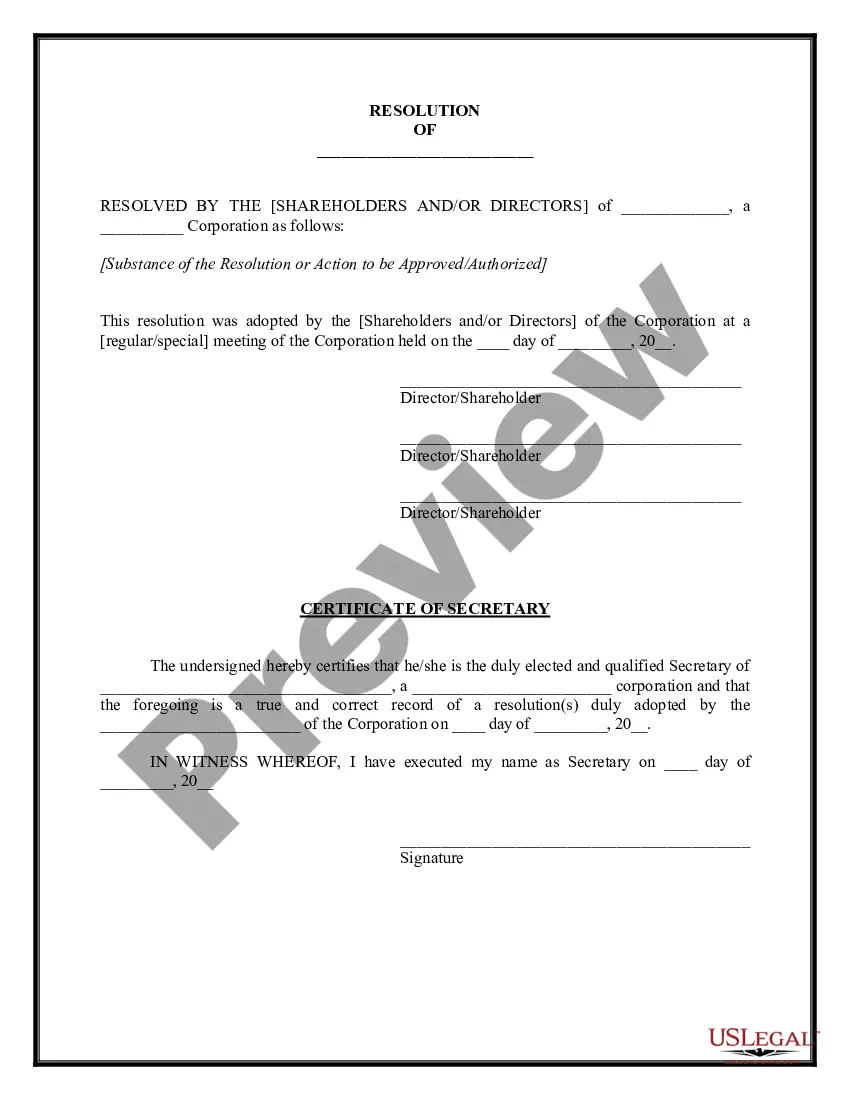
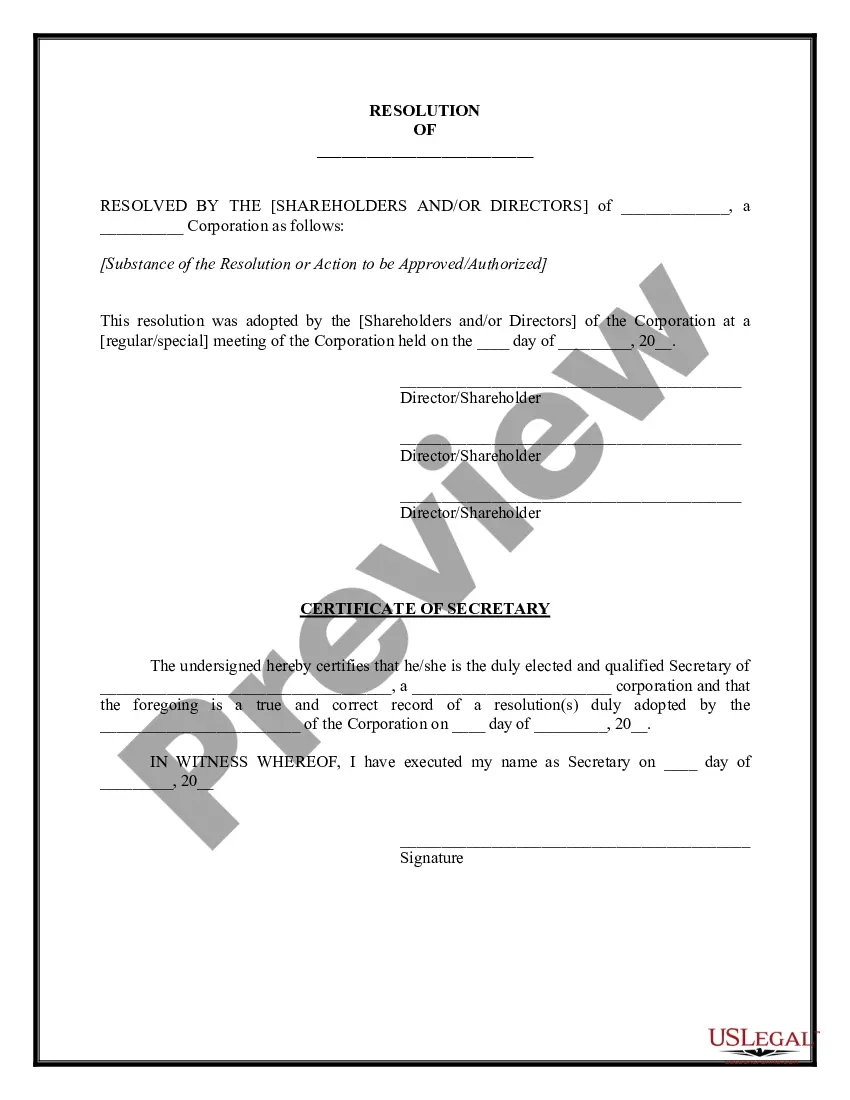
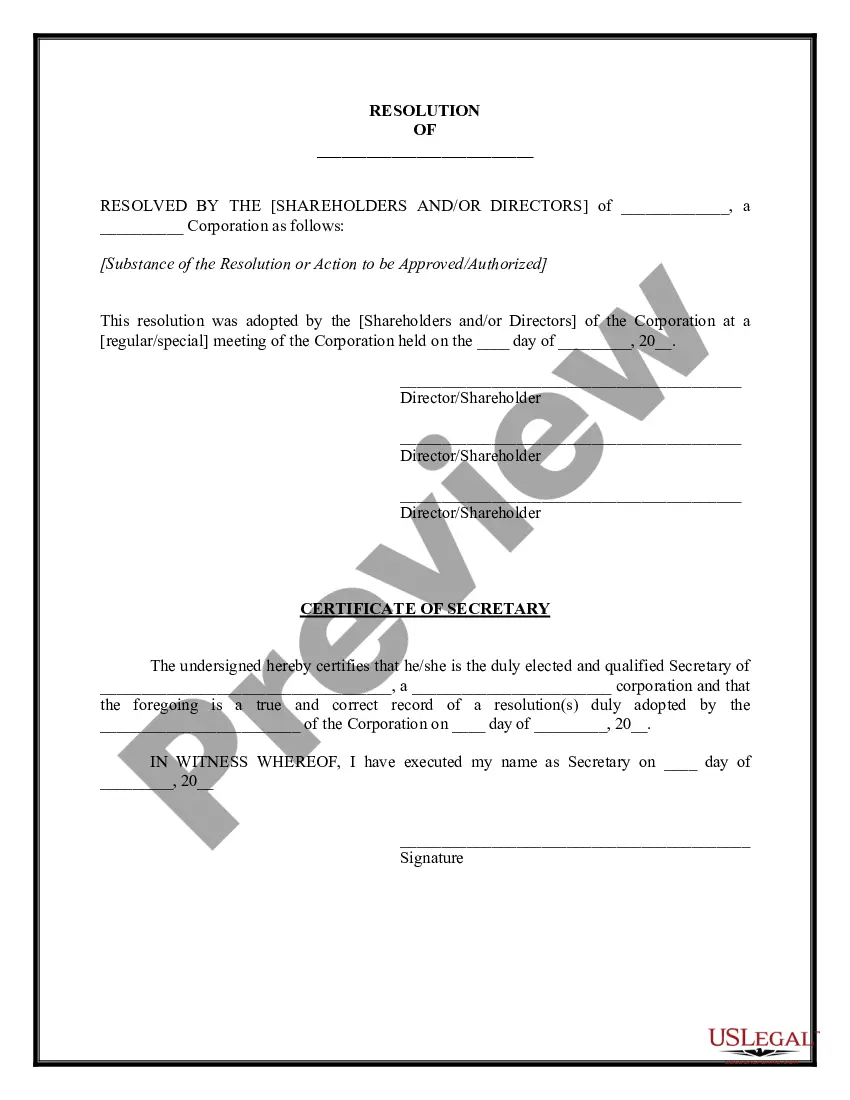
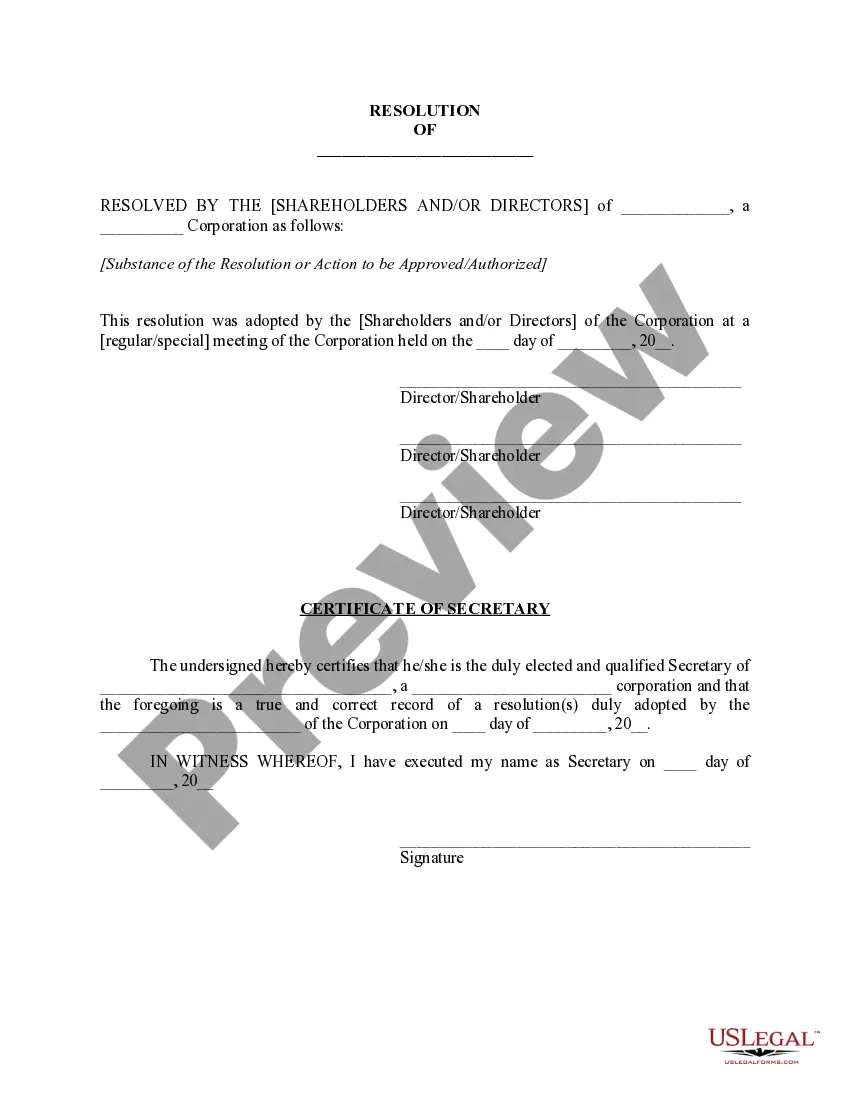
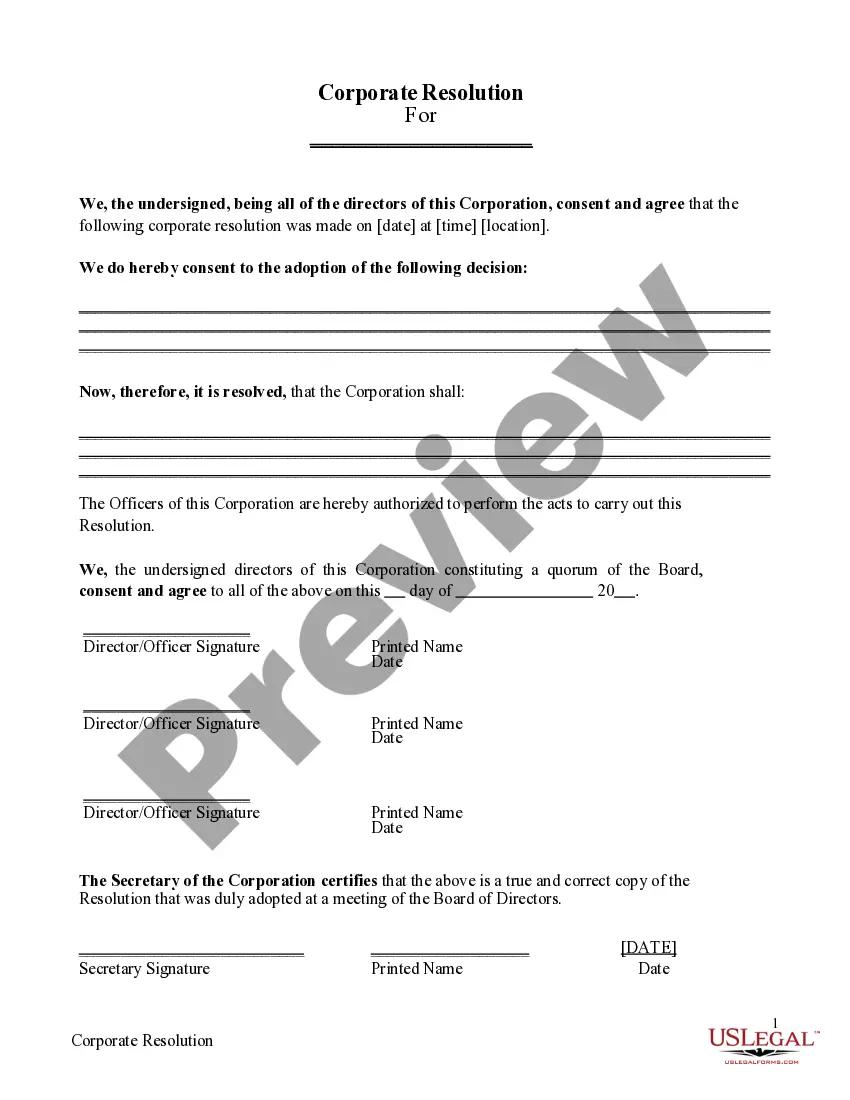
How to fill out a resolution of the board of directors? Date, time, and location of the meeting. Title that describes the board's decision to be made. Statement of majority or unanimous decision. Resolution of the decision, including any necessary actions. Officers responsible for carrying out the resolution.
The main purpose of for-profit and nonprofit entities is starkly different, but they also share one important similarity. For-profit corporations serve their shareholders, and board directors are accountable to them. Nonprofit board members serve the members of their organization, their cause and their communities.
How to write a board resolution Put the date and resolution number at the top. Give the resolution a title that relates to the decision. Use formal language. Continue writing out each critical statement. Wrap up the heart of the resolution in the last statement.
Under the law that guides nonprofit corporations, nonprofit board members have the legal responsibility to meet their duties of care, loyalty, and obedience.
Just as for any corporation, the board of directors of a nonprofit has three primary legal duties known as the “duty of care,” “duty of loyalty,” and “duty of obedience.”
A board governance/board development committee sets the pace, creates systems to wire in accountability, and ensures that the rules established for board members are followed, including ensuring that all nonprofit funds are accounted for in a transparent and compliant manner.
Nonprofit board members have the legal responsibility to meet the duty of care, the duty of loyalty, and the duty of obedience. Under well-established principles of nonprofit corporation law, a board member must meet certain standards of conduct and attention in carrying out their responsibilities to the organization.
What are the main functions of a board of directors? There are 3 main areas that a board of directors focuses their work: governance, strategic direction and accountability.