Notice Of Discovery Form Florida In California
Description



Form popularity
FAQ
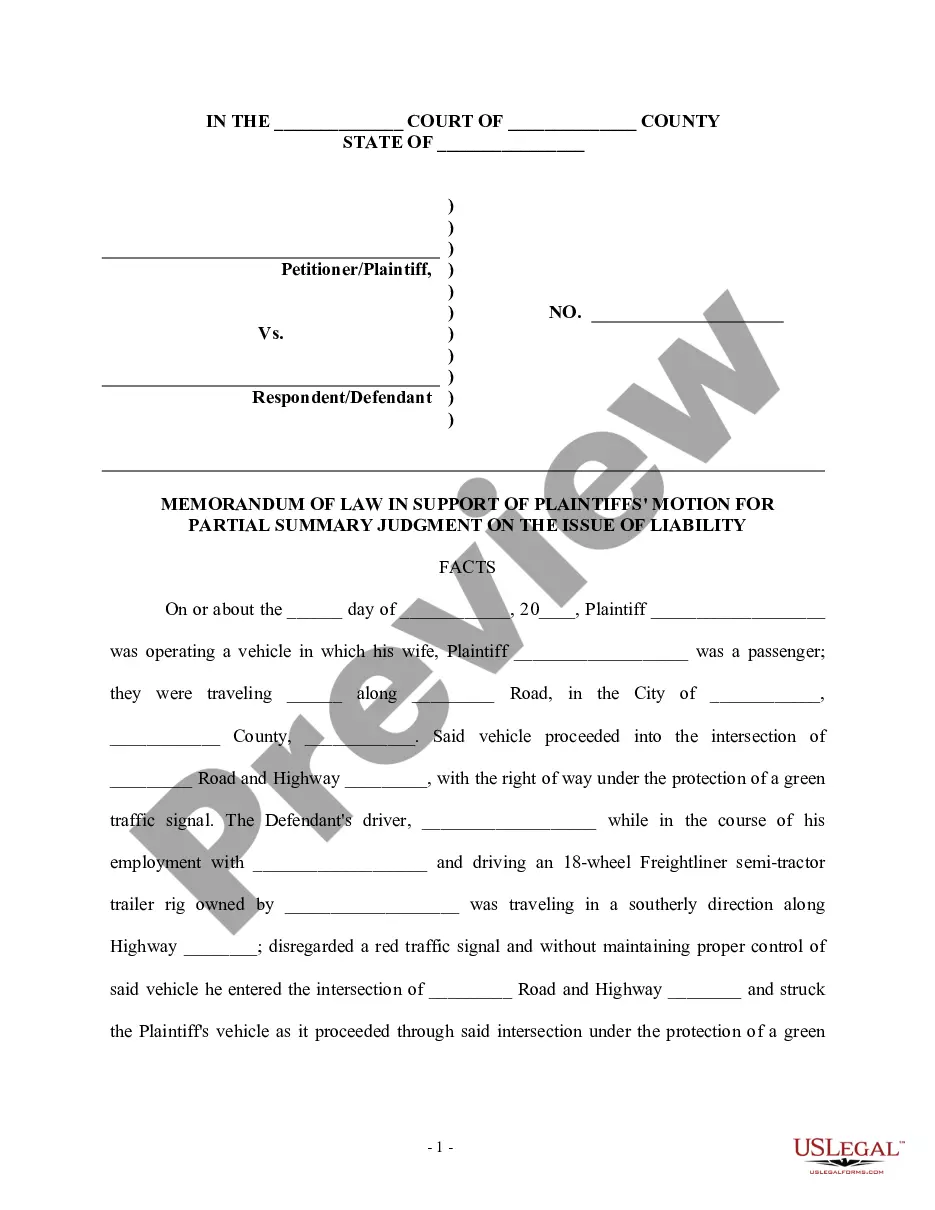
Parties are entitled to demand information “reasonably calculated to lead to admissible evidence.” Discovery procedures take place outside of court and the paperwork is only filed if the parties cannot resolve disputes between themselves.
If the parties are having a dispute, either party can file a motion with the court asking the judge to order the other side to respond to discovery requests or punish the other side for failing to respond to discovery requests or for making unreasonable discovery requests.
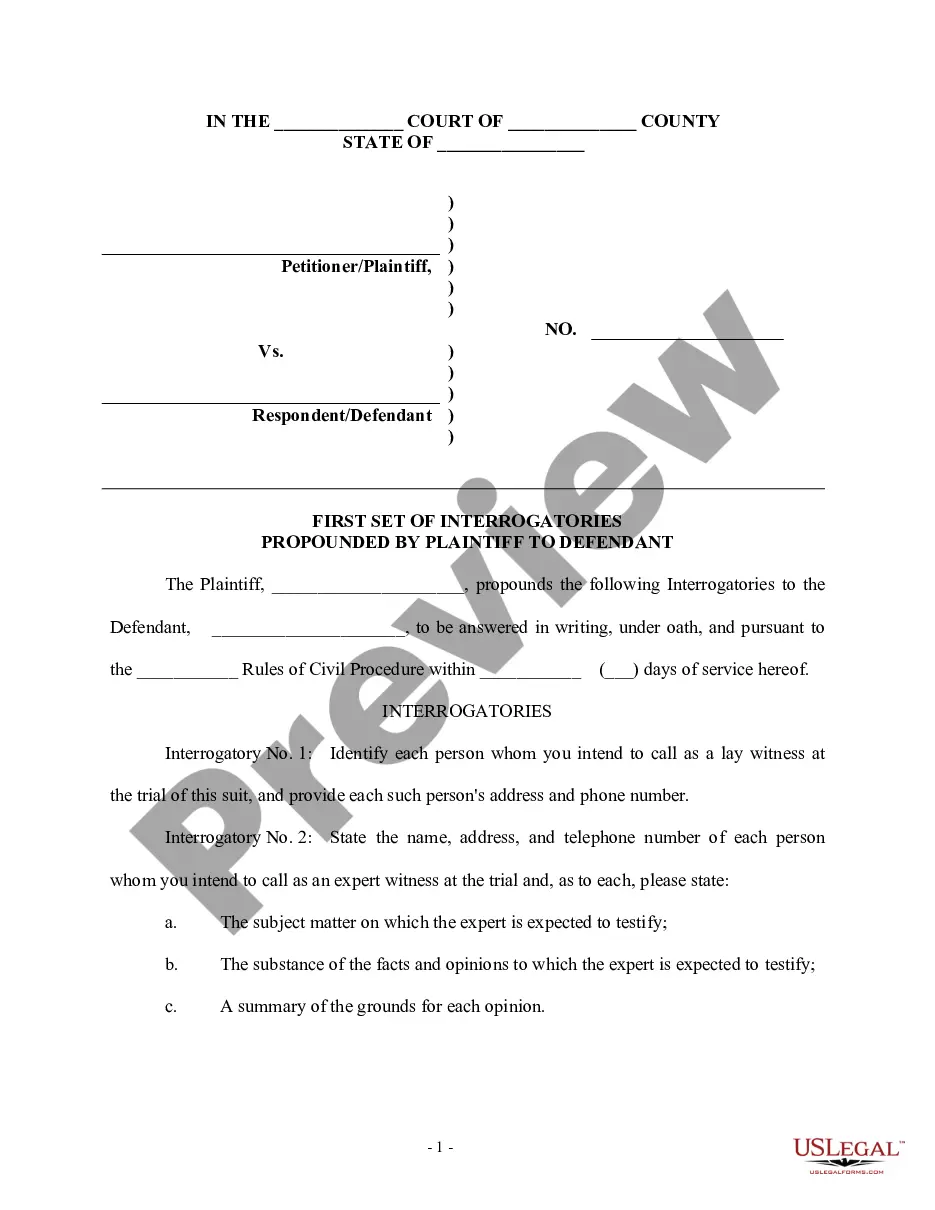
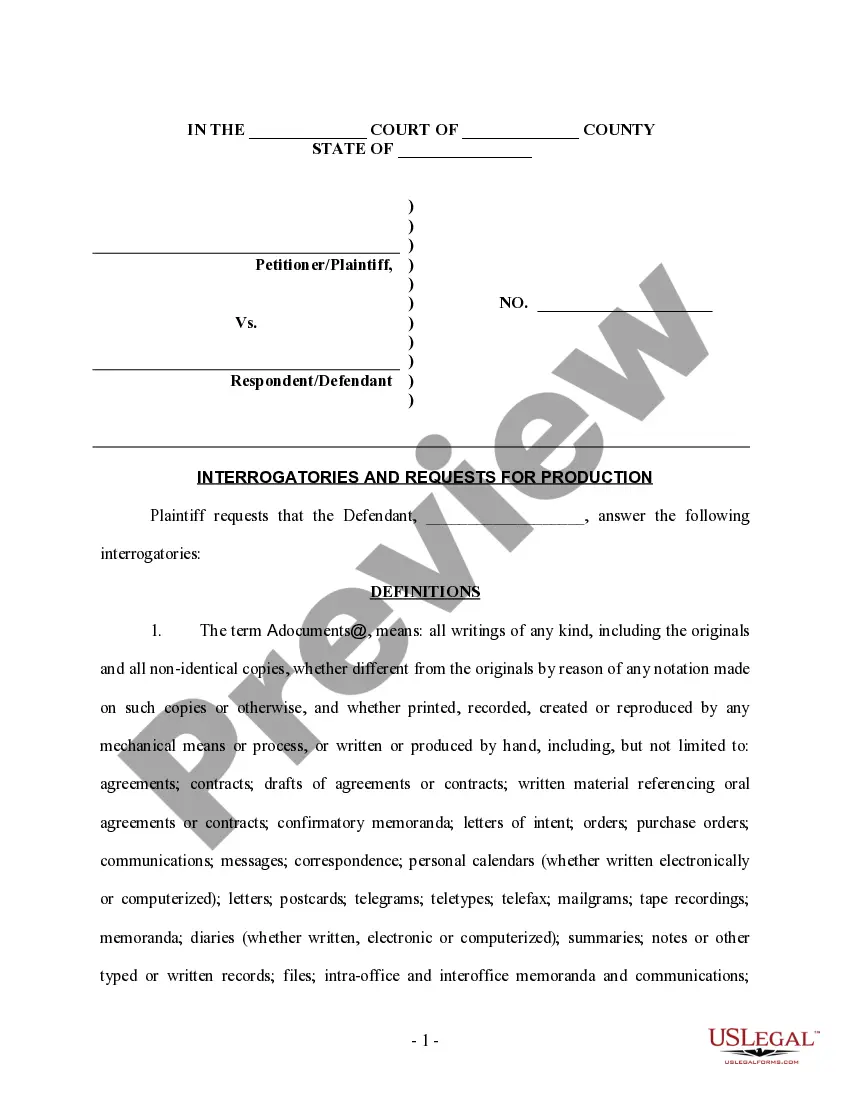
Steps Of The Discovery Process. There are four key actions in the discovery process which include interrogatories, request for documents, request for admissions, and depositions.
Parties usually send their discovery requests and responses to the other party electronically, by email. But, parties may also send or respond to discovery requests by U.S. mail or a parcel service. Discovery requests and responses should not be sent to the Administrative Judge, except to support a motion.
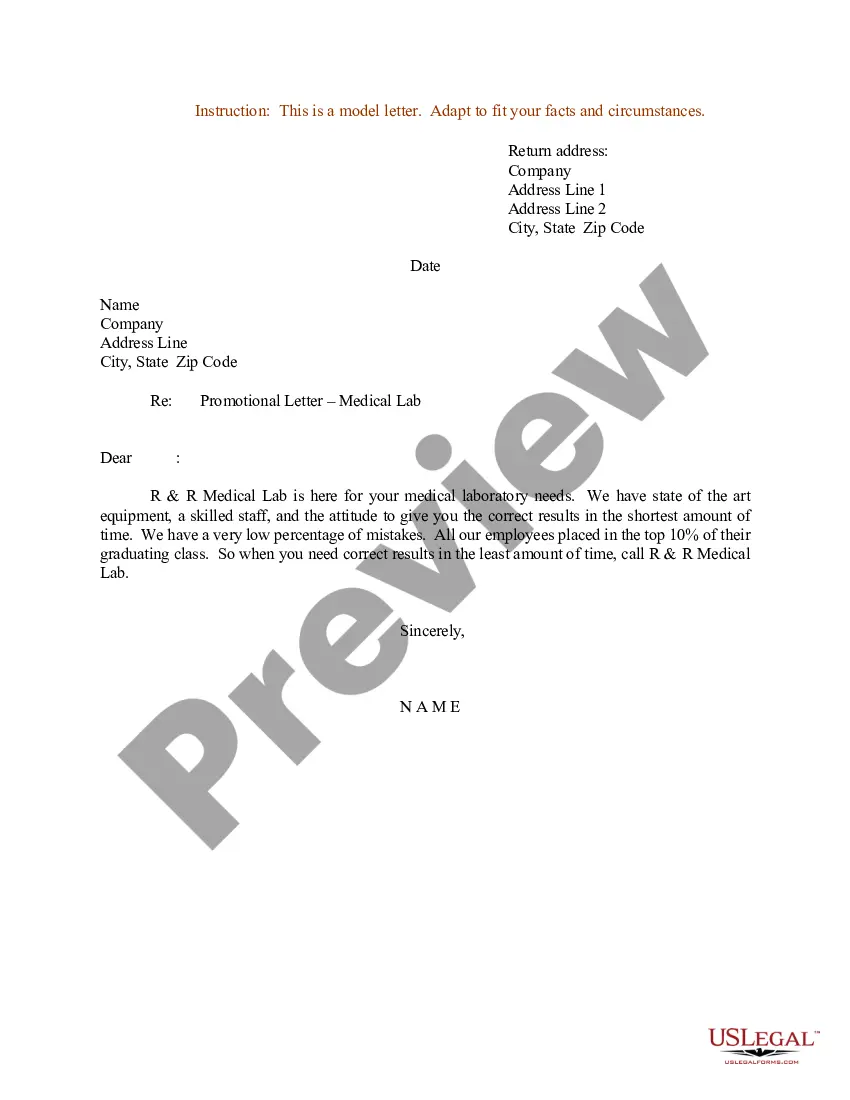
In certain cases, you might be able to write a letter to the other side and request the documents that you need. However, in more formal cases, you will likely have to draft more formal discovery demands. There are usually forms available for this in local law libraries, from the court clerk's office, or online.
Discovery is how you gather the evidence you will need to prove your case as plaintiff, or defeat the plaintiff's case as a defendant. You use discovery to find out things like: What the other side plans to say about an issue in your case. What facts or witnesses support their side.
Form Interrogatories—Family Law (FL-145) Tell your spouse or domestic partner to answer specific questions and give documents before trial. Get form FL-145.
Complete California State DE-4 Form Select Form DE-4 tab. Review your Full Name and Home Address. Select your Filing Status. Enter the Number of allowances you wish to claim in Section 1. Enter any Additional amount you want withheld from each paycheck in Section 2.
Your response for each request must include either an agreement to comply, a representation of your ability to reply, or an objection to all or part of the request. California Code of Civil Procedure (CCP) §§ 2031.210 et. seq require specific statements in your response.