Service Interrogatories With Multiple Parties In California
Description


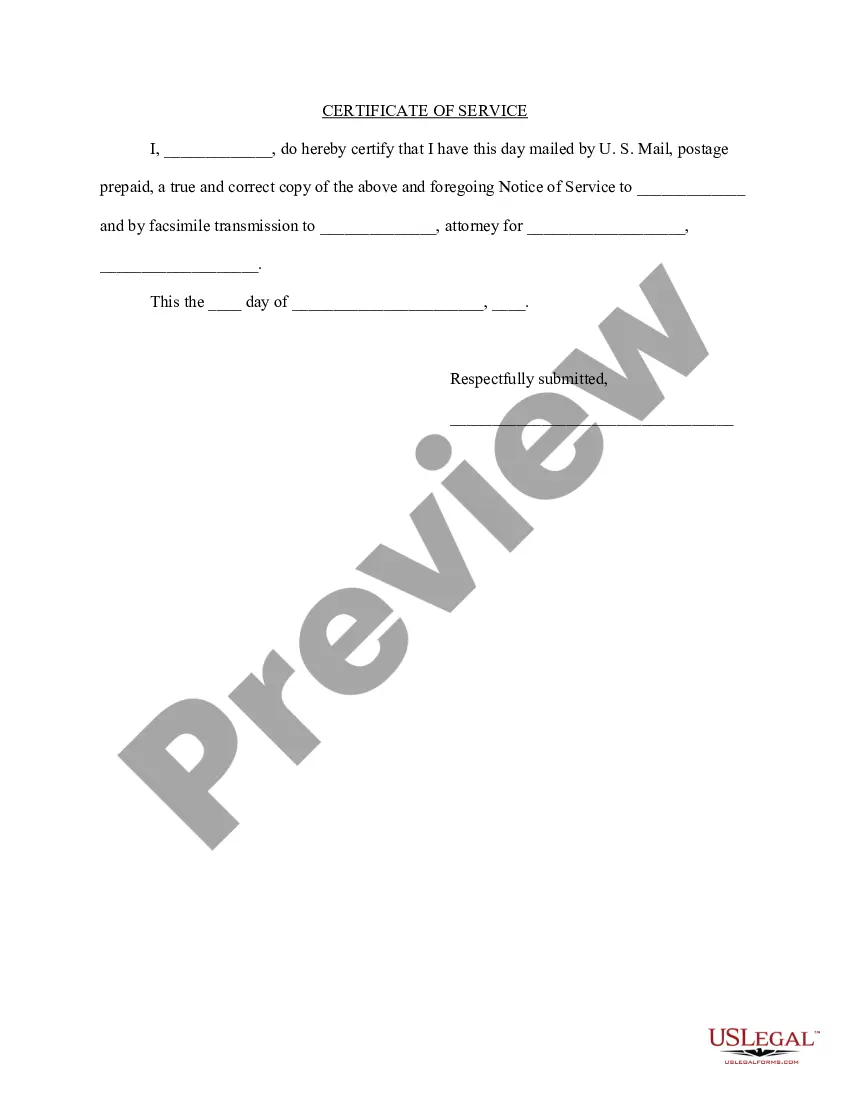
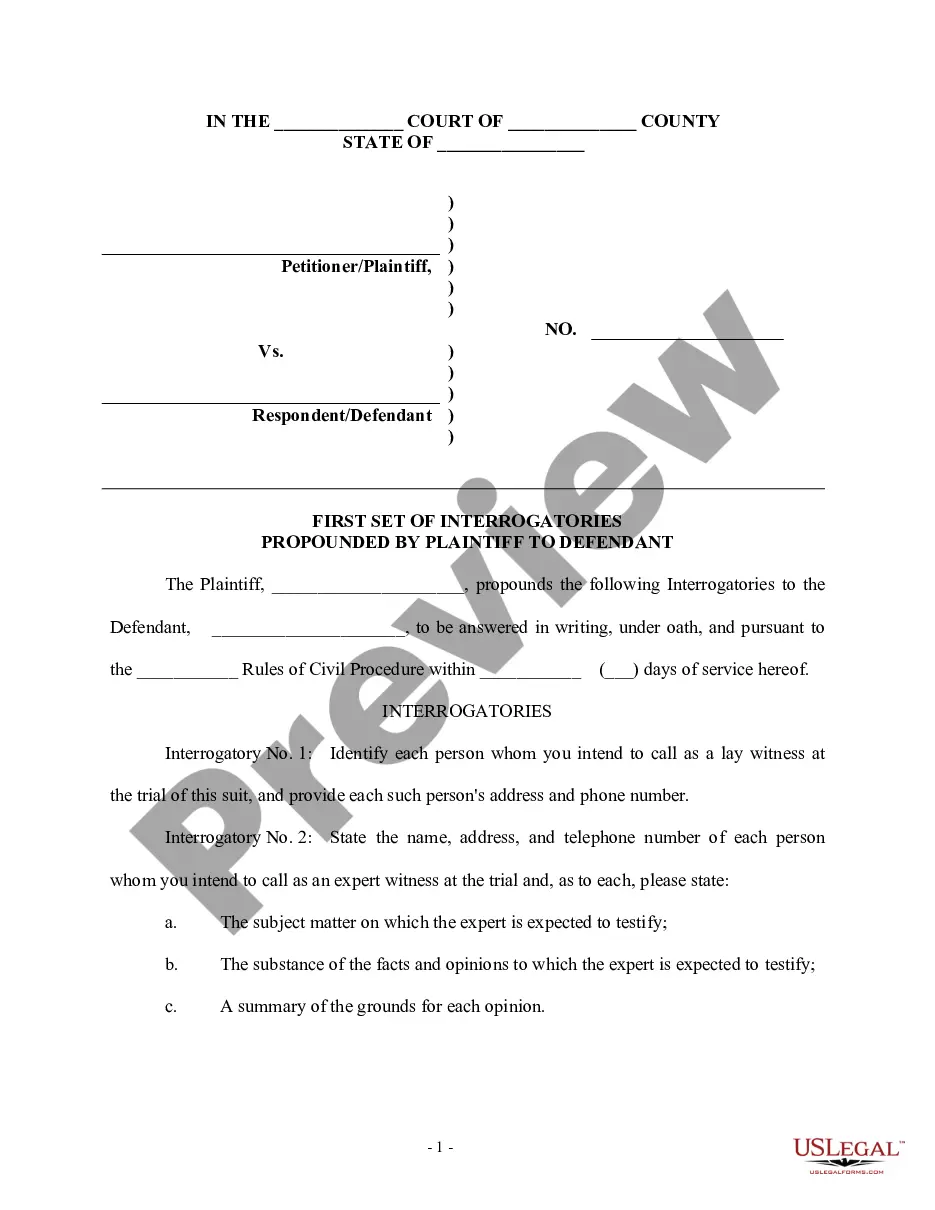

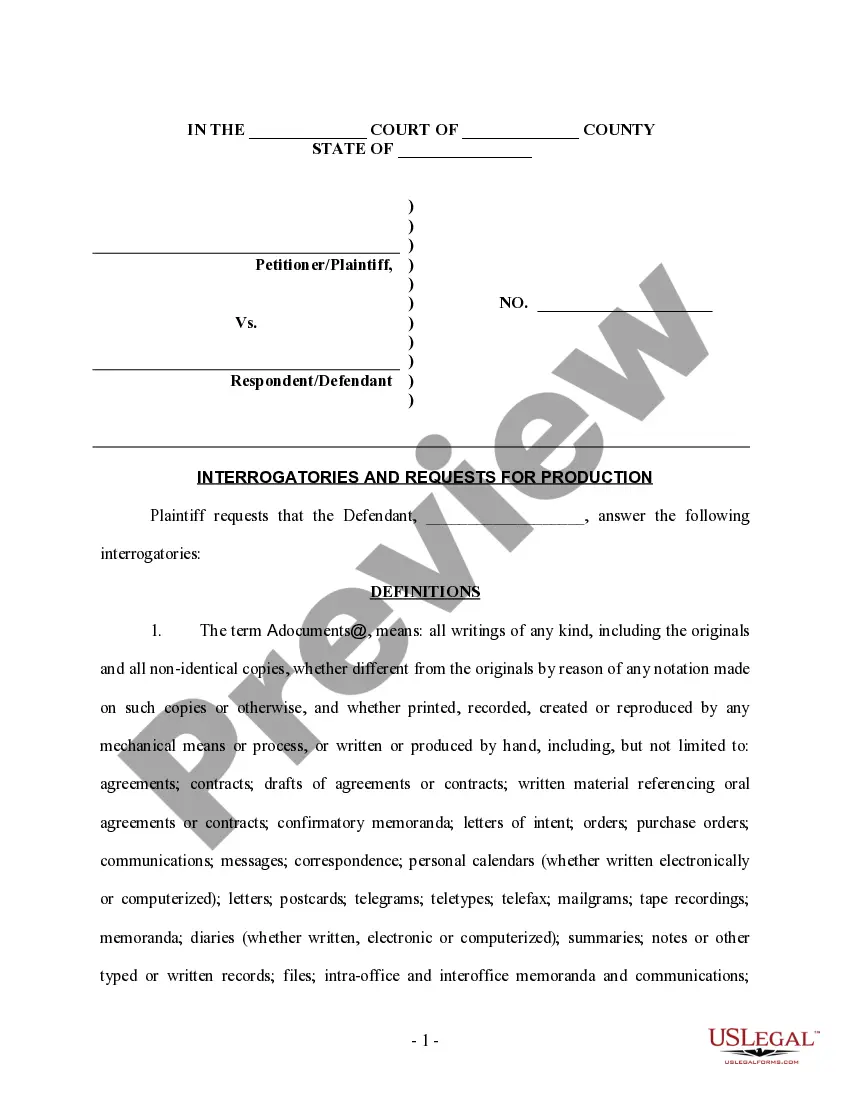
Get your form ready online
Our built-in tools help you complete, sign, share, and store your documents in one place.
Make edits, fill in missing information, and update formatting in US Legal Forms—just like you would in MS Word.
Download a copy, print it, send it by email, or mail it via USPS—whatever works best for your next step.
Sign and collect signatures with our SignNow integration. Send to multiple recipients, set reminders, and more. Go Premium to unlock E-Sign.
If this form requires notarization, complete it online through a secure video call—no need to meet a notary in person or wait for an appointment.
We protect your documents and personal data by following strict security and privacy standards.

Make edits, fill in missing information, and update formatting in US Legal Forms—just like you would in MS Word.

Download a copy, print it, send it by email, or mail it via USPS—whatever works best for your next step.

Sign and collect signatures with our SignNow integration. Send to multiple recipients, set reminders, and more. Go Premium to unlock E-Sign.

If this form requires notarization, complete it online through a secure video call—no need to meet a notary in person or wait for an appointment.

We protect your documents and personal data by following strict security and privacy standards.
Looking for another form?



Form popularity
FAQ
(b) Except as provided in Section 2030.070, no party shall, as a matter of right, propound to any other party more than 35 specially prepared interrogatories. If the initial set of interrogatories does not exhaust this limit, the balance may be propounded in subsequent sets.
You have to respond to interrogatories in writing to the best of your ability. If you do not answer an interrogatory question, and then the other side learns that you did in fact know the answer, it could have a negative impact on your case at trial.
The parties may also agree on the number of questions on their interrogatories subject to the court's approval. Interrogatories are limited to the parties in a certain case. Thus, nonparties are not obligated to respond to interrogatories.
Unless otherwise stipulated or ordered by the court, a party may serve on any other party no more than 25 written interrogatories, including all discrete subparts.
If your case is a limited civil case ($35,000 or less) you can request up to a total of 35 combined request for admissions, form interrogatories , special interrogatories, and requests for production.
If your case is an unlimited civil case (over $35,000) you may ask up to 35 special interrogatories, but may ask more with a declaration explaining the need for additional requests and a statement that the request is not done for an improper purpose.
You have 30 days from the date the requests were served to serve your written response. Your response for each request must include either an agreement to comply, a representation of your ability to reply, or an objection to all or part of the request. California Code of Civil Procedure (CCP) §§ 2031.210 et.
Beginning on January 1, 2024, parties will be required to make initial witness and document disclosures within 60 days of another party's request. Failure to comply or act in good faith with the new law will result in a court-imposed sanction of $1,000.
All discovery must be completed not later than 15 days before the date set for the arbitration hearing unless the court, upon a showing of good cause, makes an order granting an extension of the time within which discovery must be completed.