Service Interrogatories With Documents In Florida
Description





Form popularity
FAQ
A party may object to interrogatories when being required to answer would result in “unwarranted annoyance, embarrassment, or oppression, or undue burden and expense.” (Code Civ. Proc., § 2023.010(c).) This can result from requiring disclosure of information that's constitutionally protected. See, e.g., Britt v.
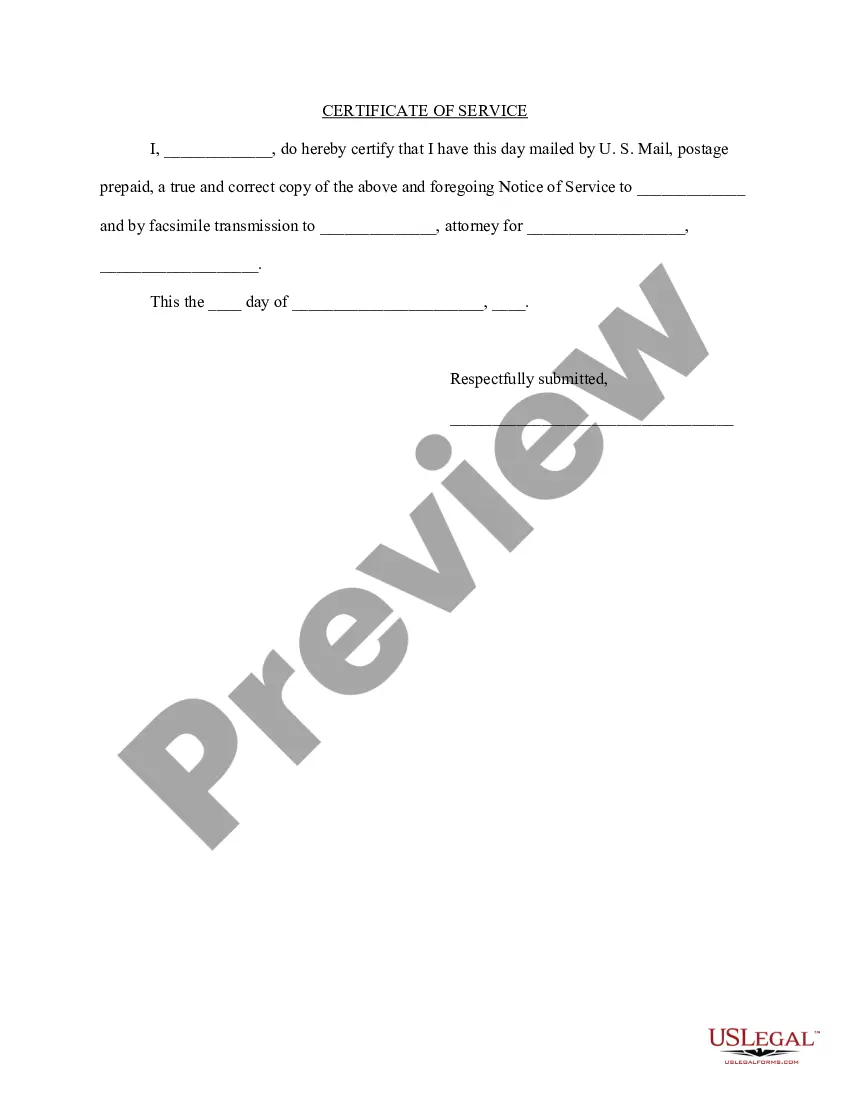
The interrogatories must be served on the party to whom the interrogatories are directed and copies must be served on all other parties. A certificate of service of the interrogatories must be filed, giving the date of service and the name of the party to whom they were directed.
No Early Discovery. Under the new rules, you can't conduct additional discovery until you've served your initial disclosures. That means no depositions, interrogatories, or document requests will fly until you've handed over your required info. Waiting could stall your defense strategy.
Fill out Proof of Service form You can use Proof of Service by Mail (form FL-335). It helps if you fill in the top part of the form with the case and court information. Your server can then fill in the information about how, when, and where they served the papers. Your server must then sign the form.
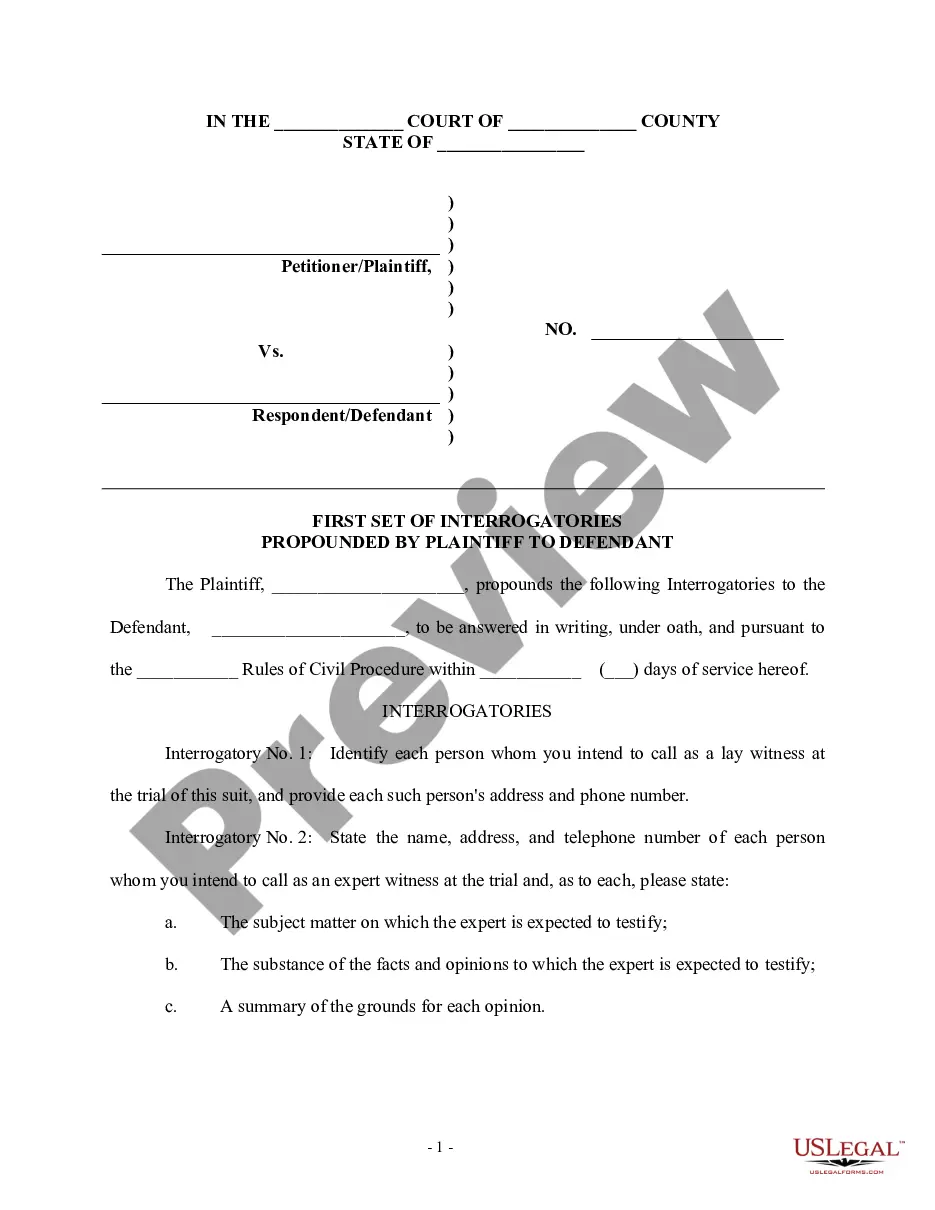
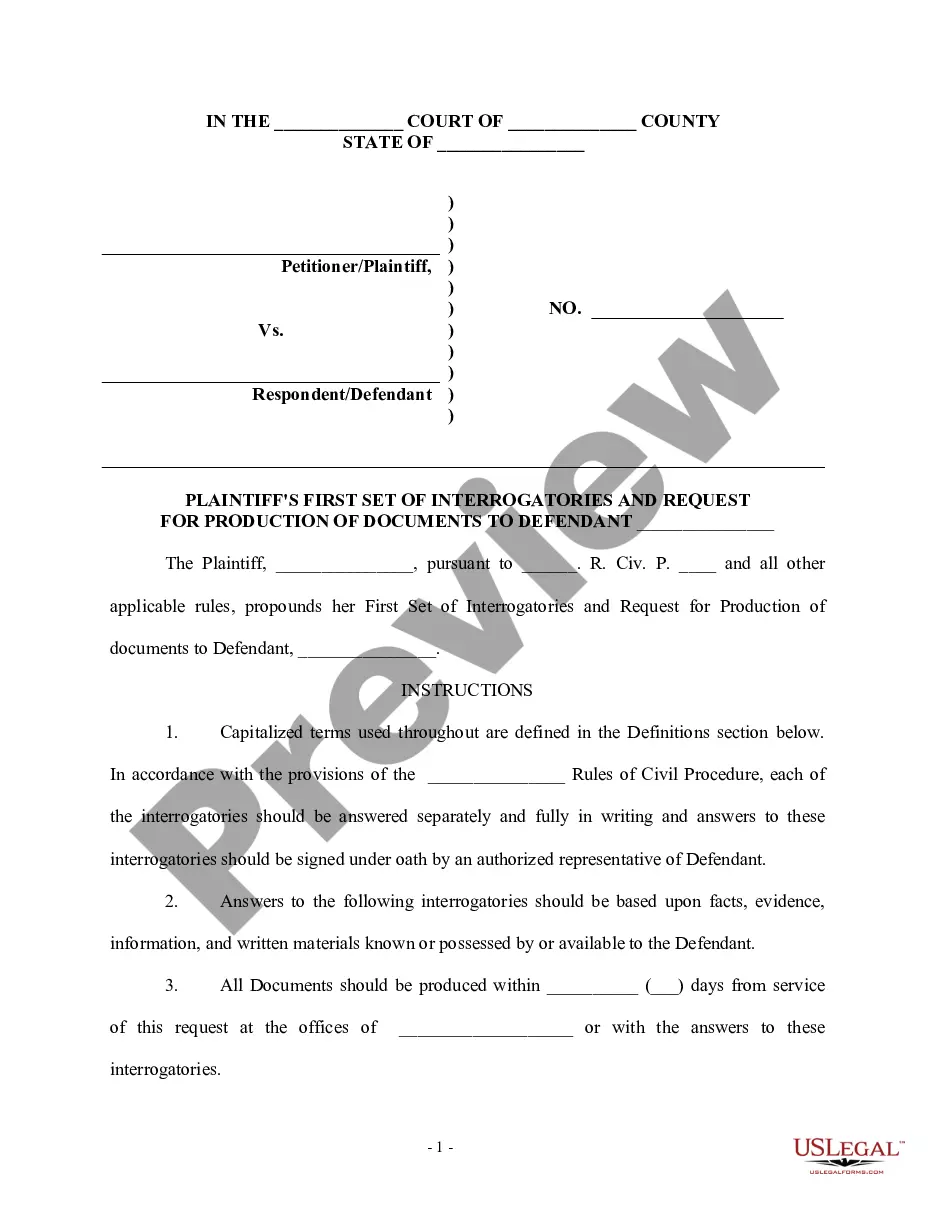
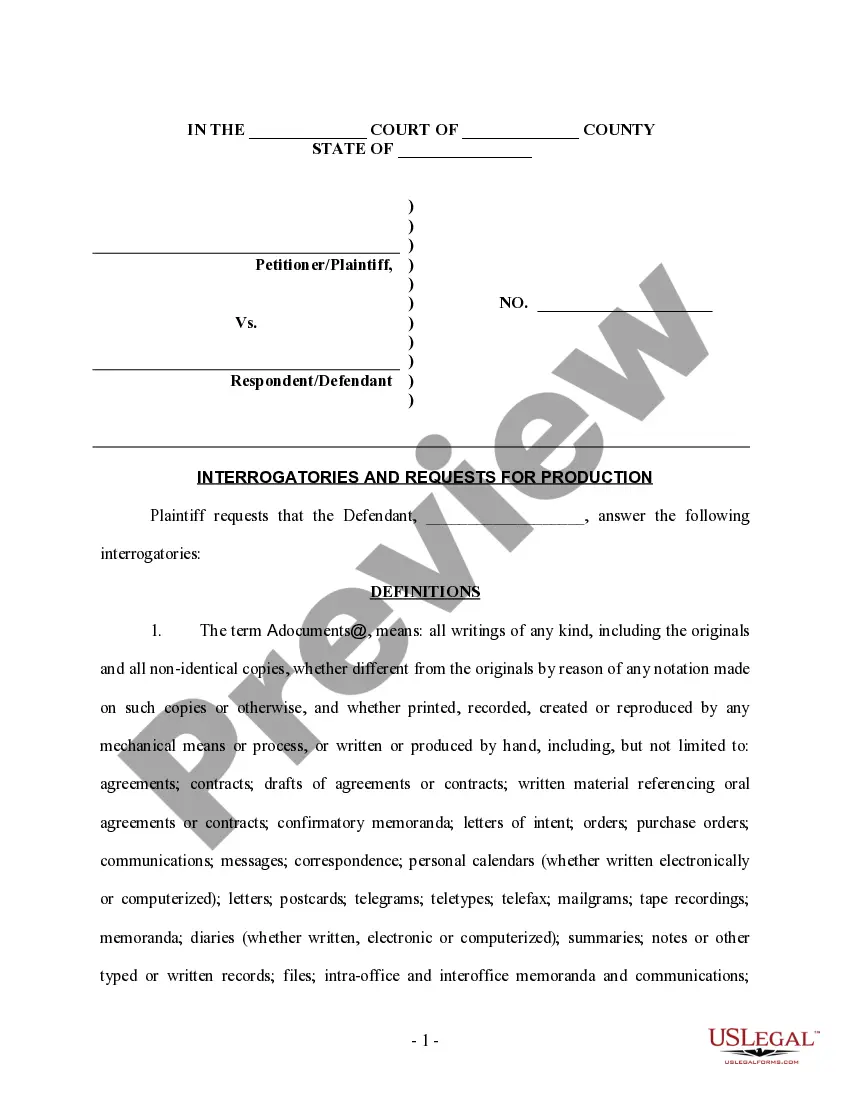
For interrogatories, action words such as “list,” “describe,” “identify,” or “state” are very useful. You may ask the other side to identify a document but you cannot use this form of discovery to get them to give it to you. Requesting documents requires a different kind of discovery process.
Good evening. There are two things to remember when answering interrogatories...i) answer only the exact question asked with as few words as possible without expanding on anything; and ii) answer as irrelevant anything you don't really want to address.
(7) Each interrogatory must be answered separately and fully in writing under oath unless it is objected to, in which event the grounds for objection must be stated and signed by the attorney making it. (8) The grounds for objecting to an interrogatory must be stated with specificity, including the reasons.
Parties must serve responses to interrogatories on the requesting party. Responses must not be filed with the court unless they are admitted into evidence by the court and are in compliance with Florida Rule of General Practice and Judicial Administration 2.425.
Under the Federal Rules and parallel state rules, litigants may use what are called “contention interrogatories” to explore adversaries' factual support for their legal contentions. Courts normally regulate the timing of those, generally prohibiting litigants from using that tactic too early in the discovery process.
The original or any copy of the answers to interrogatories may be filed in compliance with Florida Rule of Judicial Administration 2.425 and rule 1.280(g) by any party when the court should consider the answers to interrogatories in determining any matter pending before the court.