Service Interrogatories With Questions In Florida
Description




Get your form ready online
Our built-in tools help you complete, sign, share, and store your documents in one place.
Make edits, fill in missing information, and update formatting in US Legal Forms—just like you would in MS Word.
Download a copy, print it, send it by email, or mail it via USPS—whatever works best for your next step.
Sign and collect signatures with our SignNow integration. Send to multiple recipients, set reminders, and more. Go Premium to unlock E-Sign.
If this form requires notarization, complete it online through a secure video call—no need to meet a notary in person or wait for an appointment.
We protect your documents and personal data by following strict security and privacy standards.

Make edits, fill in missing information, and update formatting in US Legal Forms—just like you would in MS Word.

Download a copy, print it, send it by email, or mail it via USPS—whatever works best for your next step.

Sign and collect signatures with our SignNow integration. Send to multiple recipients, set reminders, and more. Go Premium to unlock E-Sign.

If this form requires notarization, complete it online through a secure video call—no need to meet a notary in person or wait for an appointment.

We protect your documents and personal data by following strict security and privacy standards.
Looking for another form?

Form popularity
FAQ
In California, you have 30 days to respond to an interrogatory. If you do not respond within this time, the opposing side can file a motion to compel with the court. The court may require them to first consult with you about your failure to respond before officially filing a motion to compel.
Under the Florida Rules of Civil Procedure, Rule 1.340, any party may serve upon any other party written interrogatories to be answered 1) by the party the interrogatories are directed to or 2) if that party is a public or private corporation, a partnership or association, or a governmental agency, by any officer or ...
Interrogatories allow the parties to ask who, what, when, where and why questions, making them a good method for obtaining new information.
Definition of Interrogatories in Civil Procedures One way to get information about a case is to serve interrogatories. Interrogatories are written questions to be answered.
When a party to a civil case needs to get information from the other side, she can serve the other side with written requests called “discovery requests.” These requests might include: Interrogatories, which are written questions about things that are relevant or important to the case. (NRCP 33; JCRCP 33)
Definition: Written questions submitted to a party from his or her adversary to ascertain answers that are prepared in writing and signed under oath and that have relevance to the issues in a lawsuit.
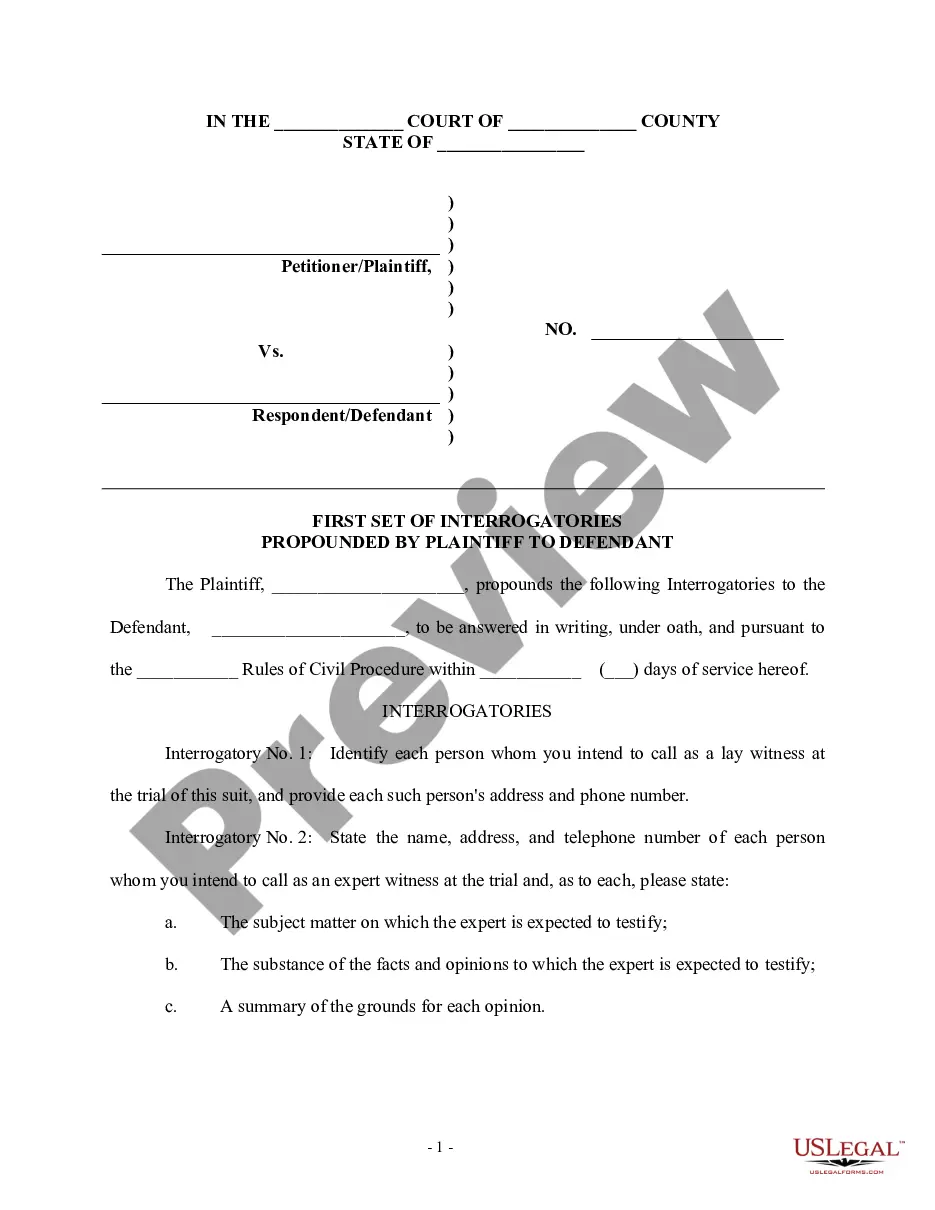
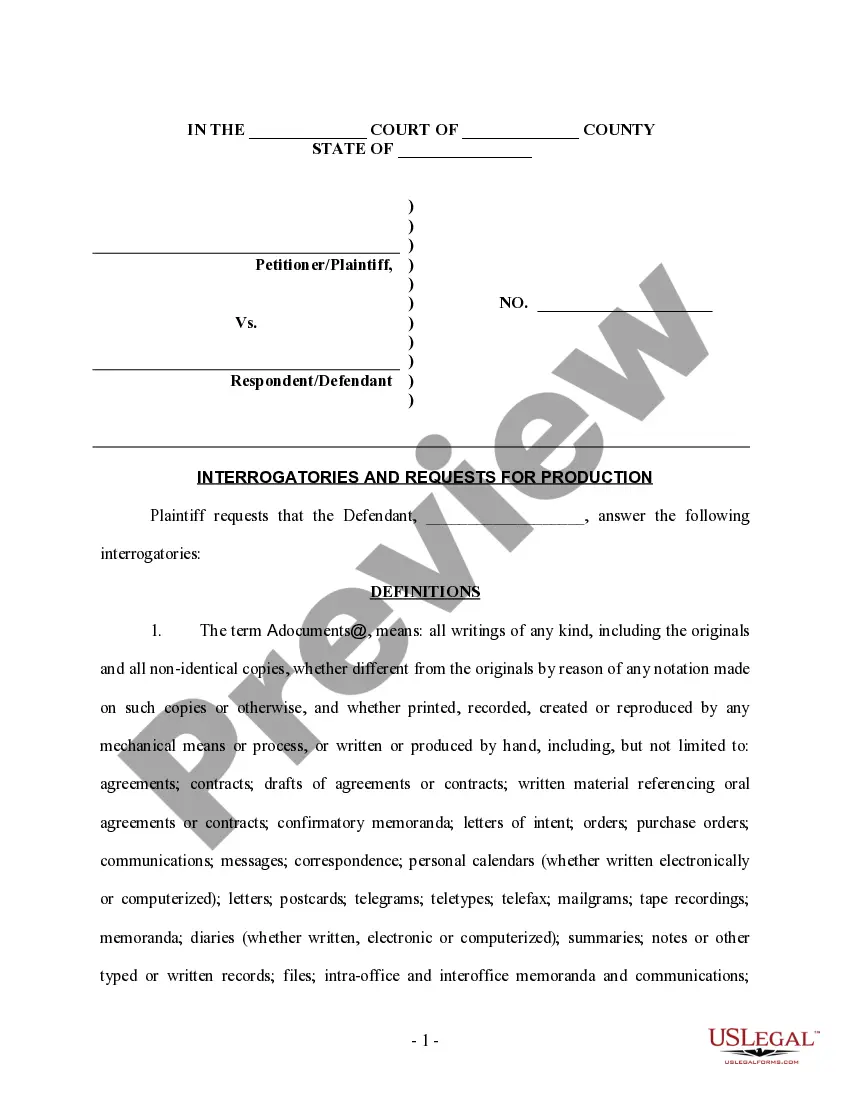
An interrogatory is a request for information, in the form of standard questions, that must be answered in writing and then notarized. In Florida, there are two types of interrogatories used in family law proceedings.
(1) Interrogatories must be served on the party to whom the interrogatories are directed and copies must be served on all other parties. (2) A certificate of service of the interrogatories must be filed, giving the date of service and the name of the party to whom they were directed.
An interrogatory is a request for information, in the form of standard questions, that must be answered in writing and then notarized. In Florida, there are two types of interrogatories used in family law proceedings.
Rule 1.370 Requests for Admission can be a powerful tool to narrow the disputed facts and issues in litigation. A request for admission may be utilized to conclusively establish the truth of any fact, opinion of fact, or application of law to fact.