Notice Discovery Template For Product In Harris
Description

Get your form ready online
Our built-in tools help you complete, sign, share, and store your documents in one place.
Make edits, fill in missing information, and update formatting in US Legal Forms—just like you would in MS Word.
Download a copy, print it, send it by email, or mail it via USPS—whatever works best for your next step.
Sign and collect signatures with our SignNow integration. Send to multiple recipients, set reminders, and more. Go Premium to unlock E-Sign.
If this form requires notarization, complete it online through a secure video call—no need to meet a notary in person or wait for an appointment.
We protect your documents and personal data by following strict security and privacy standards.

Make edits, fill in missing information, and update formatting in US Legal Forms—just like you would in MS Word.

Download a copy, print it, send it by email, or mail it via USPS—whatever works best for your next step.

Sign and collect signatures with our SignNow integration. Send to multiple recipients, set reminders, and more. Go Premium to unlock E-Sign.

If this form requires notarization, complete it online through a secure video call—no need to meet a notary in person or wait for an appointment.

We protect your documents and personal data by following strict security and privacy standards.
Looking for another form?
Form popularity
FAQ
An objection that a discovery request is not relevant must include a specific explanation describing why the request lacks relevance and/or why the requested discovery is disproportionate in light of the factors enumerated in Federal Rule of Civil Procedure 26(b)(1).
A 4-step guide to successful product discovery Step One: Outline your discovery toolbox Step Two: Plan how every team member can contribute Step Three: Consider how to continually involve customers Step Four: Set your ways of working
The law says that the request must be “reasonably calculated to lead to the discovery of relevant, admissible, evidence.” Something is relevant if it tends to prove or disprove something that one of the sides in the lawsuit needs to prove to win their case.
A typical product discovery template is divided into four key sections, each addressing a crucial aspect of the product discovery process—things like ideation, research and validation, prototyping, testing, and refining.
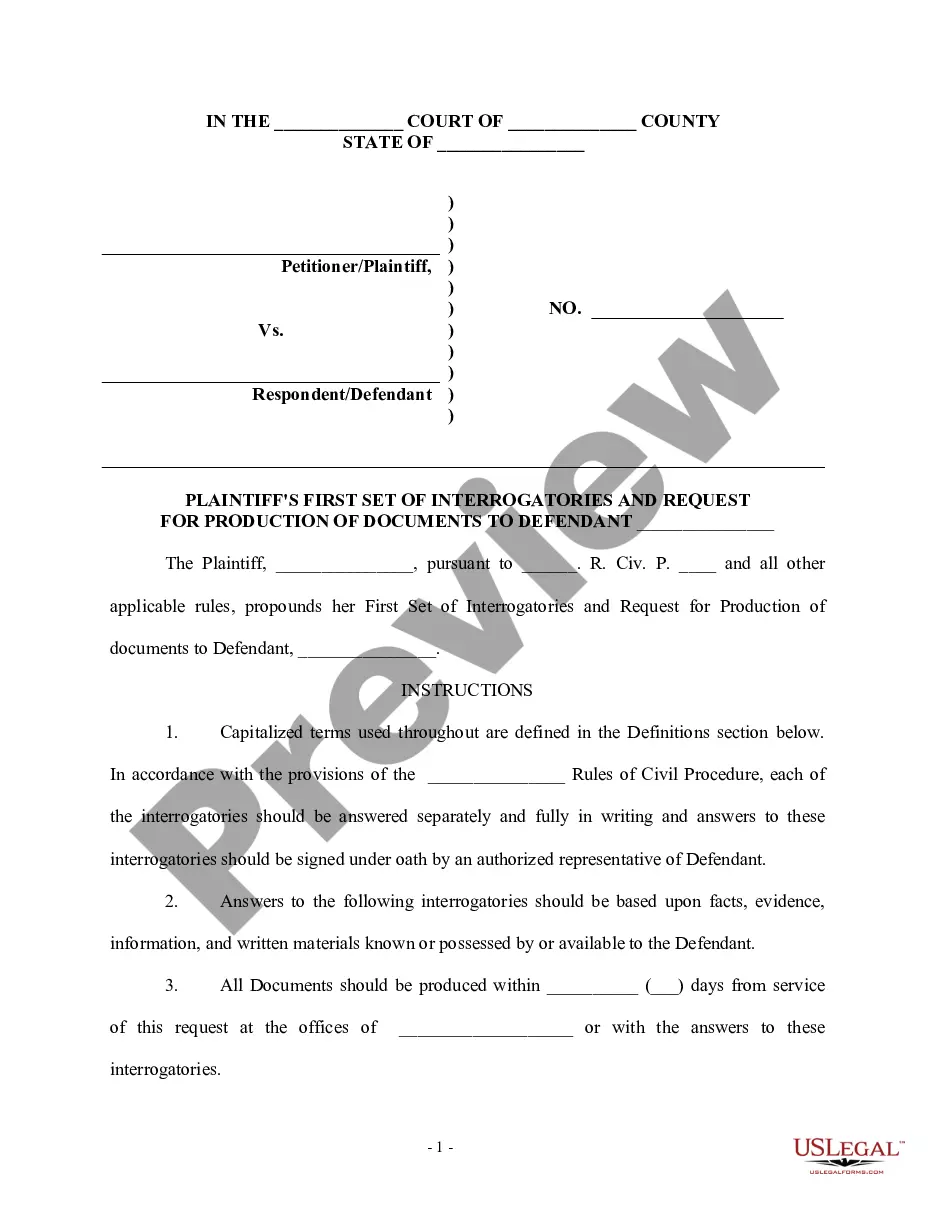
Steps Of The Discovery Process. There are four key actions in the discovery process which include interrogatories, request for documents, request for admissions, and depositions.
Discovery is how you gather the evidence you will need to prove your case as plaintiff, or defeat the plaintiff's case as a defendant. You use discovery to find out things like: What the other side plans to say about an issue in your case. What facts or witnesses support their side.