Service Of Interrogatories Federal Rules In King
Description



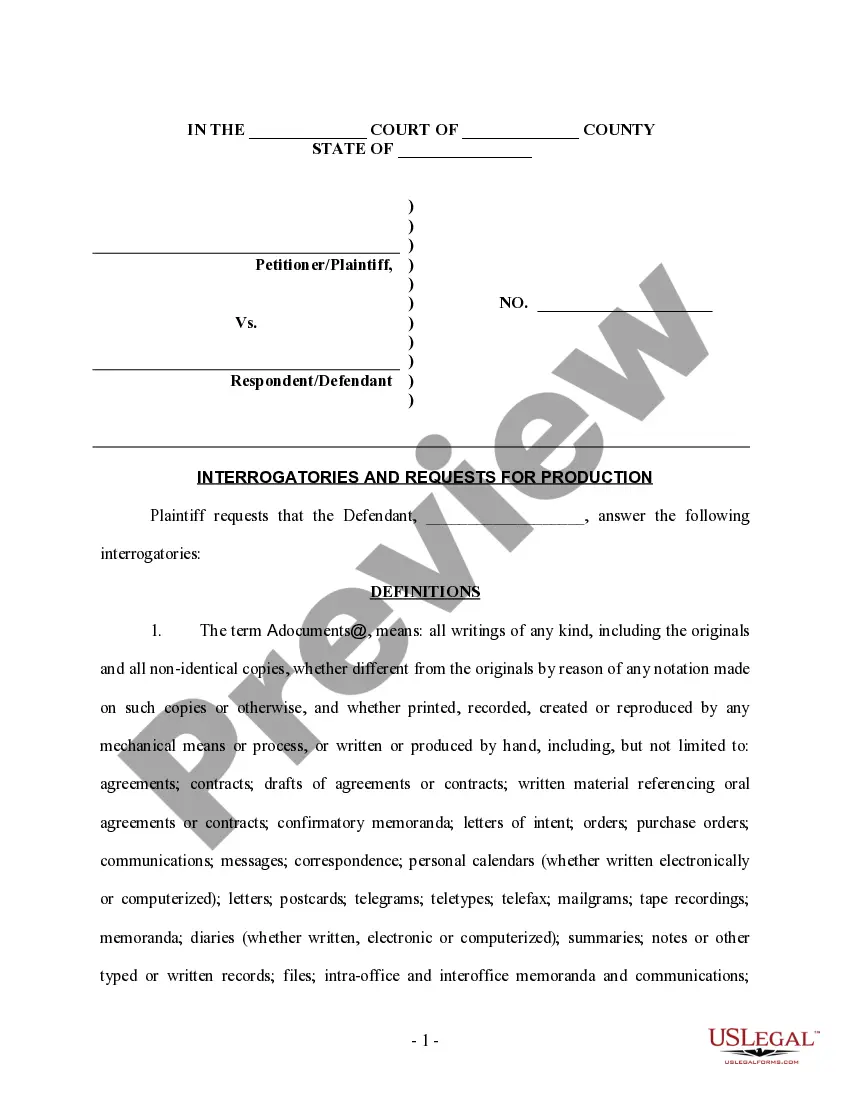
Get your form ready online
Our built-in tools help you complete, sign, share, and store your documents in one place.
Make edits, fill in missing information, and update formatting in US Legal Forms—just like you would in MS Word.
Download a copy, print it, send it by email, or mail it via USPS—whatever works best for your next step.
Sign and collect signatures with our SignNow integration. Send to multiple recipients, set reminders, and more. Go Premium to unlock E-Sign.
If this form requires notarization, complete it online through a secure video call—no need to meet a notary in person or wait for an appointment.
We protect your documents and personal data by following strict security and privacy standards.

Make edits, fill in missing information, and update formatting in US Legal Forms—just like you would in MS Word.

Download a copy, print it, send it by email, or mail it via USPS—whatever works best for your next step.

Sign and collect signatures with our SignNow integration. Send to multiple recipients, set reminders, and more. Go Premium to unlock E-Sign.

If this form requires notarization, complete it online through a secure video call—no need to meet a notary in person or wait for an appointment.

We protect your documents and personal data by following strict security and privacy standards.
Looking for another form?
Form popularity
FAQ
Federal Rules of Civil Procedure (FRCP) Rule 34 governs the process by which a party in a legal proceeding can request access to documents, electronically stored information, and tangible items held by another party.
"Rule 34: If it exists, there is of it." "Rule 34: If it exists, or can be imagined, there is Internet of it." "Rule 34: If you can imagine it, it exists as Internet ." “Rule 34(r): If it exists, there is a subreddit devoted to it.”
The rule provides that a request for inspection shall set forth the items to be inspected either by item or category, describing each with reasonable particularity, and shall specify a reasonable time, place, and manner of making the inspection.
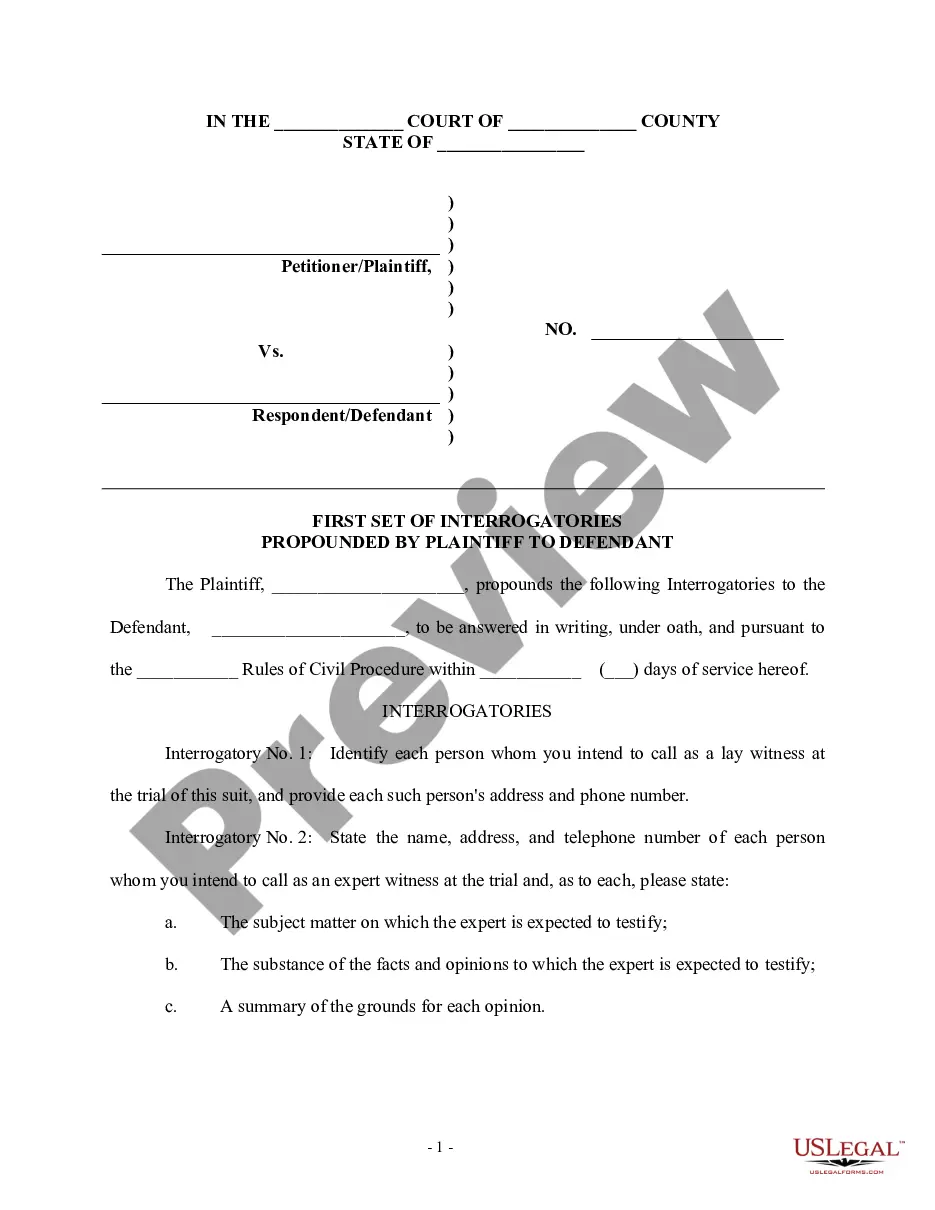
Usually, lawyers use interrogatories to obtain detailed information about persons, corporations, facts, witnesses, and identity and locations of records and documents. Court rules usually limit the number of questions included in an interrogatory.
Good evening. There are two things to remember when answering interrogatories...i) answer only the exact question asked with as few words as possible without expanding on anything; and ii) answer as irrelevant anything you don't really want to address.
Read each question (interrogatory) very carefully. Answer only the question that is asked, and avoid the temptation to over-explain your answer. If the question contains several parts, you may break your answer into parts as well. It is also possible that you might object to the question.
Unless leave of court is obtained, interrogatories may not be served prior to the meeting of the parties under Rule 26(f).