Notice Discovery Template For Product In Michigan
Description





Form popularity
FAQ
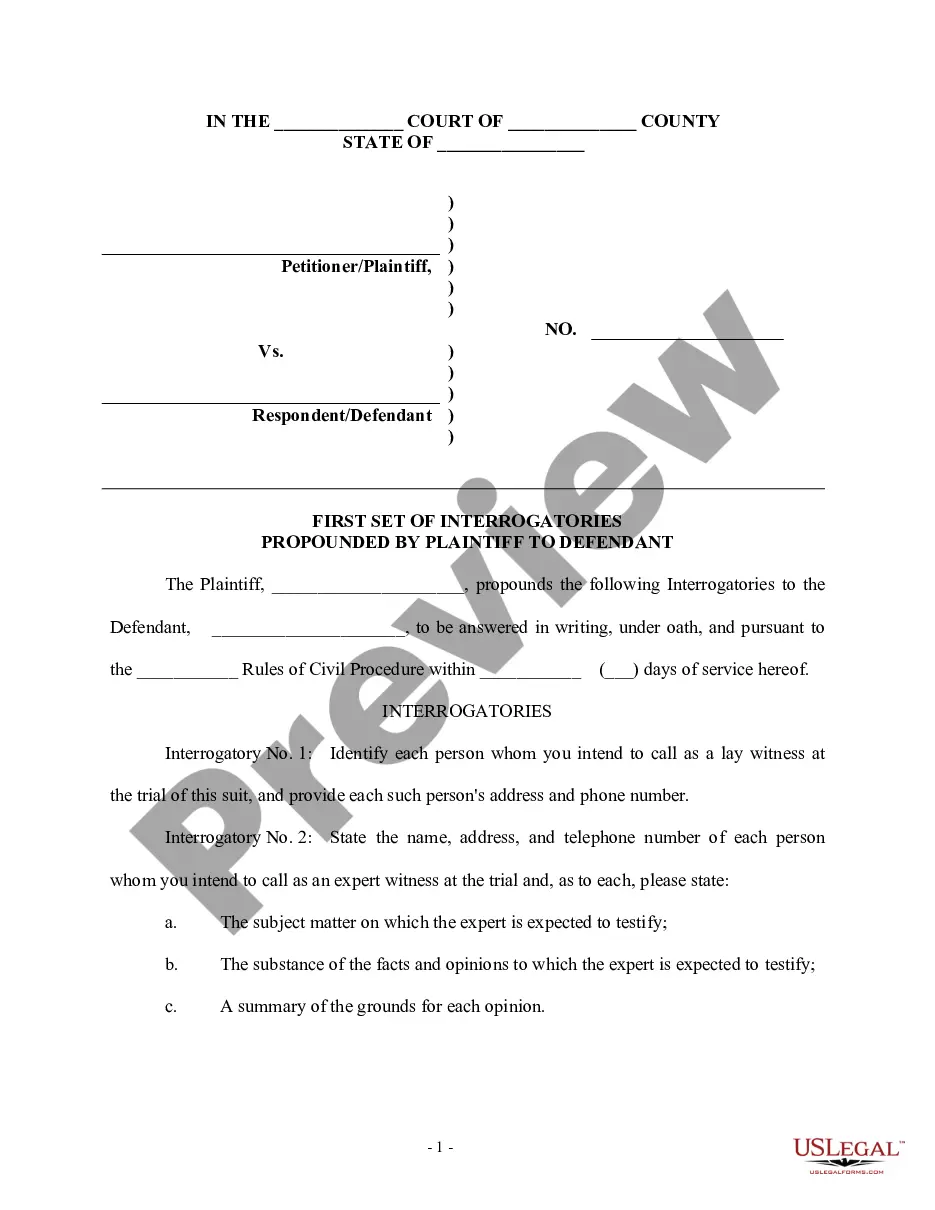
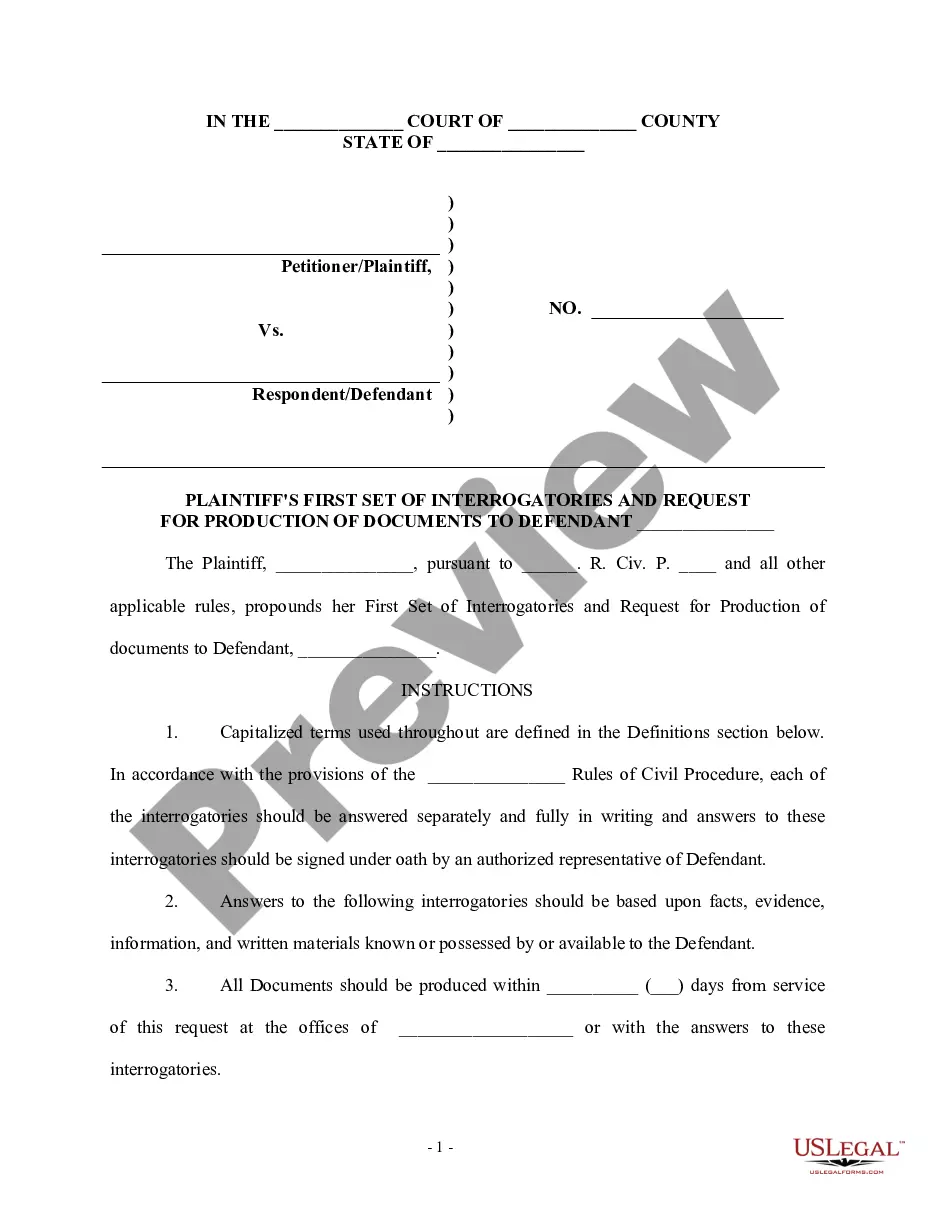
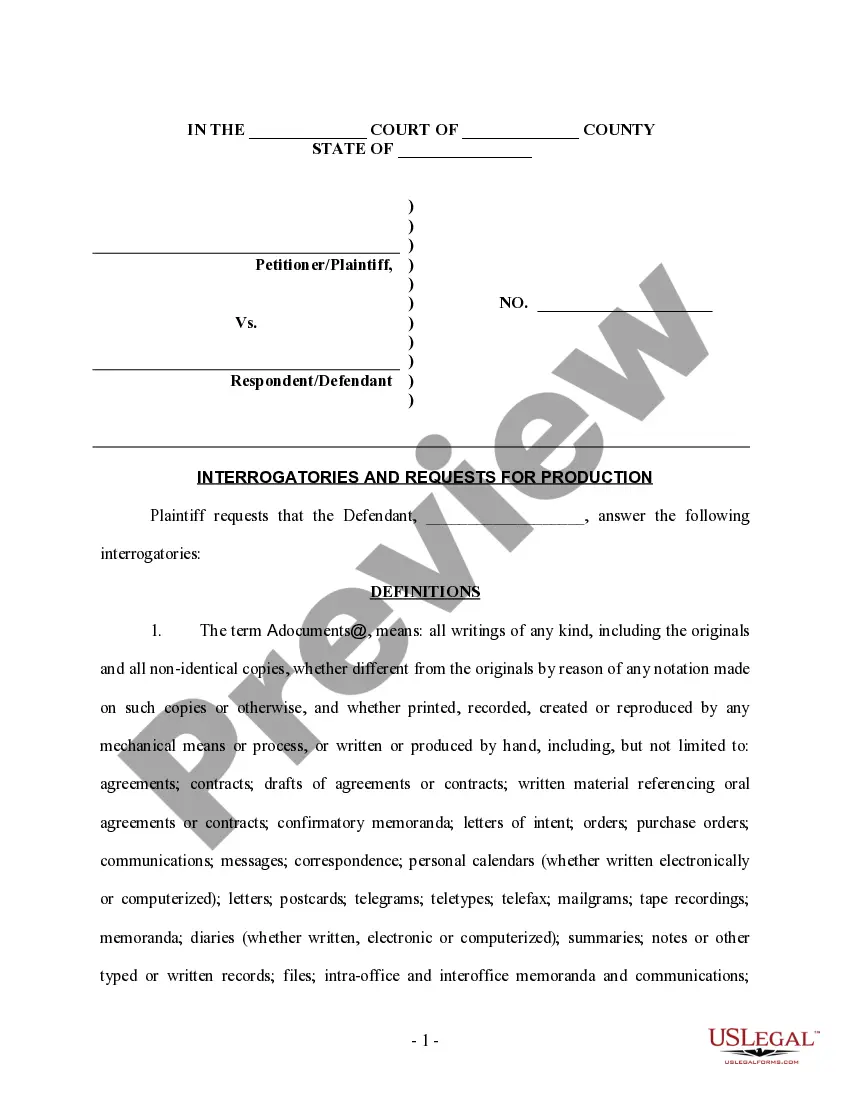
Interrogatories are lists of questions sent to the other party that s/he must respond to in writing. You can use interrogatories to find out facts about a case but they cannot be used for questions that draw a legal conclusion.
For interrogatories, action words such as “list,” “describe,” “identify,” or “state” are very useful. You may ask the other side to identify a document but you cannot use this form of discovery to get them to give it to you. Requesting documents requires a different kind of discovery process.
Interrogatories are written questions sent by one party in a lawsuit to another party in that same suit, which the responding party must answer under penalty of perjury. Interrogatories allow the parties to ask who, what, when, where and why questions, making them a good method for obtaining new information.
Rule 2.313 - Failure to Serve Disclosure or to Provide or to Permit Discovery; Sanctions (A) Motion for Order Compelling Disclosure or Discovery. A party, on reasonable notice to other parties and all persons affected, may apply for an order compelling disclosure or discovery as follows: (1) Appropriate Court.
Parties may obtain discovery regarding any non-privileged matter that is relevant to any party's claims or defenses and proportional to the needs of the case, taking into account all pertinent factors, including whether the burden or expense of the proposed discovery outweighs its likely benefit, the complexity of the ...
(f) A statement that the person may object to the investigative subpoena or file reasons for not complying with the investigative subpoena by filing a written statement of objection or noncompliance with the prosecuting attorney on or before the date scheduled for the questioning or the production of the records, ...
Common objections include: The request is impermissibly compound. The propounding party may ask you to answer only one question with each interrogatory. You may object to any request that asks you to answer two or more different questions in a single request.
You can use interrogatories to find out facts about a case but they cannot be used for questions that draw a legal conclusion.
Rule 2.116 - Summary Disposition (A) Judgment on Stipulated Facts. (1) The parties to a civil action may submit an agreed-upon stipulation of facts to the court. (2) If the parties have stipulated to facts sufficient to enable the court to render judgment in the action, the court shall do so.