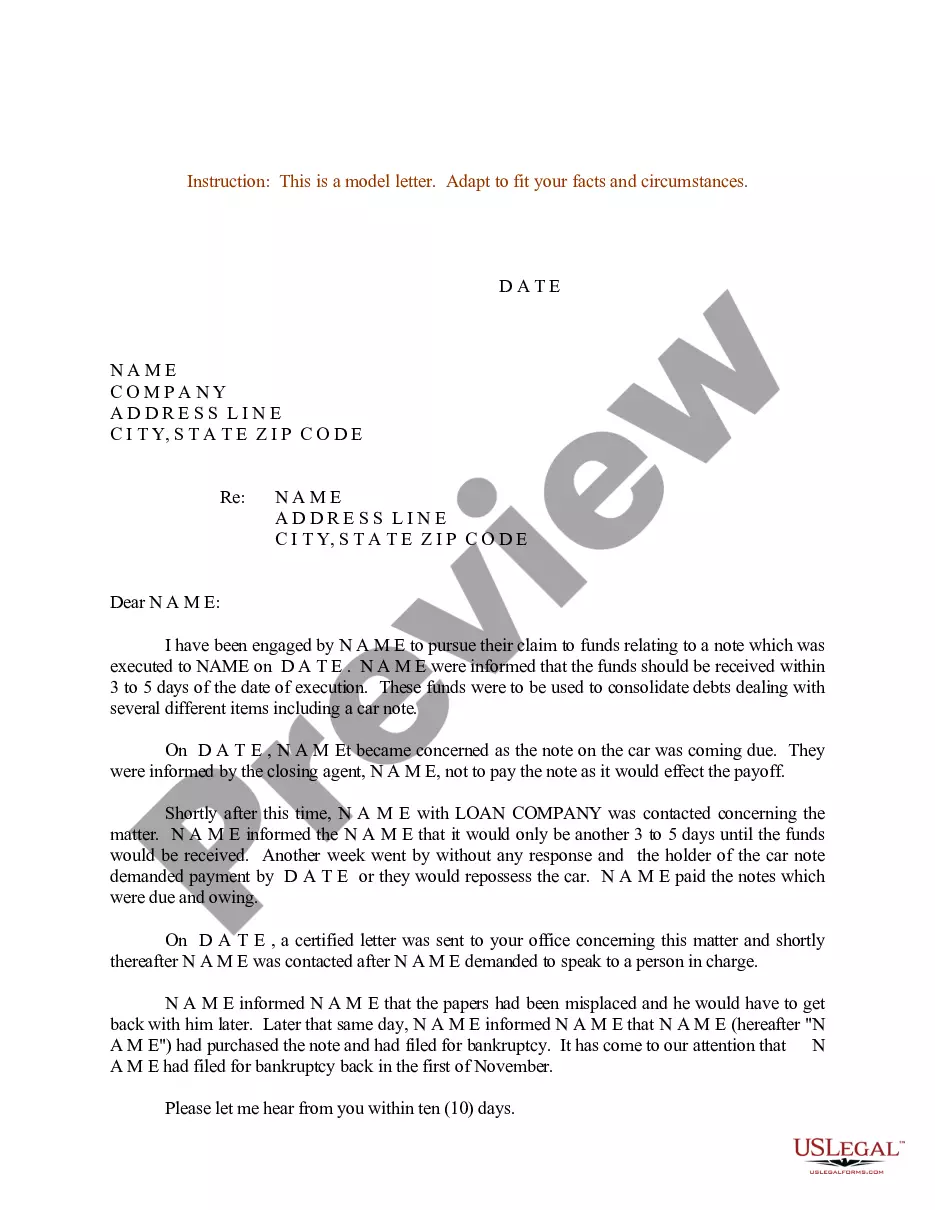
Notice Of Service Example In Sacramento
Description






Form popularity
FAQ
Service Documents means a claim form, application notice, order or judgment or other document relating to any Proceedings.
A "Proof of Service" is a one-page document that must be attached at the back of every document filed in bankruptcy court, whether the document was filed on a docket in a bankruptcy case or in an adversary proceeding. The "Proof of Service" document is a mandatory form.
The proof of service must be signed by the process server under penalty of perjury, affirming the accuracy and truthfulness of the statements therein. And the affidavit is signed by the process server in front of a notary who puts them under oath that their statements therein are accurate and truthful.
An example of a Proof of Service is a signed declaration from the person who served the documents, stating the name of the person who was served and the date, time, and manner of service. A Proof of Service may also include an affidavit, which is a sworn statement that the documents were properly served.
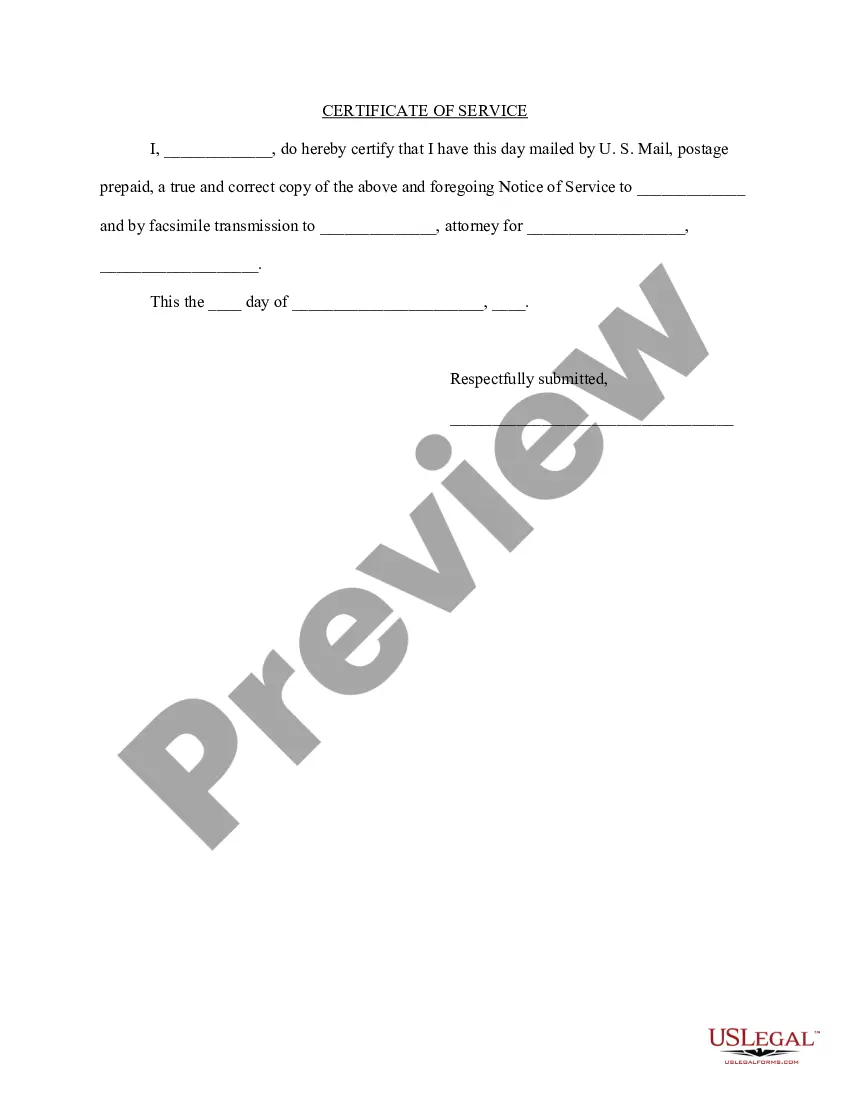
The certificate must state the name of the person or persons served, the date of service, the method of service, and the mailing address or email address to which service was made, if not made in person.
Personal service and substituted service are two common types of service of process used in the United States, with personal service being the one most difficult for a defendant to attack for its legality. Another method used to perform service of process is publication. For example, publication in a newspaper.
Filling out and filing the proof of service The process server must fill out and sign the proof of service form, which shows how, when, and where the papers were served, and who received them. The server then gives you the proof of service. Make a copy of the proof of service.
Complete the top section of the proof of service form as follows: First box, left side: In this box print the name, address, and telephone number of the person for whom you served the documents. Second box, left side: Print the name of the county in which the legal action is filed and the court's address in this box.
Personal Testimony: Provide a detailed account of your whereabouts and activities you're engaged in at the time of the alleged service. Witnesses: If there are individuals with you at your location during the improper service, their testimonies can serve as evidence.