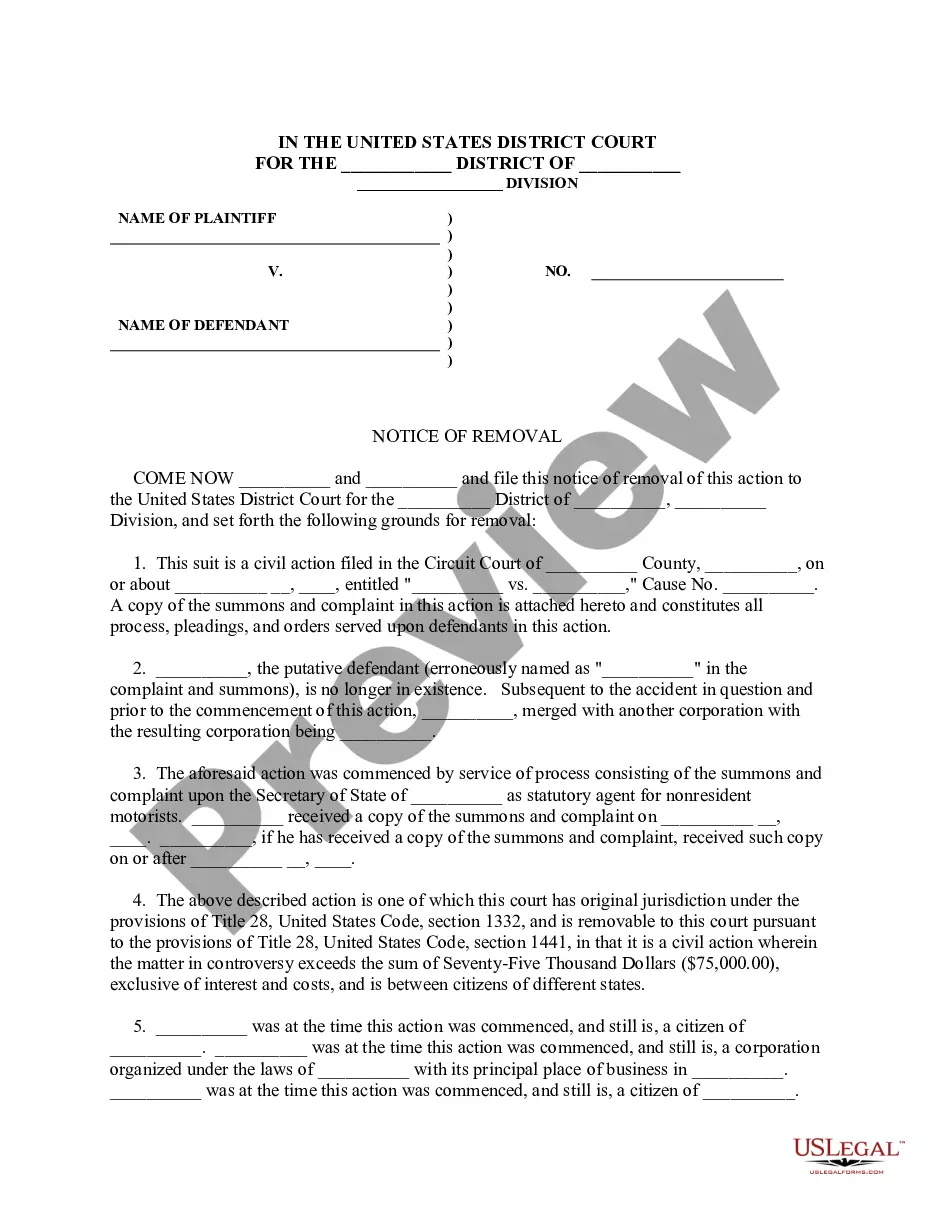
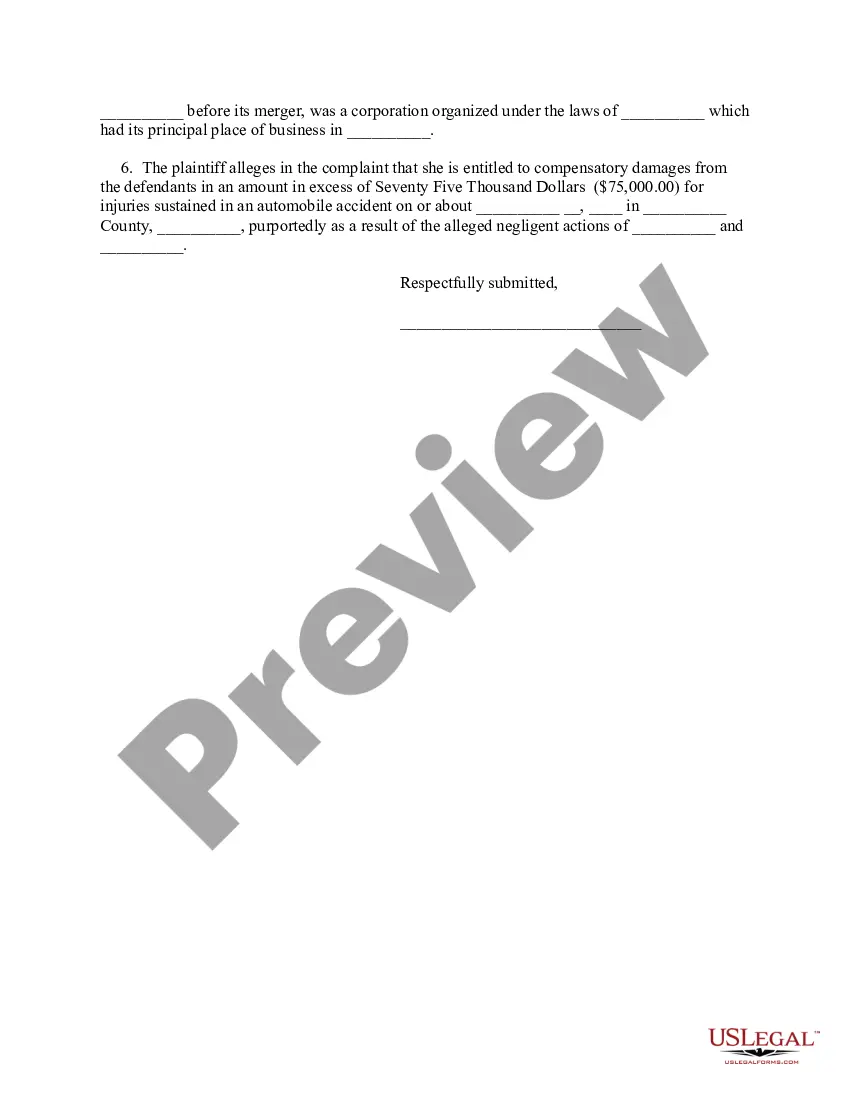
Notice Of Removal Template With Formulas In Orange
Description
Form popularity
FAQ
1. The main reason civil cases are removed from state to federal court is that while filed in state court, perhaps in good faith; it is discovered that one party, usually the defendant has moved to another state. Now you have a case which if other requirements are met 1.
Once the case is removed to federal court, the response (motion to dismiss, answer or other pleading) deadline for a defendant who did not answer in state court is the longer of (a) 21 days after receiving — through service or otherwise — a copy of the initial pleading stating the claim for relief, (b) 21 days after ...
Each defendant shall have 30 days after receipt by or service on that defendant of the initial pleading or summons described in paragraph (1) to file the notice of removal.
A defendant or defendants desiring to remove any civil action from a State court shall file in the district court of the United States for the district and division within which such action is pending a notice of removal signed pursuant to Rule 11 of the Federal Rules of Civil Procedure and containing a short and plain ...
(a) Motion and opposition (3) Any opposition must be served and filed within 15 days after the motion is filed.
The magic trick for plaintiffs seeking to avoid removal of their case to federal court is to plead only state claims (to avoid federal question removal) and sue at least one party from the same state (to avoid diversity removal).
A motion for remand must be made within 30 days after the notice of removal is filed, with the exception of a remand motion based on lack of subject-matter jurisdiction which can be made at any time. (§ 1447(c).)
Notice of Removal: A notice that a defendant files in federal court to move a case from state court to federal court. The notice must explain why the case should be moved and include copies of all the legal documents that have been filed in the case.