Notice Of Removal Template Withholding In Tarrant
Description
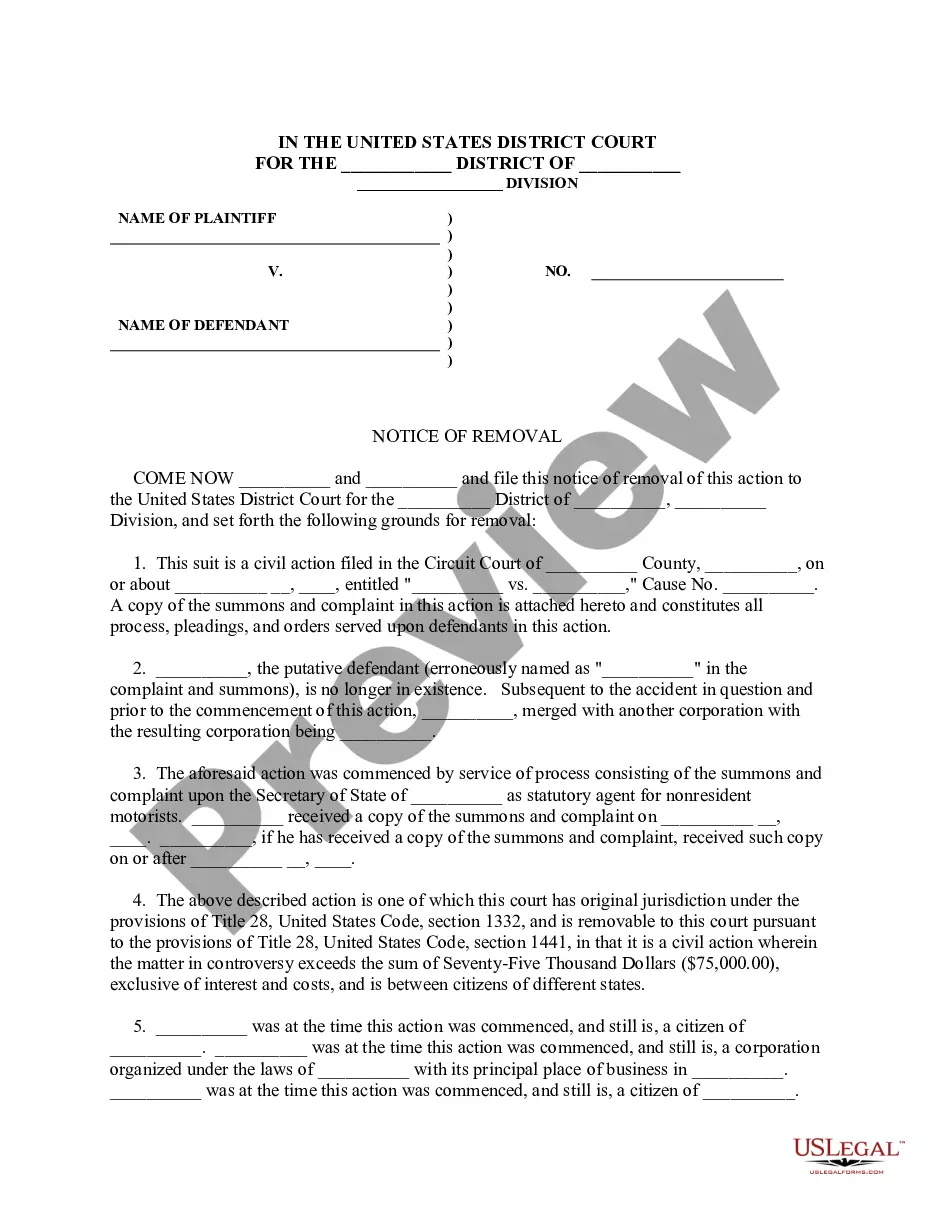

Get your form ready online
Our built-in tools help you complete, sign, share, and store your documents in one place.
Make edits, fill in missing information, and update formatting in US Legal Forms—just like you would in MS Word.
Download a copy, print it, send it by email, or mail it via USPS—whatever works best for your next step.
Sign and collect signatures with our SignNow integration. Send to multiple recipients, set reminders, and more. Go Premium to unlock E-Sign.
If this form requires notarization, complete it online through a secure video call—no need to meet a notary in person or wait for an appointment.
We protect your documents and personal data by following strict security and privacy standards.

Make edits, fill in missing information, and update formatting in US Legal Forms—just like you would in MS Word.

Download a copy, print it, send it by email, or mail it via USPS—whatever works best for your next step.

Sign and collect signatures with our SignNow integration. Send to multiple recipients, set reminders, and more. Go Premium to unlock E-Sign.

If this form requires notarization, complete it online through a secure video call—no need to meet a notary in person or wait for an appointment.

We protect your documents and personal data by following strict security and privacy standards.
Looking for another form?

Form popularity
FAQ
Through a Court Order All Texas residents can apply for a name change under Texas Family Code Chapter 45. This chapter defines the formal process for changing a legal name through the courts. An adult may request to change their name for any reason, except for reasons against the public interest.
To enforce a court order, you must file a motion for enforcement. This motion must call out the specific provisions that were violated, as well as the relief you are requesting from the court. Given the penalties that can be imposed on violators, it's very important that the language in the motion is very precise.
A Motion to Enforce in Texas is a legal tool available to co-parents when their ex-partner fails to comply with a court order. This motion aims to ensure the original court order, whether it pertains to child custody, visitation schedules, child support, or other co-parenting agreements, is executed as intended.
Courts don't take custody order violations lightly, and the penalties can be severe. Violating parents may face fines, be held in contempt of court, or even serve jail time, depending on the gravity and recurrence of the violation.
As clerk of the three County Courts at Law, the County Clerk is responsible for the intake, processing and maintenance of civil cases with a jurisdictional limit up to $250,000; including debt, breach of contract, garnishments, temporary restraining orders, injunctions, automotive/personal injury cases and eminent ...
If a case is “retained,” it is kept open. If your case was placed on the dismissal docket (but not yet dismissed), you can ask the judge to keep your case open by filing a Motion to Retain Case on the Docket and Notice of Hearing.
The divorce can be filed in the district court county where either party has lived for the last 90 days, as long as they have also lived in Texas for at least the last 6 months.
Divorce records in Tarrant County are handled by the District Clerk's office. Please visit the District Clerk's website for more information or call 817-884-1880.
Divorce records in Tarrant County are handled by the District Clerk's office. Please visit the District Clerk's website for more information or call 817-884-1880. How do I file an Assumed Name?