Qualifications For Homestead Exemption In Nebraska In Michigan
Description





Get your form ready online
Our built-in tools help you complete, sign, share, and store your documents in one place.
Make edits, fill in missing information, and update formatting in US Legal Forms—just like you would in MS Word.
Download a copy, print it, send it by email, or mail it via USPS—whatever works best for your next step.
Sign and collect signatures with our SignNow integration. Send to multiple recipients, set reminders, and more. Go Premium to unlock E-Sign.
If this form requires notarization, complete it online through a secure video call—no need to meet a notary in person or wait for an appointment.
We protect your documents and personal data by following strict security and privacy standards.
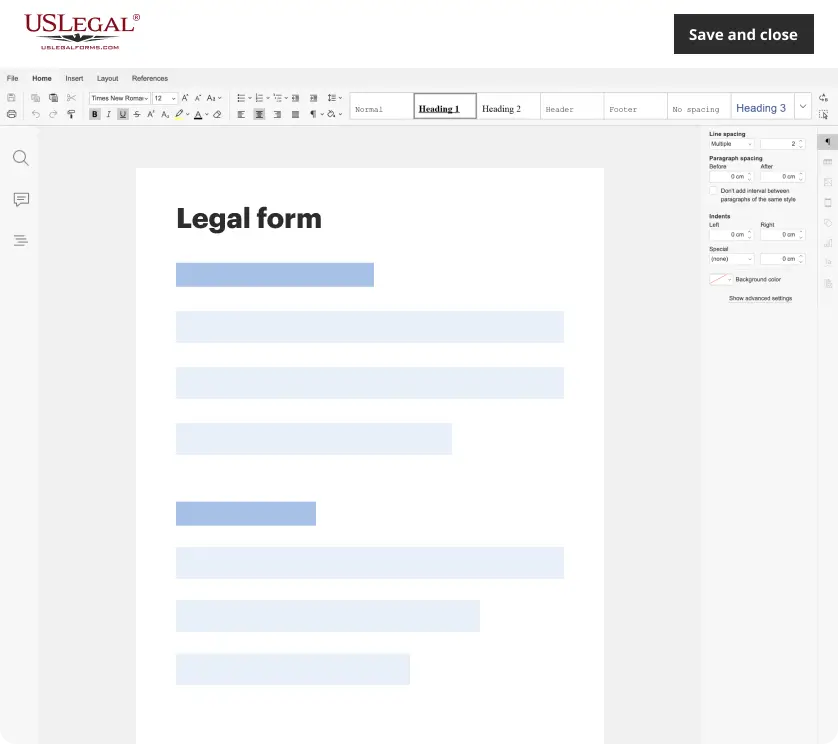
Make edits, fill in missing information, and update formatting in US Legal Forms—just like you would in MS Word.
Download a copy, print it, send it by email, or mail it via USPS—whatever works best for your next step.
Sign and collect signatures with our SignNow integration. Send to multiple recipients, set reminders, and more. Go Premium to unlock E-Sign.

If this form requires notarization, complete it online through a secure video call—no need to meet a notary in person or wait for an appointment.
We protect your documents and personal data by following strict security and privacy standards.
Looking for another form?




Form popularity
FAQ
Who Qualifies? You can claim a property tax credit if all the following apply: You are considered a "natural person" (owner or claimant), and not a living trust or other legal entity, such as a S corporation or LLC. Your homestead is in Michigan (whether you rent or own).
700.2402 Homestead allowance. If there is no surviving spouse, each minor child and each dependent child of the decedent is entitled to a homestead allowance equal to $15,000.00, adjusted as provided in section 1210, divided by the number of the decedent's minor and dependent children.
How is household income determined for the Homestead Exemption? Household income includes the federal adjusted gross income (AGI) from the previous year, plus certain non-taxable income like Social Security. Medical expenses exceeding 4% of household income can be subtracted from total income.
In Michigan, to qualify as a homestead, you must own the property and live in it as your main home. The homestead protection covers property worth up to $3,500. While this amount may seem small today, it still provides important protection in certain situations.
The Nebraska homestead exemption program is a property tax relief program for six categories of homeowners: 1. Persons over age 65 (see page 8); 2. Veterans totally disabled by a nonservice-connected accident or illness (see page 8); 3.
Long-term Resident Senior Exemption The property must qualify for a homestead exemption. At least one homeowner must be 65 years old as of January 1. Total 'Household Adjusted Gross Income' for everyone who lives on the property cannot exceed statutory limits.
The Nebraska Homestead Exemption program offers vital property tax relief for homeowners in Nebraska who occupy their primary residence from January 1 through August 15. If you qualify, you may be eligible for a reduction in your property taxes.
If you own and occupy your home as your primary residence you may qualify for the Principal Residence Exemption (PRE). This exempts you from a portion of your local school operating millage. To claim a PRE you must file the form at the Assessing Department. When you no longer qualify you must file the rescission.

