Exchange Agreement Form In Maricopa
Description

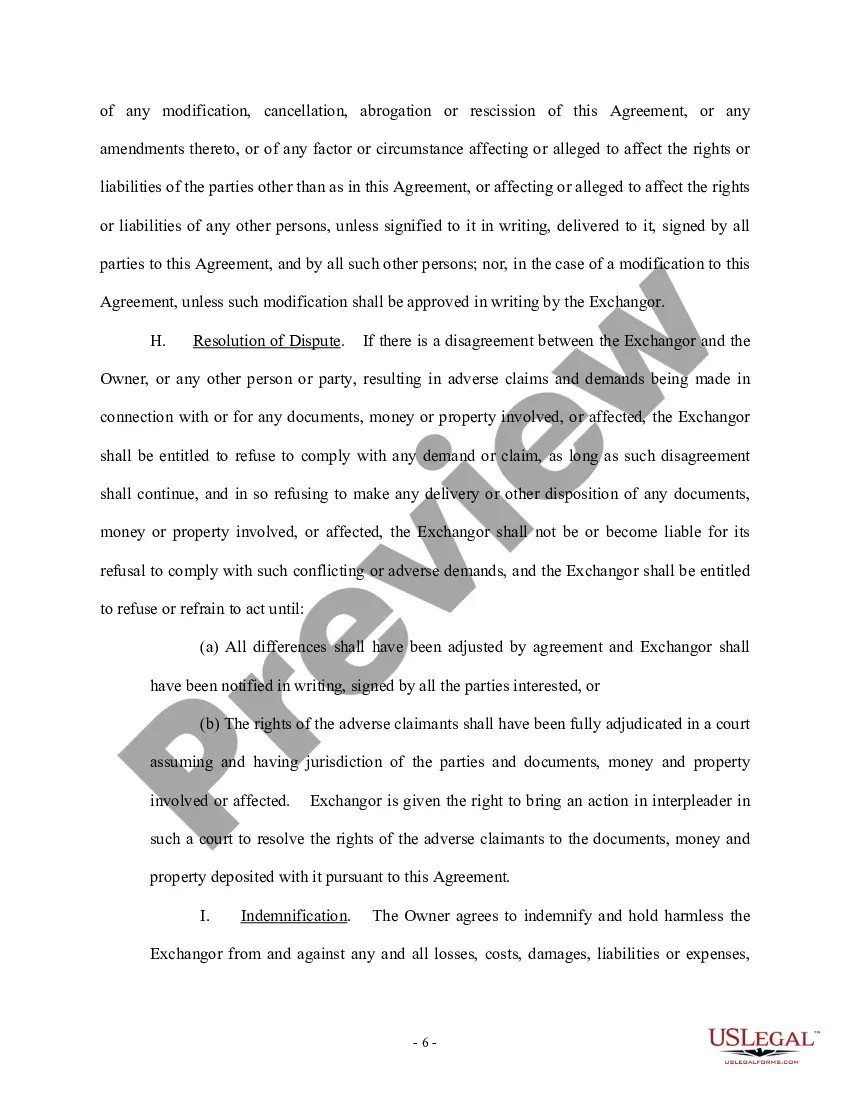
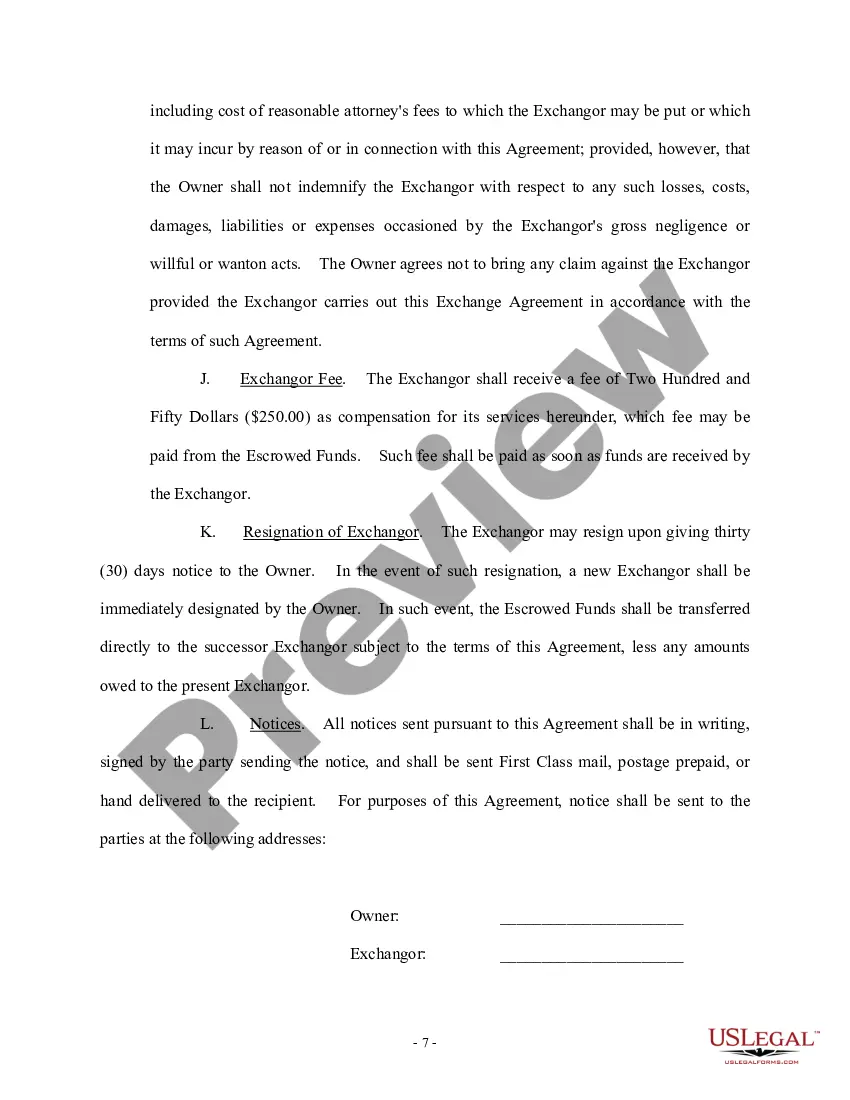
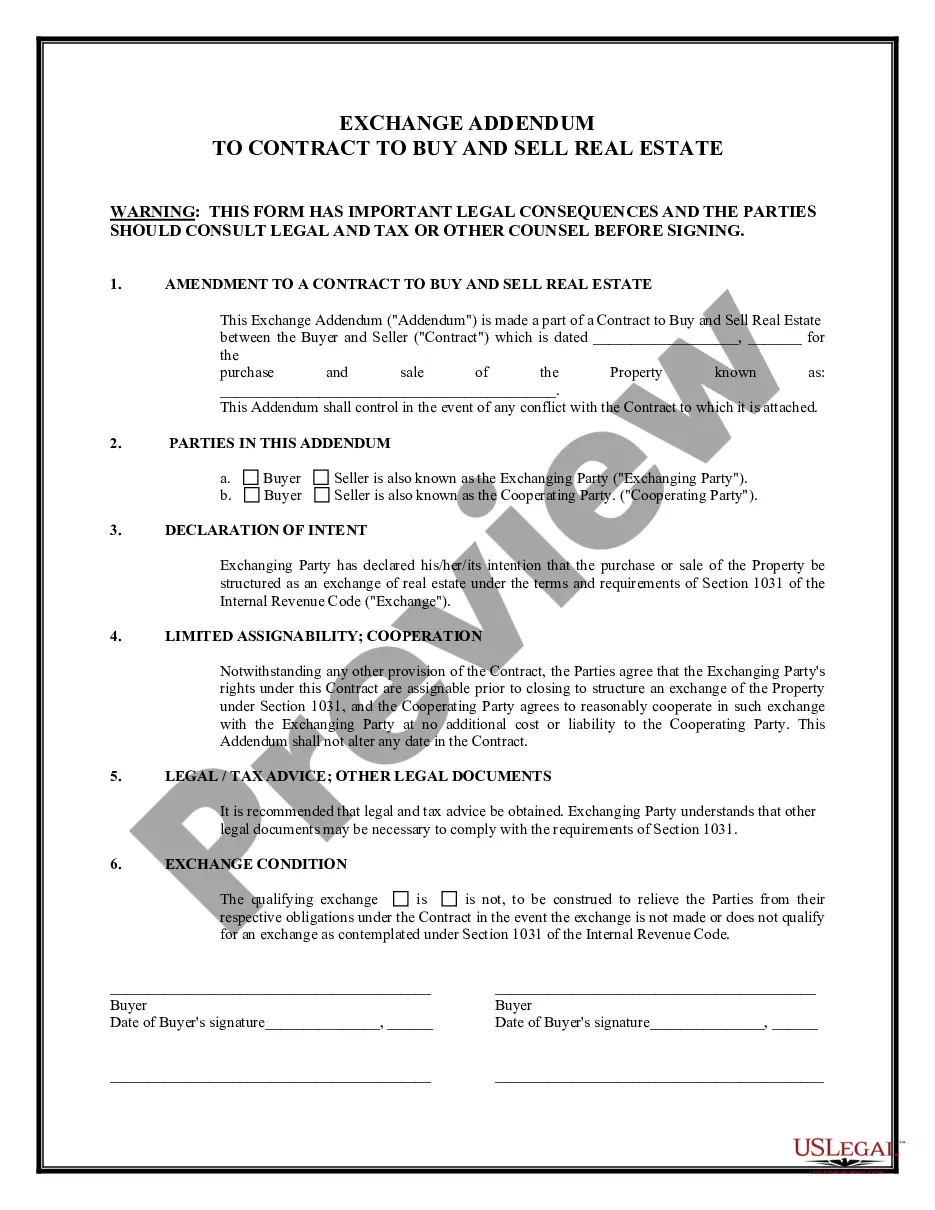
Get your form ready online
Our built-in tools help you complete, sign, share, and store your documents in one place.
Make edits, fill in missing information, and update formatting in US Legal Forms—just like you would in MS Word.
Download a copy, print it, send it by email, or mail it via USPS—whatever works best for your next step.
Sign and collect signatures with our SignNow integration. Send to multiple recipients, set reminders, and more. Go Premium to unlock E-Sign.
If this form requires notarization, complete it online through a secure video call—no need to meet a notary in person or wait for an appointment.
We protect your documents and personal data by following strict security and privacy standards.

Make edits, fill in missing information, and update formatting in US Legal Forms—just like you would in MS Word.

Download a copy, print it, send it by email, or mail it via USPS—whatever works best for your next step.

Sign and collect signatures with our SignNow integration. Send to multiple recipients, set reminders, and more. Go Premium to unlock E-Sign.

If this form requires notarization, complete it online through a secure video call—no need to meet a notary in person or wait for an appointment.

We protect your documents and personal data by following strict security and privacy standards.
Looking for another form?
Form popularity
FAQ
Filing a Will or Probate Case The Probate Filing Counter is located at 201 W. Jefferson in Phoenix, or at our Southeast location, 222 E. Javelina in Mesa, or at our Northwest Regional Court Center location at 14264 W.
If you're wondering how long probate takes in Arizona, the timeline varies depending on several factors. Simple cases with no disputes or complex assets can take as little as six months, while more complicated cases can extend over a year or more.
If you're doing it on your own, however, you may contact your court clerk for information on how to do this. The motion has to state what your ex-spouse isn't doing, what areas he or she is in violation of. It must clarify why he or she ought to be held in contempt of the divorce decree. You must prove your case.
Formal probate is when the requirements of informal probate are not satisfied and a Judge or Commissioner is needed to resolve any disputes. SuperiorCourtAZ.
Formal probate is when the requirements of informal probate are not satisfied, and a Judge or Commissioner is needed to resolve any disputes. Superiorcourt.maricopa. See the court's video highlighting the differences between informal and formal probate, and what each process entails.
Formal Probate: High level of court supervision, with multiple hearings and judicial oversight. Informal Probate: Minimal court involvement, with fewer hearings and more autonomy for the personal representative.
The three main types of probate in Arizona are Informal, Formal, and Supervised. Much of the difference depends on the amount of court supervision required to complete the process.
Modification via Mediation Alternative dispute resolution (ADR) is a popular avenue for parents trying to arrange or modify custody agreements in California. Through ADR, you could achieve an official, legal custody modification without going to court. ADR is not a custody trial.
A change in circumstances is when something important in a family's life changes, like when a parent loses their job or gets sick. This can be used in family court to ask for changes to custody or support orders. A modification order is a new court order that changes things like child support or visitation.
