1031 Exchange Agreement Form For Deed In Minnesota
Description




Form popularity
FAQ
While it may be tempting to ask your CPA to act as your Qualified Intermediary, a CPA cannot facilitate a 1031 exchange between investors. Under IRC Section 1031 guidelines, CPAs, attorneys, investment bankers, and real estate agents/brokers fall under the 'agent' category.
A 1031 exchange does not obviate the need for a realtor. Quite to the contrary, in most cases an Exchanger has an even greater need for a realtor due to the time constraints placed on Exchangers.
What Is a Qualified Intermediary? Qualified Intermediary (QI) is someone a property seller selects to oversee the 1031 exchange process and its funds. They hold the funds from the previous property and use them to acquire the new replacement property to ensure compliance with IRS regulations.
A Qualified Intermediary, or QI, is an independent third party to the transaction whose function is to prepare the documents necessary to create the exchange, as well as to act as the independent escrow agent for the exchange funds.
Under Section 1031 of the Internal Revenue Code, it's entirely possible to exchange raw land for another 'like-kind' property, which could even be a rental property. It's crucial to remember, though, that properties for personal use, including your main home or vacation homes, don't qualify for a 1031 exchange.
Your 1031 exchange must be reported by completing Form 8824 and filing it along with your federal income tax return. If you completed more than one exchange, a different form must be completed for each exchange. For line-by-line instructions on how to complete form, download the instructions here.
If during the current tax year you transferred property to another party in a like-kind exchange, you must file Form 8824 with your tax return for that year. Also file Form 8824 for the 2 years following the year of a related party exchange. See Line 7, later, for details. Section 1031 regulations.
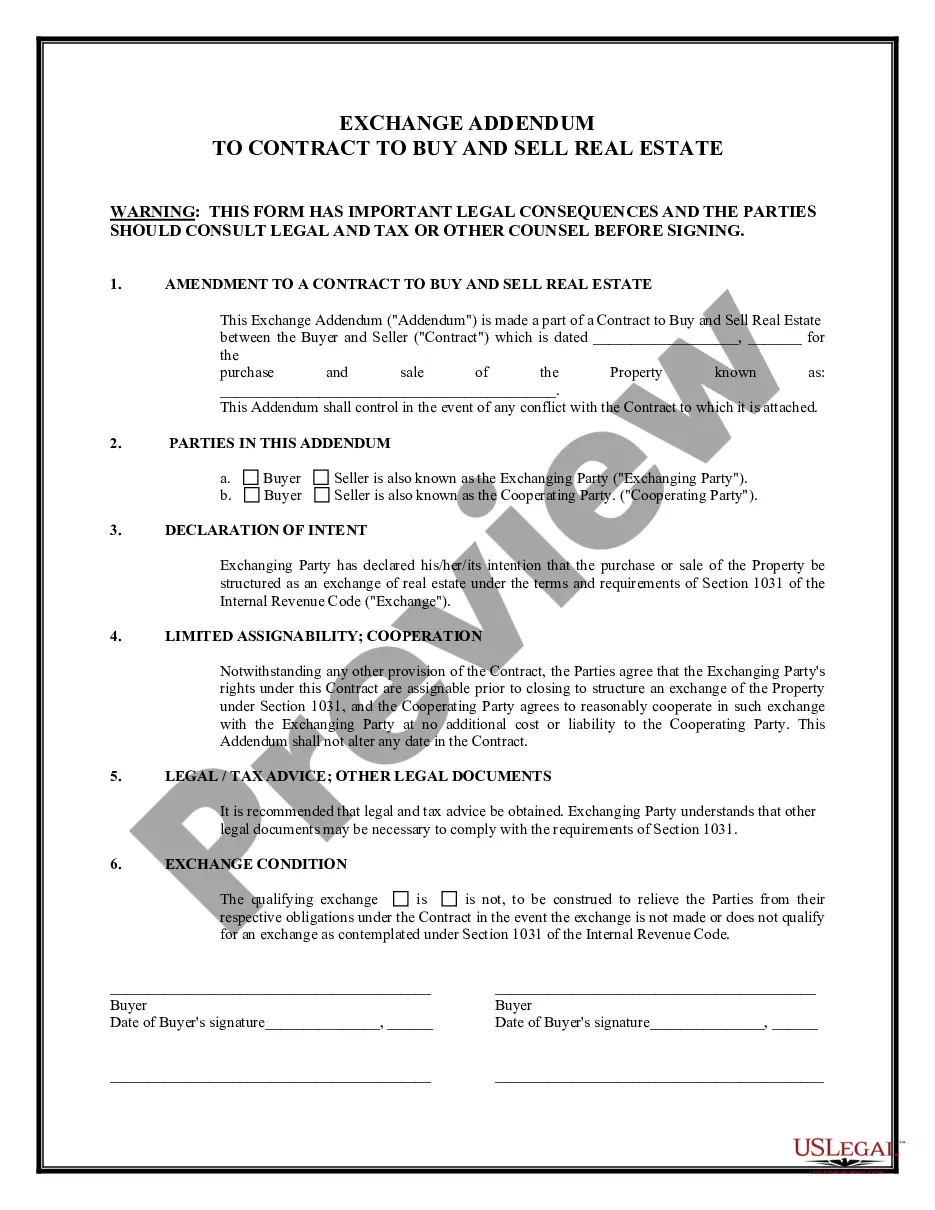
To qualify for a 1031 Exchange, Relinquished and Replacement Properties must be qualified as “like-kind,” and the transaction must be structured properly. “Like-kind” properties must be real property held for productive use in the investor's trade or business or for investment.
