Patent Trademark Application Form Sample In Clark
Description

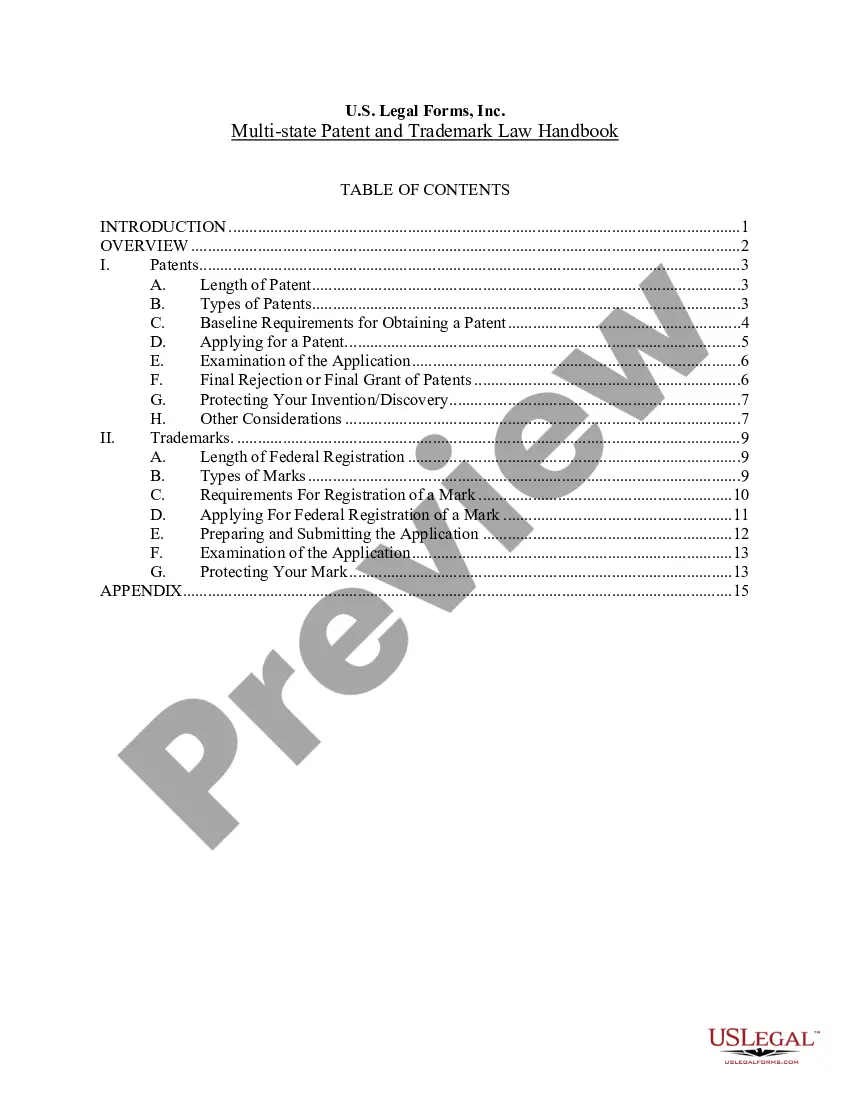
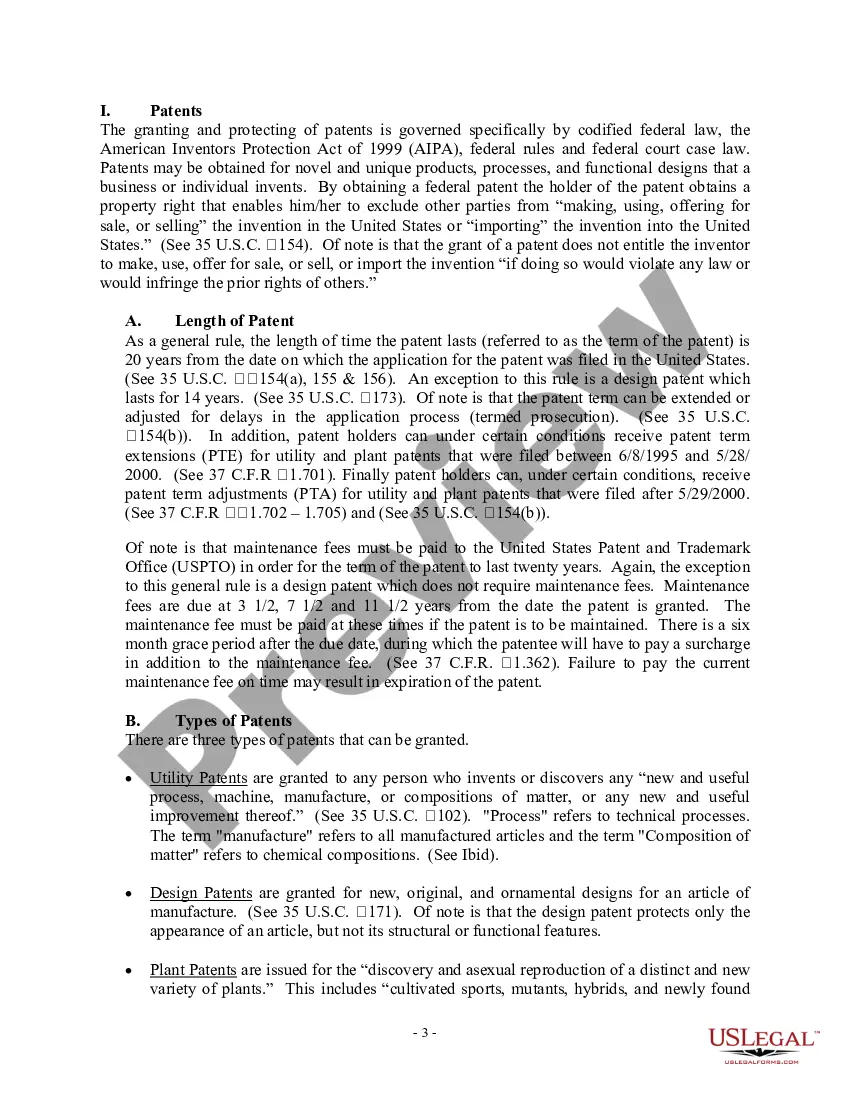


Get your form ready online
Our built-in tools help you complete, sign, share, and store your documents in one place.
Make edits, fill in missing information, and update formatting in US Legal Forms—just like you would in MS Word.
Download a copy, print it, send it by email, or mail it via USPS—whatever works best for your next step.
Sign and collect signatures with our SignNow integration. Send to multiple recipients, set reminders, and more. Go Premium to unlock E-Sign.
If this form requires notarization, complete it online through a secure video call—no need to meet a notary in person or wait for an appointment.
We protect your documents and personal data by following strict security and privacy standards.

Make edits, fill in missing information, and update formatting in US Legal Forms—just like you would in MS Word.

Download a copy, print it, send it by email, or mail it via USPS—whatever works best for your next step.

Sign and collect signatures with our SignNow integration. Send to multiple recipients, set reminders, and more. Go Premium to unlock E-Sign.

If this form requires notarization, complete it online through a secure video call—no need to meet a notary in person or wait for an appointment.

We protect your documents and personal data by following strict security and privacy standards.
Looking for another form?


Form popularity
FAQ
Nowadays, nearly half (48.3%) of all trademark applications filed in the US with the United States Patent and Trademark Office (USPTO) are rejected.
Likelihood of confusion is a common reason for refusal of a trademark application. The USPTO will review your application and compare your mark to any existing trademark applications or registered trademarks.
If a trademark misdescribes a quality, purpose, function, feature, characteristic, ingredient, or use of the goods or services, and the misrepresentation would be credible or plausible to consumer, the mark would be refused as deceptively misdescriptive.
Strong trademarks are suggestive, fanciful, or arbitrary. Weak trademarks are descriptive or generic. Think about them this way. You want your trademark to be strong or “hot,” as opposed to weak or “cold.”
The specification should be in conformity with the requirements of the Patents Act 1992 and Patents Rules 1992, typed or printed on single sided A4 pages with margins of 2 to 3 centimeters. These margins should be blank, and each page should be numbered. Two copies of the specification must be submitted.
The first is Genericide, a term used when a brand name has become so widely used that it becomes synonymous with a general class of product or service, causing the trademark to lose its distinctiveness. For example, 'Band-Aid' often being used to refer to any adhesive bandage is an instance of genericide.
Fanciful marks are devices which have been invented for the sole purpose of functioning as a trademark and have no other meaning than acting as a mark. Fanciful marks are considered to be the strongest type of mark.
BizExpress: Best Trademark Registration Services in India.
R gives you much greater legal protections compared to an unregistered trademark (TM). If you register your brand name or logo (otherwise known as a “mark”), you get a legal presumption of ownership over it. Anyone who challenges your ownership has a much greater burden of proof to overcome if it's registered.
