Patent Application For Software In Kings
Description




Get your form ready online
Our built-in tools help you complete, sign, share, and store your documents in one place.
Make edits, fill in missing information, and update formatting in US Legal Forms—just like you would in MS Word.
Download a copy, print it, send it by email, or mail it via USPS—whatever works best for your next step.
Sign and collect signatures with our SignNow integration. Send to multiple recipients, set reminders, and more. Go Premium to unlock E-Sign.
If this form requires notarization, complete it online through a secure video call—no need to meet a notary in person or wait for an appointment.
We protect your documents and personal data by following strict security and privacy standards.

Make edits, fill in missing information, and update formatting in US Legal Forms—just like you would in MS Word.

Download a copy, print it, send it by email, or mail it via USPS—whatever works best for your next step.

Sign and collect signatures with our SignNow integration. Send to multiple recipients, set reminders, and more. Go Premium to unlock E-Sign.

If this form requires notarization, complete it online through a secure video call—no need to meet a notary in person or wait for an appointment.

We protect your documents and personal data by following strict security and privacy standards.
Looking for another form?


Form popularity
FAQ
When drafting descriptions, a step-by-step approach can be highly beneficial. Start with a broad overview of your software, then drill down into specific components or processes. For each section, clearly describe the problem it addresses, how it operates, and why it represents an improvement over existing solutions.
Here is the procedure on how to apply for patent in India: STEP 1: Invention Disclosure. STEP 2: Patentability Search. STEP 3: Filing an Application for a Patent. STEP 4: Patent Drafting. STEP 5: Filing the Patent Application. STEP 6: Request for Examination. STEP 7: Responding to Objections (if any) ... STEP 8: Grant of Patent.
The real question is whether software-related inventions can be patented. The answer to this question is YES!
The simple answer is yes, you can patent software. However, there are strict rules to follow as to what software or software-related inventions can be patented. Let's begin by taking a brief look at what the requirements for obtaining patents in general are before applying these rules to software.
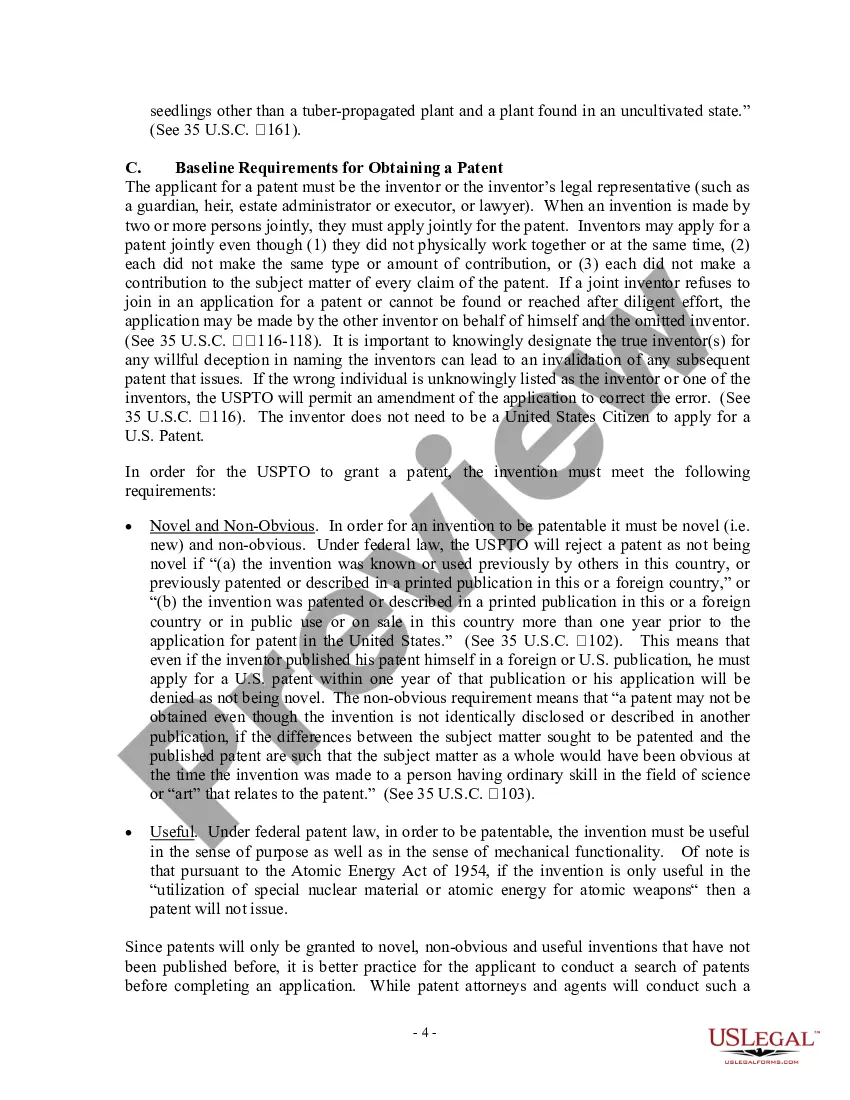
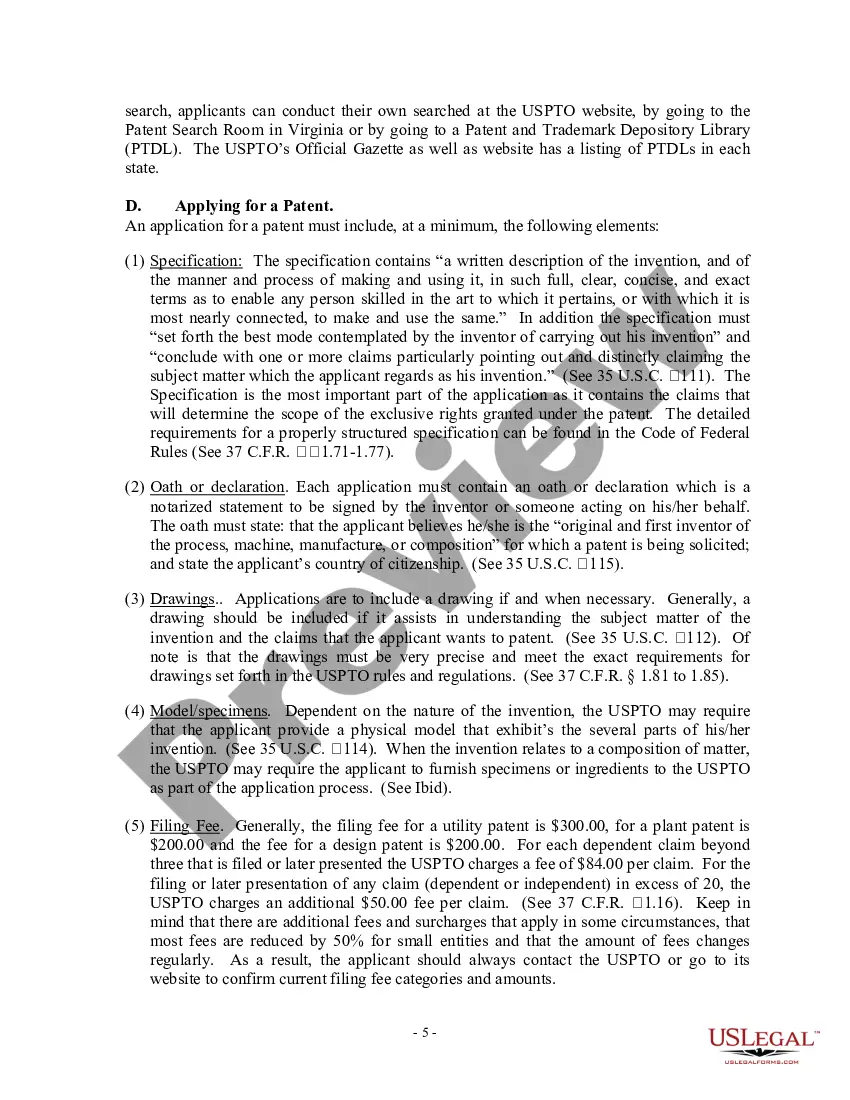
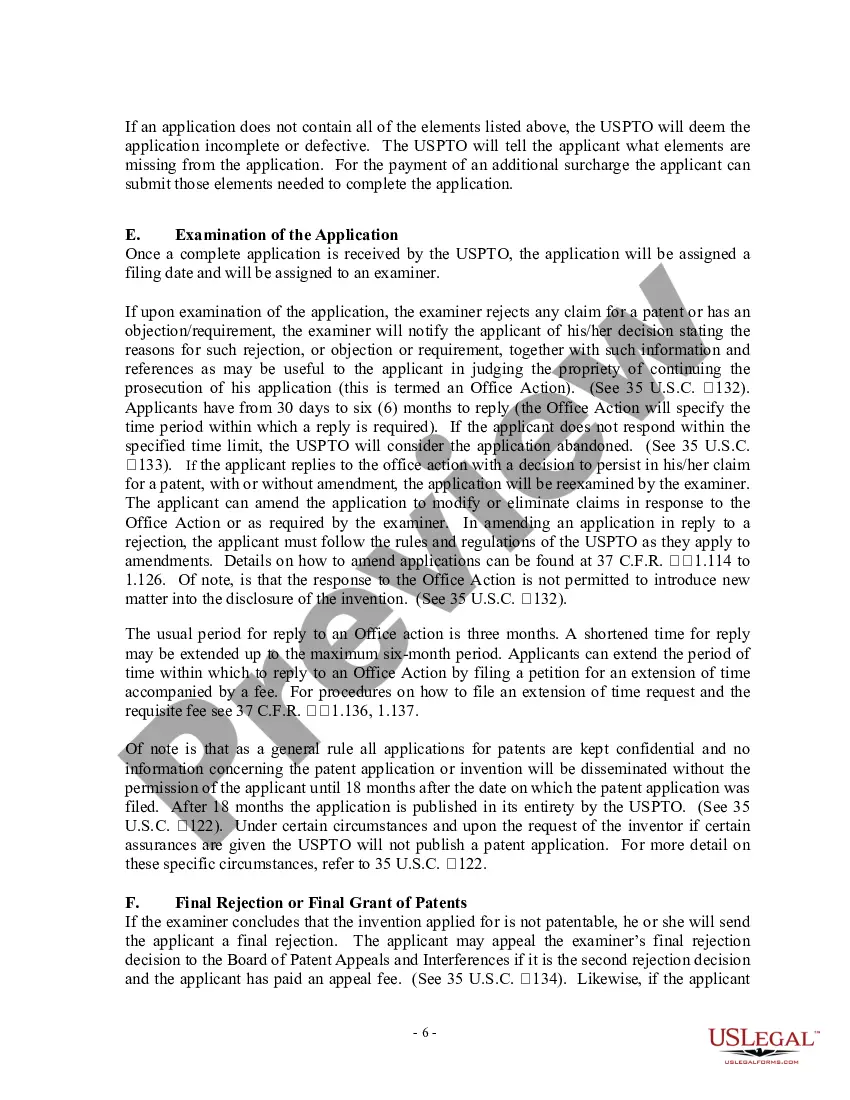
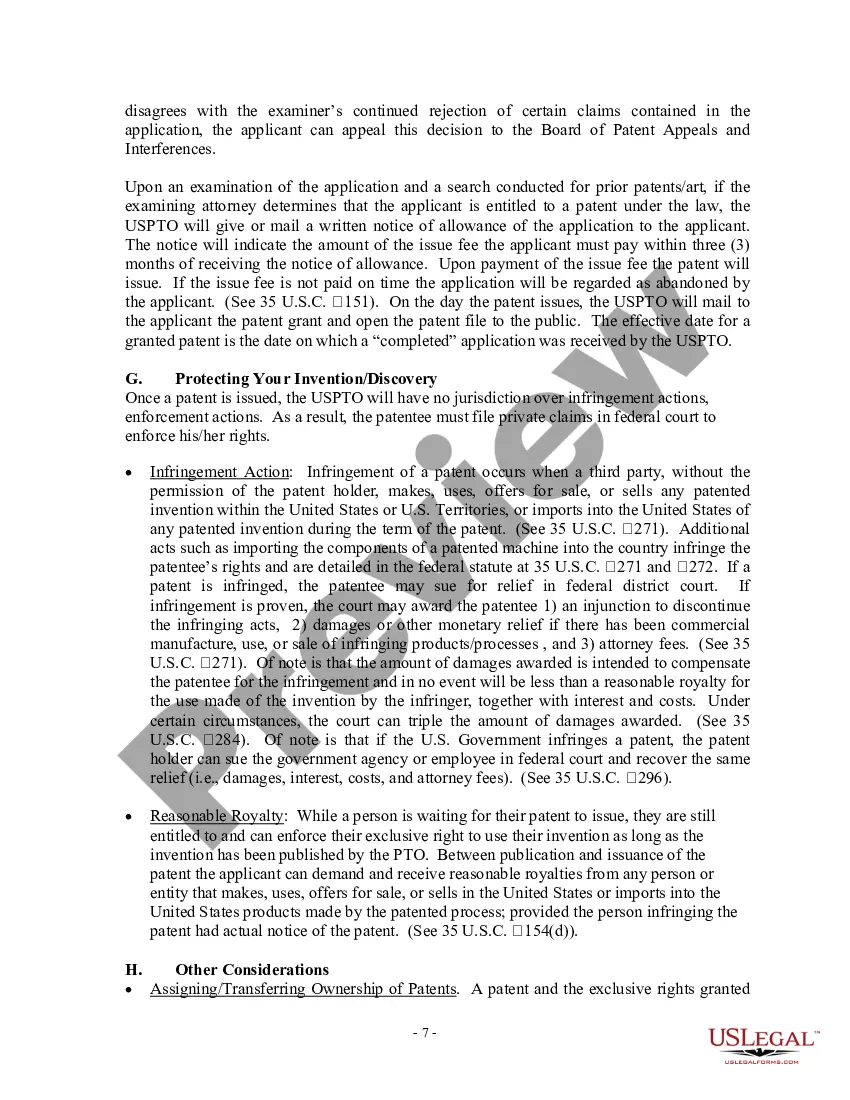
How do I protect software with a patent? If you want to protect your software through the patent system, you must submit a patent application. Your application must describe your invention in detail (the specification), should include drawings, and must truthfully name the inventors of the invention.
A software invention, for example, could be protected under copyrights (how human expression authored computer-readable code), patents (a useful, novel, and non-obvious method, device, or system), or both.
How do I protect software with a patent? If you want to protect your software through the patent system, you must submit a patent application. Your application must describe your invention in detail (the specification), should include drawings, and must truthfully name the inventors of the invention.
You can patent a product that results from an idea yourself, but you cannot patent the idea itself. However, the patent application process is arduous and complex, and if you have the financial means, you may want to hire a patent attorney to assist you.
The specification should be in conformity with the requirements of the Patents Act 1992 and Patents Rules 1992, typed or printed on single sided A4 pages with margins of 2 to 3 centimeters. These margins should be blank, and each page should be numbered. Two copies of the specification must be submitted.
