Patent Use Can For Mcq In Kings
Description




Get your form ready online
Our built-in tools help you complete, sign, share, and store your documents in one place.
Make edits, fill in missing information, and update formatting in US Legal Forms—just like you would in MS Word.
Download a copy, print it, send it by email, or mail it via USPS—whatever works best for your next step.
Sign and collect signatures with our SignNow integration. Send to multiple recipients, set reminders, and more. Go Premium to unlock E-Sign.
If this form requires notarization, complete it online through a secure video call—no need to meet a notary in person or wait for an appointment.
We protect your documents and personal data by following strict security and privacy standards.

Make edits, fill in missing information, and update formatting in US Legal Forms—just like you would in MS Word.

Download a copy, print it, send it by email, or mail it via USPS—whatever works best for your next step.

Sign and collect signatures with our SignNow integration. Send to multiple recipients, set reminders, and more. Go Premium to unlock E-Sign.

If this form requires notarization, complete it online through a secure video call—no need to meet a notary in person or wait for an appointment.

We protect your documents and personal data by following strict security and privacy standards.
Looking for another form?
Form popularity
FAQ
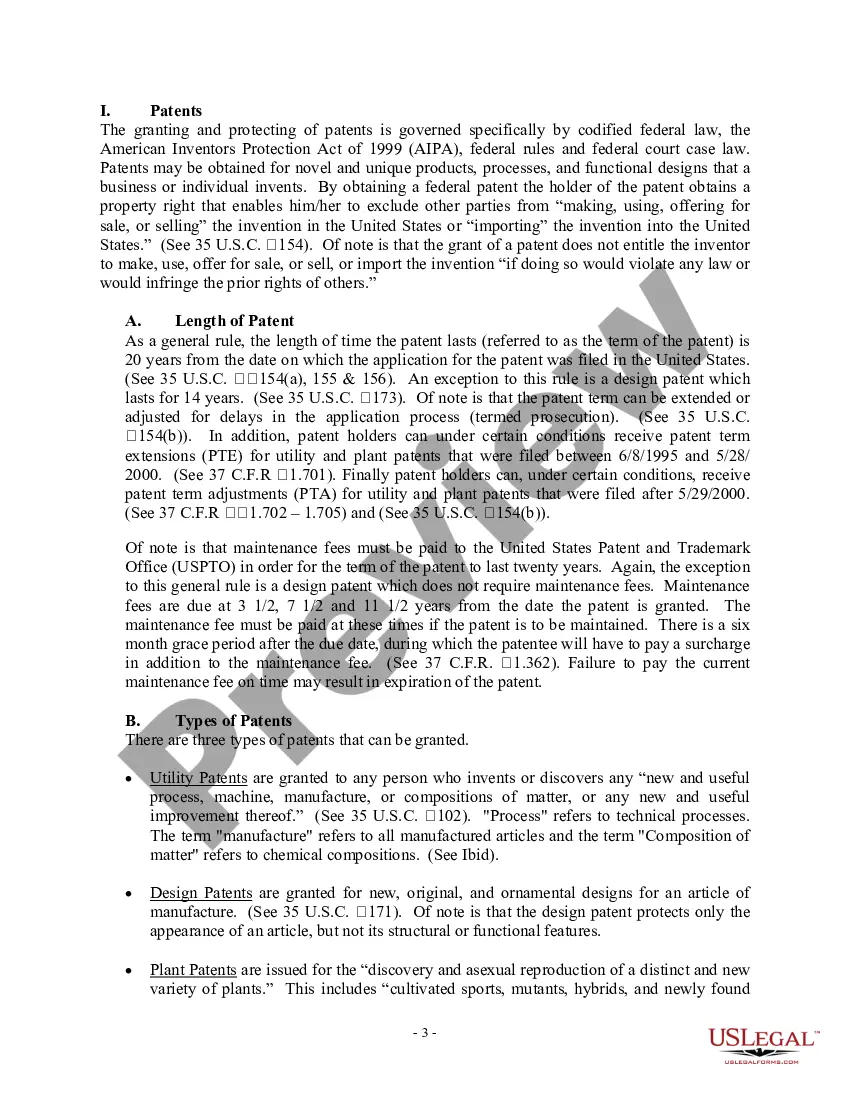
A patent protects an invention by allowing its inventor — or the group who owns the patent — control over who may use the invention.
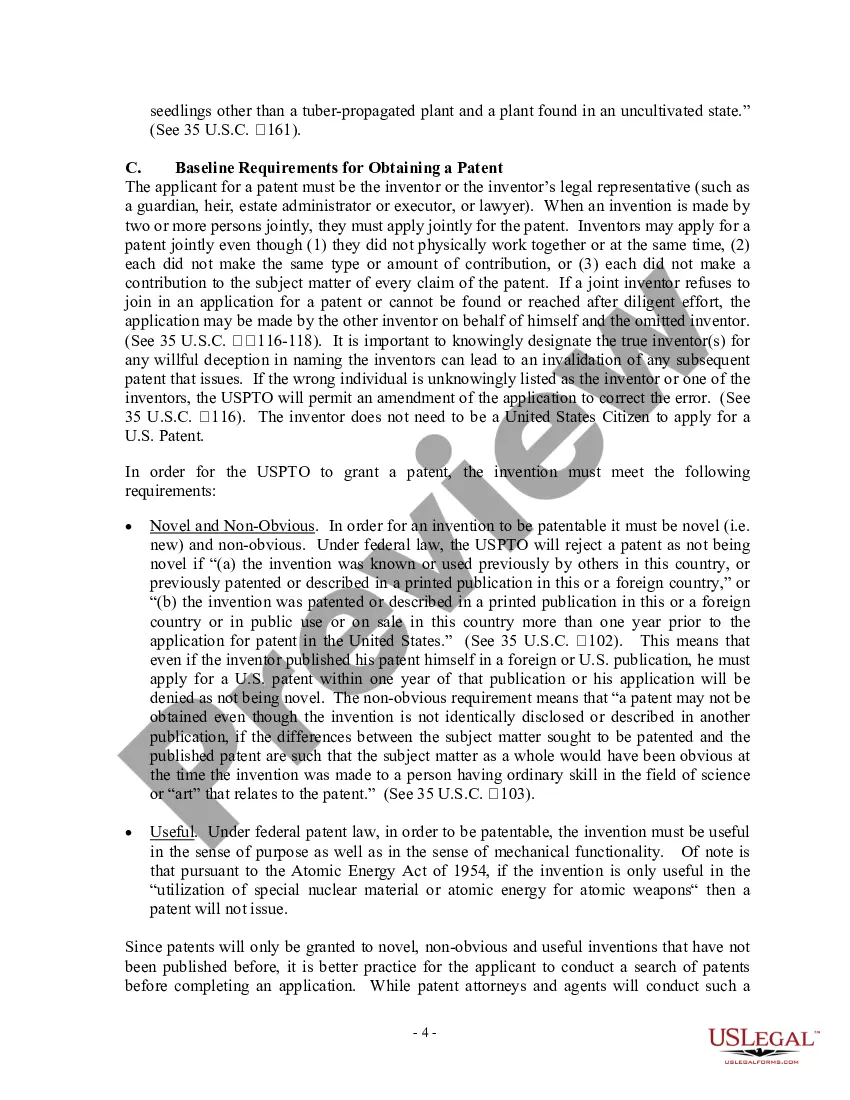
4.6. The correct answer is (C), (D), (A), (B) Key Points Patent: A patent is an exclusive right granted for an invention, which is a product or a process that provides, in general, a new way of doing something, or offers a new technical solution to a problem.
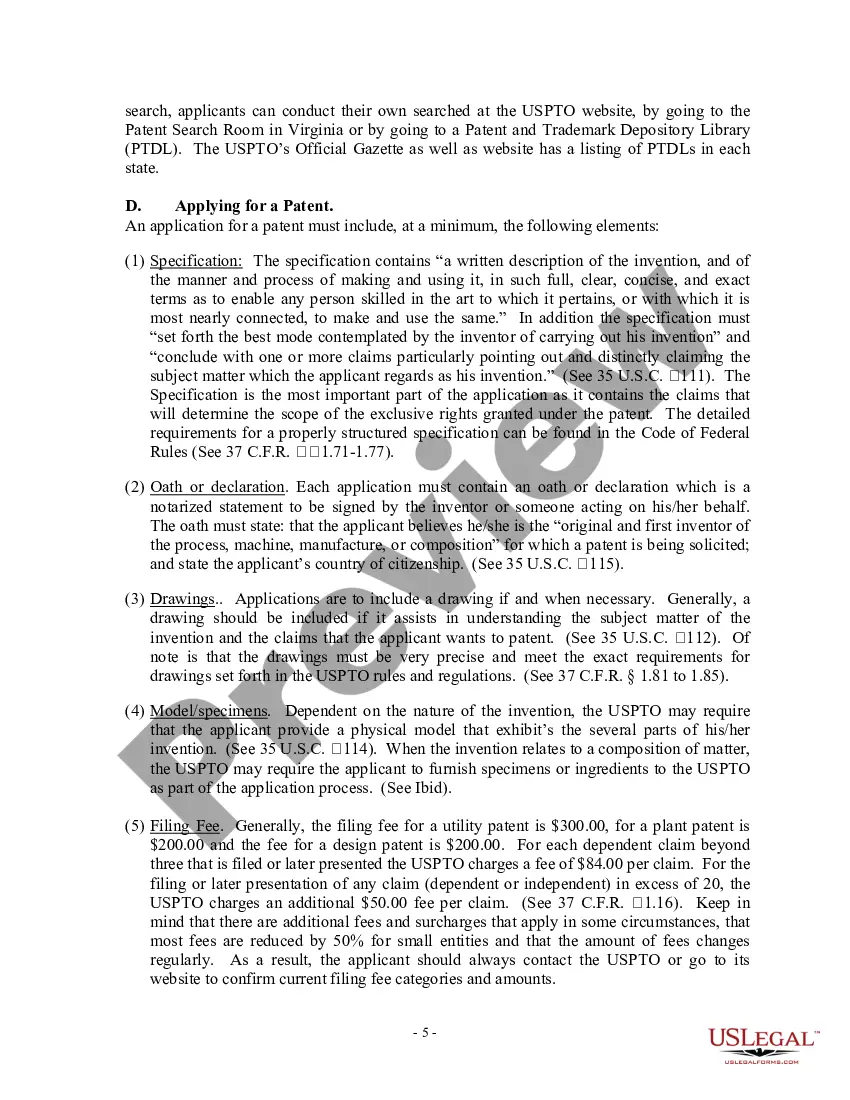
Patent Requirements The invention must be statutory (subject matter eligible) The invention must be new. The invention must be useful. The invention must be non-obvious.
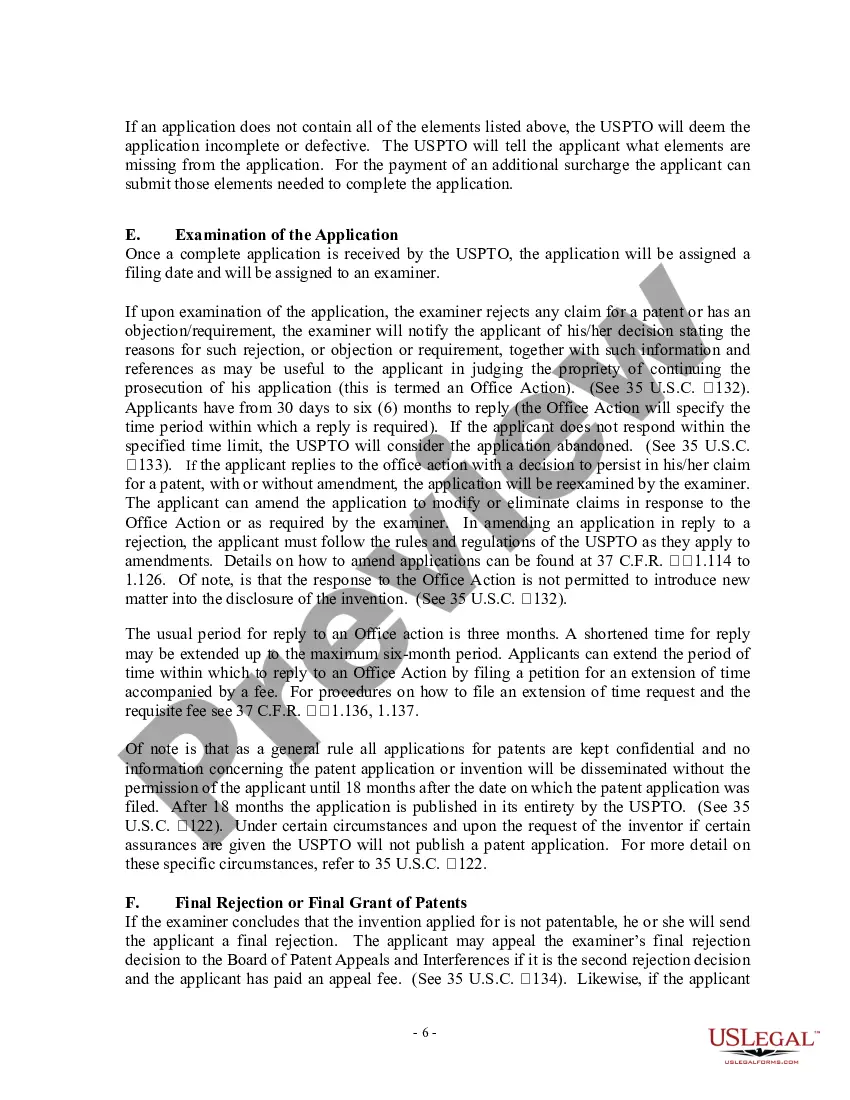
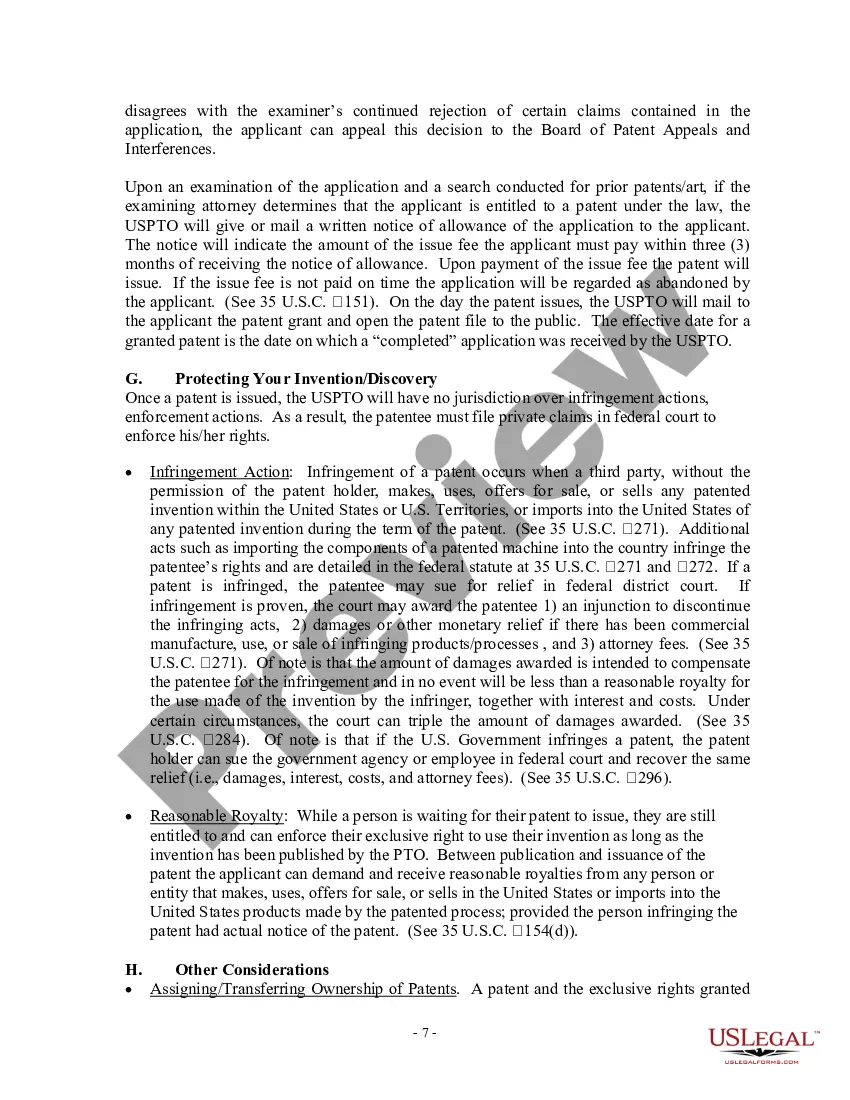
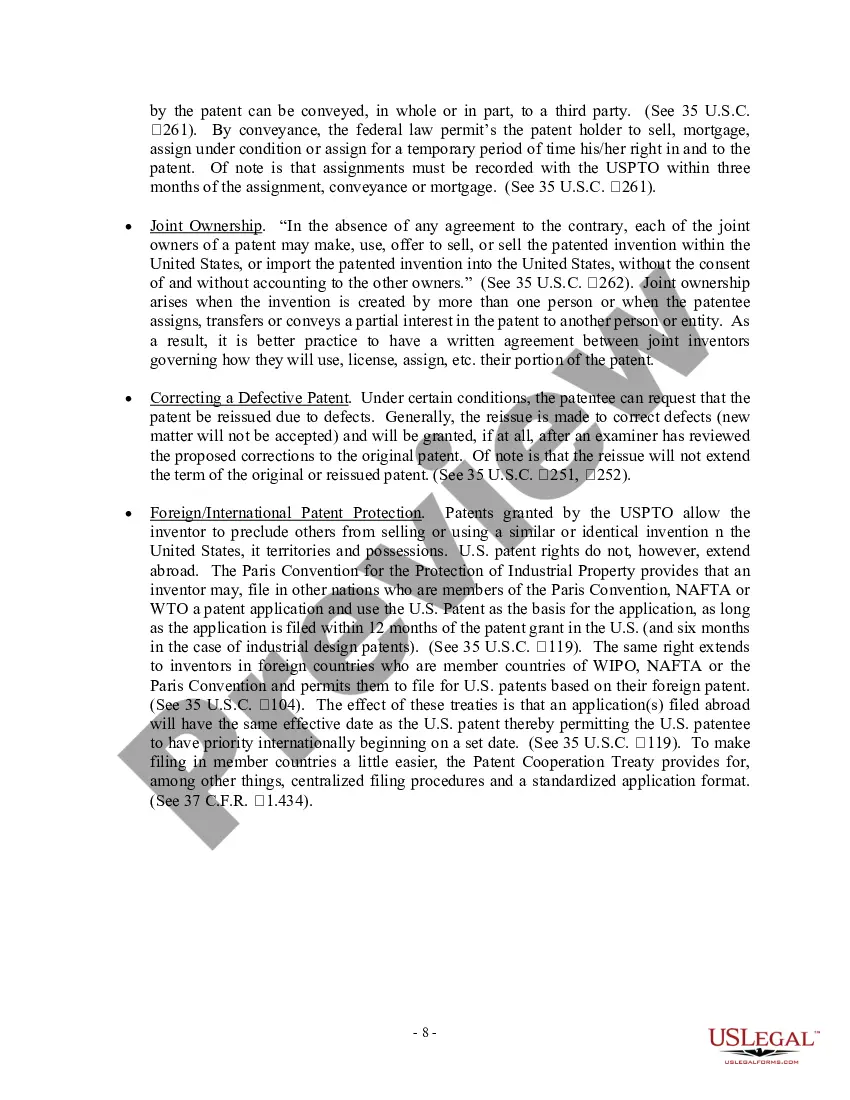
Patents protect inventions and grant the patent holder exclusive rights to use and commercialize the invention for a certain period, usually 20 years.
Patents: Patents protect inventions for a period of 20 years.
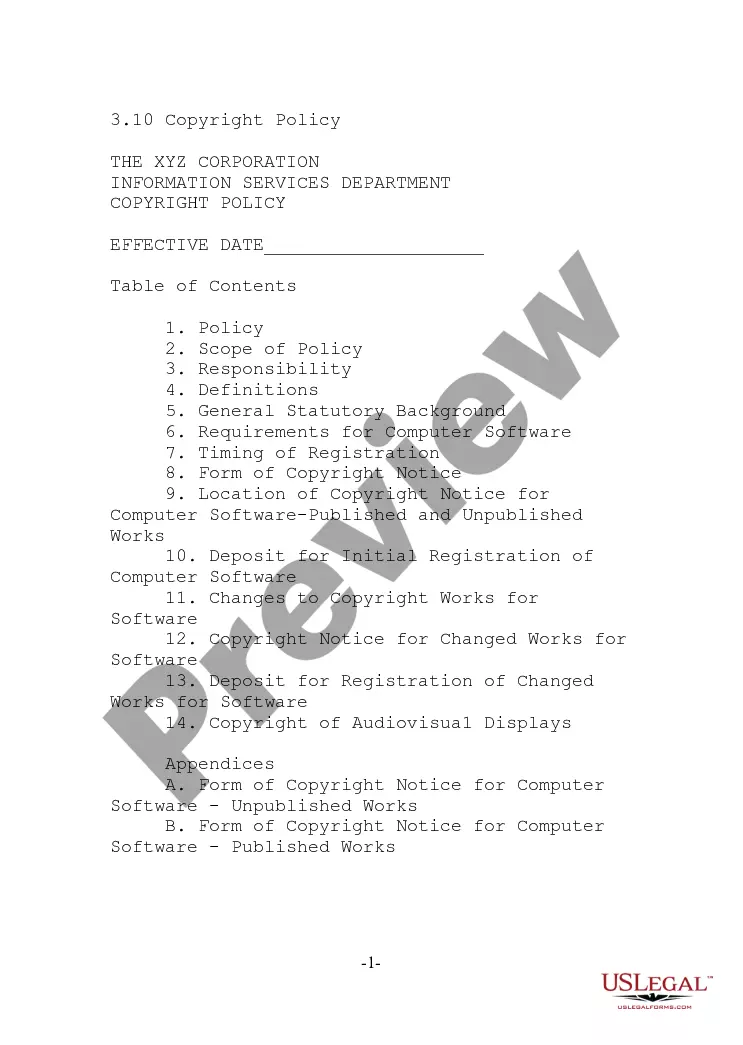
However, as with any other copyrighted work, the copyright in a patent, a patent application, or non-patent literature does not extend to any "idea, procedure, process, system, method of operation, concept, principle, or discovery" that may be disclosed in these works.
What Can Be Patented? Nearly anything can be patented. Machines, medicines, computer programs, articles made by machines, compositions, chemicals, biogenetic materials, and processes, can all be the subject matter for a United States patent.
Copyright protects original works of authorship, while a patent protects inventions or discoveries. Ideas and discoveries are not protected by the copyright law, although the way in which they are expressed may be.
The Poor Man's Patent Is Obsolete Being the first to invent will no longer save you is someone else filed first. So even if you did write out the idea for your invention and mailed it to yourself, that date would not matter.
