Patent Application For Prosecution In Maryland
Description




Get your form ready online
Our built-in tools help you complete, sign, share, and store your documents in one place.
Make edits, fill in missing information, and update formatting in US Legal Forms—just like you would in MS Word.
Download a copy, print it, send it by email, or mail it via USPS—whatever works best for your next step.
Sign and collect signatures with our SignNow integration. Send to multiple recipients, set reminders, and more. Go Premium to unlock E-Sign.
If this form requires notarization, complete it online through a secure video call—no need to meet a notary in person or wait for an appointment.
We protect your documents and personal data by following strict security and privacy standards.

Make edits, fill in missing information, and update formatting in US Legal Forms—just like you would in MS Word.

Download a copy, print it, send it by email, or mail it via USPS—whatever works best for your next step.

Sign and collect signatures with our SignNow integration. Send to multiple recipients, set reminders, and more. Go Premium to unlock E-Sign.

If this form requires notarization, complete it online through a secure video call—no need to meet a notary in person or wait for an appointment.

We protect your documents and personal data by following strict security and privacy standards.
Looking for another form?

Form popularity
FAQ
To practice patent law, you would register with the USPTO. This involves submitting an application and passing the multiple-choice exam, also called the patent bar exam. Some coursework or experience in science or engineering is a prerequisite for this exam, but a bachelor's degree may be adequate.
How to Apply for Patent in India?: Patent Filing Process in India Step 1: Patent Search. Step 2: Patent Application Filing. Step 3: Patent Specification Drafting. Step 4: Patent Publication. Step 5: Requesting Patent Examination. Step 6: Grant of Patent.
The search and examination phases constitute the main part of the prosecution of a patent application leading to grant or refusal. A search is conducted by the patent office for any prior art that is relevant to the application in question and the results of that search are notified to the applicant in a search report.
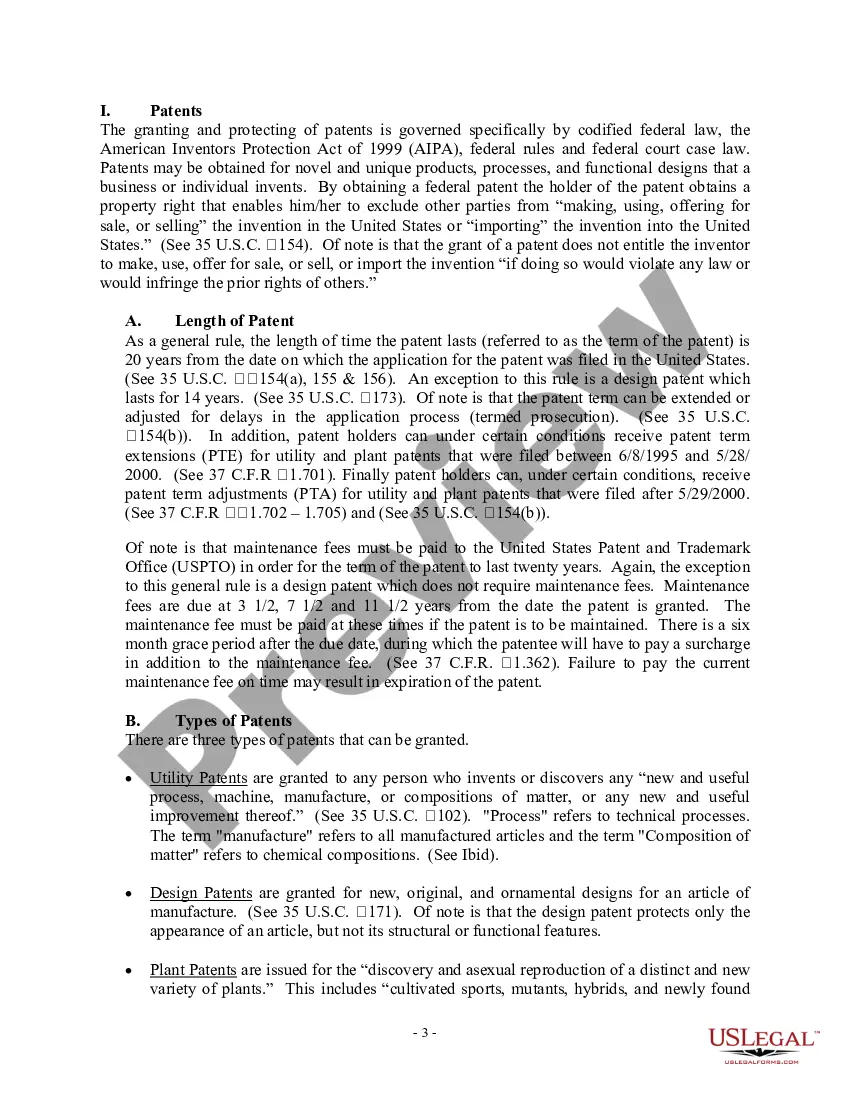
It is a negotiating process between the inventor (represented by an expert patent attorney) and the USPTO, usually centering on whether or not the invention is "non-obvious."
The timing of patent prosecution can vary significantly depending on the number of communications with the examiner. The goal of the USPTO is to issue the first Office Action within 14 months of the application filing date, and subsequent Office Actions within four months of each response submitted by the applicant.
A patent owner can enforce its patent rights against an infringer in any federal district court that has personal jurisdiction over the defendant. A patent owner can also enforce its patent rights in an administrative proceeding before the United States International Trade Commission (ITC).
