Patent Paper Example In Tarrant
Description

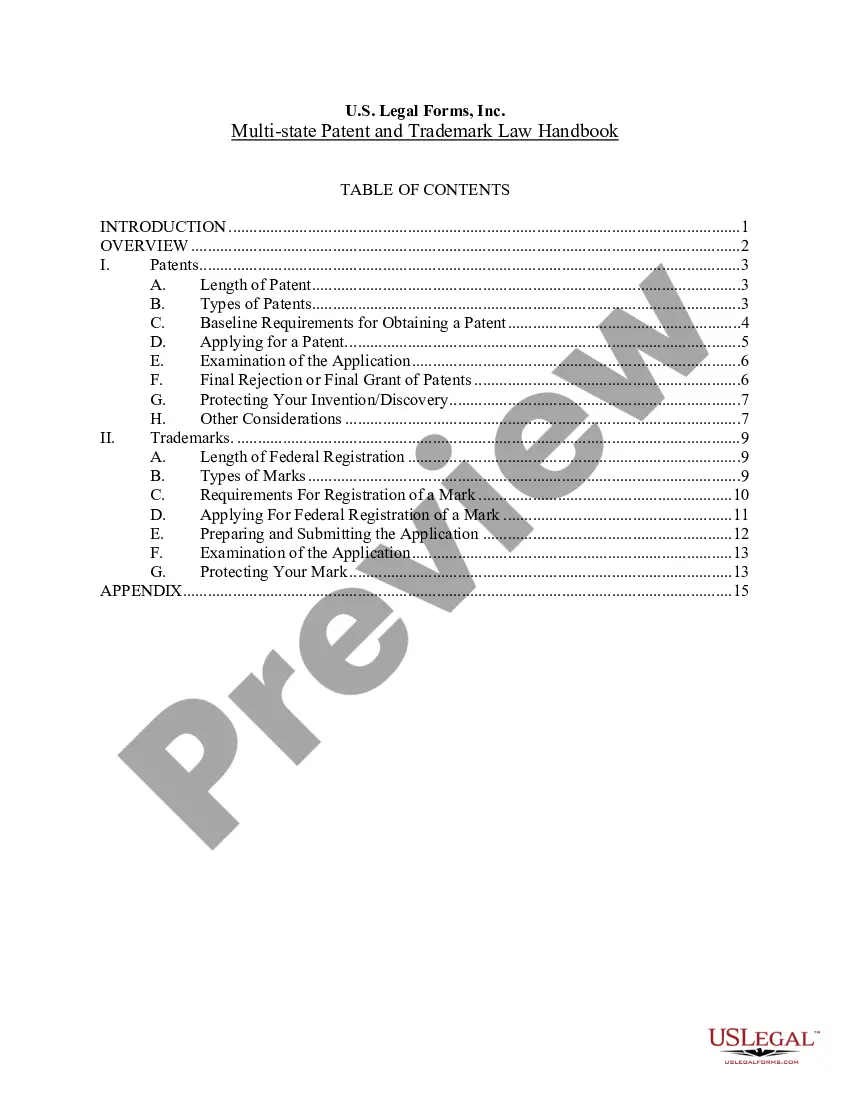
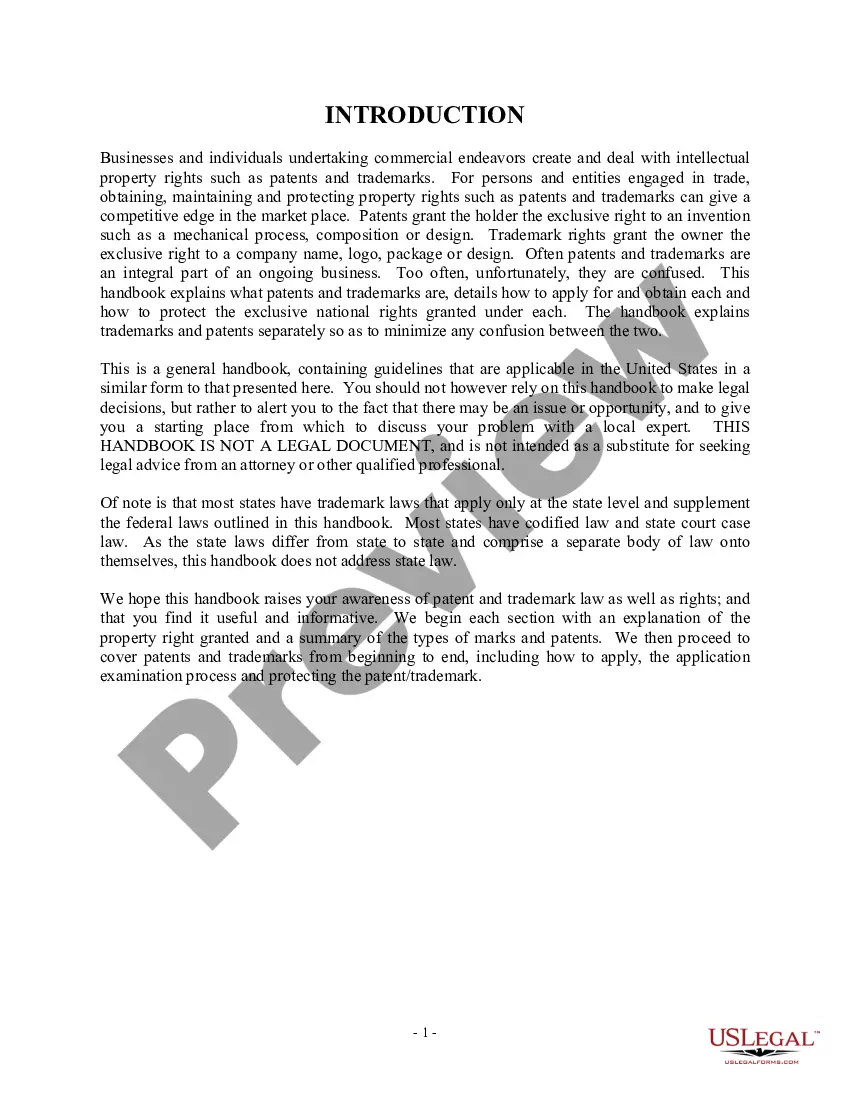
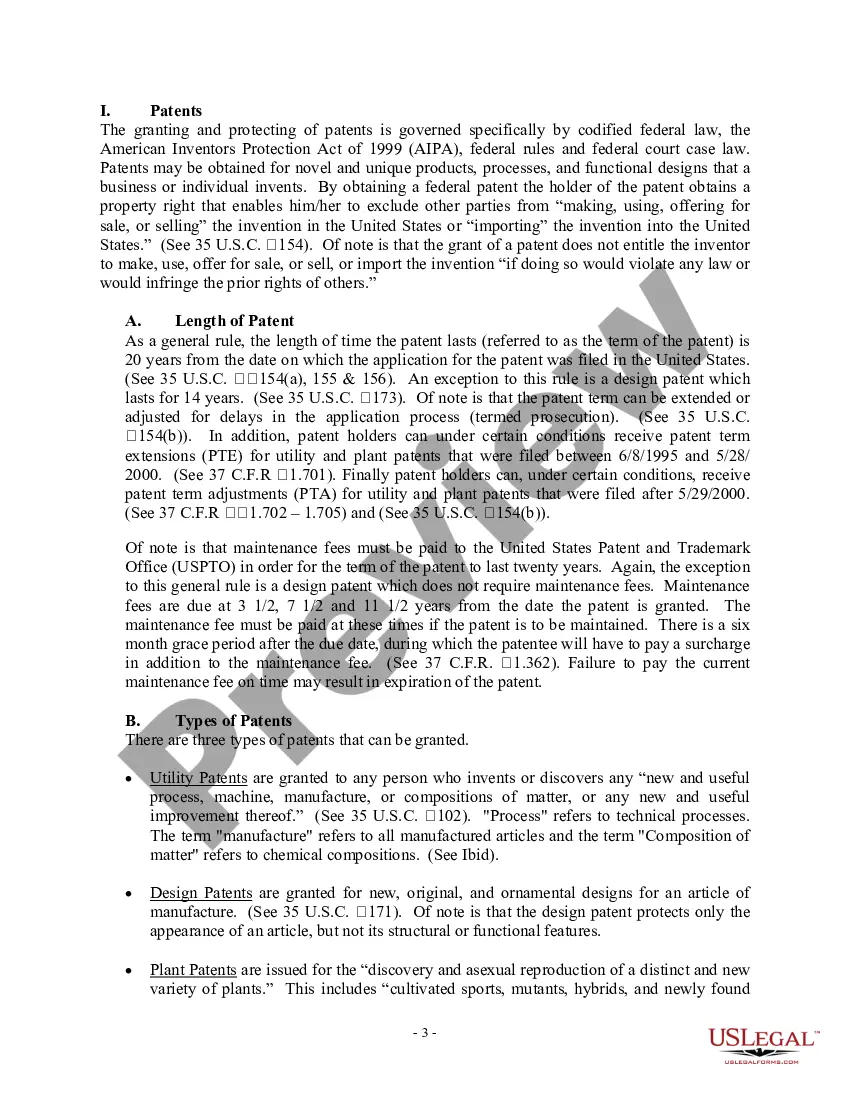

Get your form ready online
Our built-in tools help you complete, sign, share, and store your documents in one place.
Make edits, fill in missing information, and update formatting in US Legal Forms—just like you would in MS Word.
Download a copy, print it, send it by email, or mail it via USPS—whatever works best for your next step.
Sign and collect signatures with our SignNow integration. Send to multiple recipients, set reminders, and more. Go Premium to unlock E-Sign.
If this form requires notarization, complete it online through a secure video call—no need to meet a notary in person or wait for an appointment.
We protect your documents and personal data by following strict security and privacy standards.

Make edits, fill in missing information, and update formatting in US Legal Forms—just like you would in MS Word.

Download a copy, print it, send it by email, or mail it via USPS—whatever works best for your next step.

Sign and collect signatures with our SignNow integration. Send to multiple recipients, set reminders, and more. Go Premium to unlock E-Sign.

If this form requires notarization, complete it online through a secure video call—no need to meet a notary in person or wait for an appointment.

We protect your documents and personal data by following strict security and privacy standards.
Looking for another form?
Form popularity
FAQ
Filing Patent Application Patent application in Form-1. Proof of right to file application from the inventor. Provisional specifications, if complete specifications are not available. Complete specification in Form-2 within 12 months of filing of provisional specification.
A patent application often includes the following primary sections: Invention Title. The title's objective is to provide a clear understanding of the invention or idea. Prior Art: Context and Novelty. Invention Summary. Drawings and Descriptions. Detailed Description. Claims. Scope. Characteristics.
It is possible to file a patent application on your own, however it requires a solid understanding of patent law, the ability to draft accurate and comprehensive descriptions of your invention, and adherence to specific application procedures / requirements of the patent office.
Copies of official U.S. Patent and U.S. Trademark documents are available for sale from the Patent and Trademark Copy Fulfillment Branch. Request for copies must include payment and identification of the patent number(s) or trademark registration number(s) being requested.
Format of a Patent Application The Specification. The Title. The Description. The Claims. The Drawings. The Abstract. Sample Specifications. Minimum Requirements for a Filing Date.
“Text” will display the entire patent or published patent application in HTML text in a new browser tab. Select “PDF” to view the entire pdf file in a new browser tab. Use the download or print buttons on the right to download or print a copy of the pdf. The permanent web link for the image may be copied and pasted.
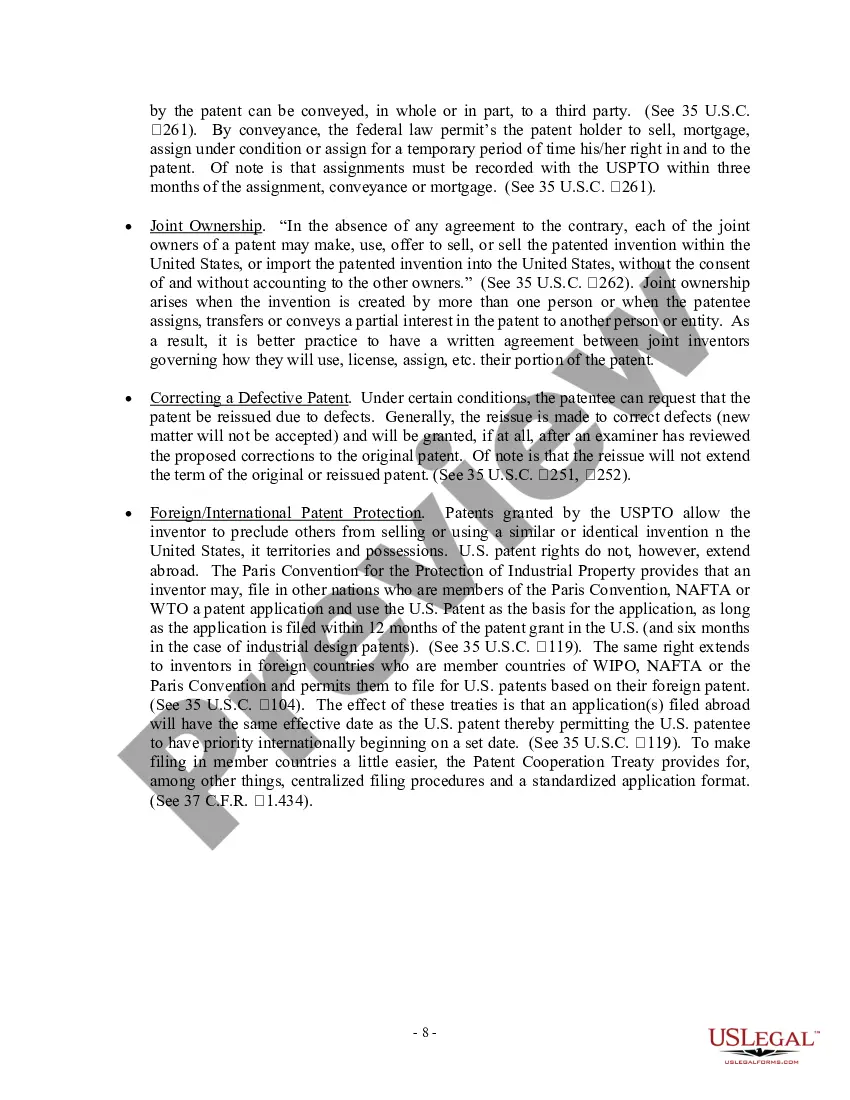
A patent provides its owner with the right to prevent the manufacture, sale, use, importation, or offer for sale of the patented product, process, or composition. A patent is not a positive right that enables its owner to do anything that he or she wants.
General Format: Inventor1, Inventor2, et al. Title of patent. Patent number (include country code, the word “Patent”, and patent number with retained commas), date of filing (format Month Date, Year), and issued date of publication (format Month Date, Year).
Structure of the specification A patent specification normally has the following parts in the order given: A title to identify the invention. A statement as to the field to which the invention relates. An explanation of the background “state of the art” – what was already known prior to the invention.
A patent application must include: a description of your invention that allows others to see how it works and how it could be made. legal statements that set out the technical features of your invention (that are to be protected (known as 'claims')
