File Notice Lis Pendens Fort Worth Tx In Broward
Description

Form popularity
FAQ
The titleholder can sell a property and transfer the deed to someone else while subject to a lis pendens. However, most title companies will not provide insurance for homes with a lis pendens, and closing agents may close with the lien being bonded.
To file a Lis Pendens in Texas, the party initiating the lawsuit must follow procedures outlined in the Texas Property Code. This includes submitting a declarative affidavit to the county clerk's office where the property is located. The affidavit must generally contain: Names of the parties involved.
The titleholder can sell a property and transfer the deed to someone else while subject to a lis pendens. However, most title companies will not provide insurance for homes with a lis pendens, and closing agents may close with the lien being bonded.
(2) A notice of lis pendens is not effectual for any purpose beyond 1 year from the commencement of the action and will expire at that time, unless the relief sought is disclosed by the pending pleading to be founded on a duly recorded instrument or on a lien claimed under part I of chapter 713 against the property ...
What Does Lis Pendens Mean? Lis pendens is a Latin term that literally means “lawsuit pending.” In a modern context, it is a notice filed against real estate that is under the control of the courts because of a pending lawsuit. It is often referred to as a “cloud on title”.
A lis pendens has no life of its own apart from the lawsuit that underlies it. If there is no lawsuit, there can be no valid lis pendens. “A lis pendens operates only during the pendency of the underlying suit, and only as to those matters that are involved in the suit.
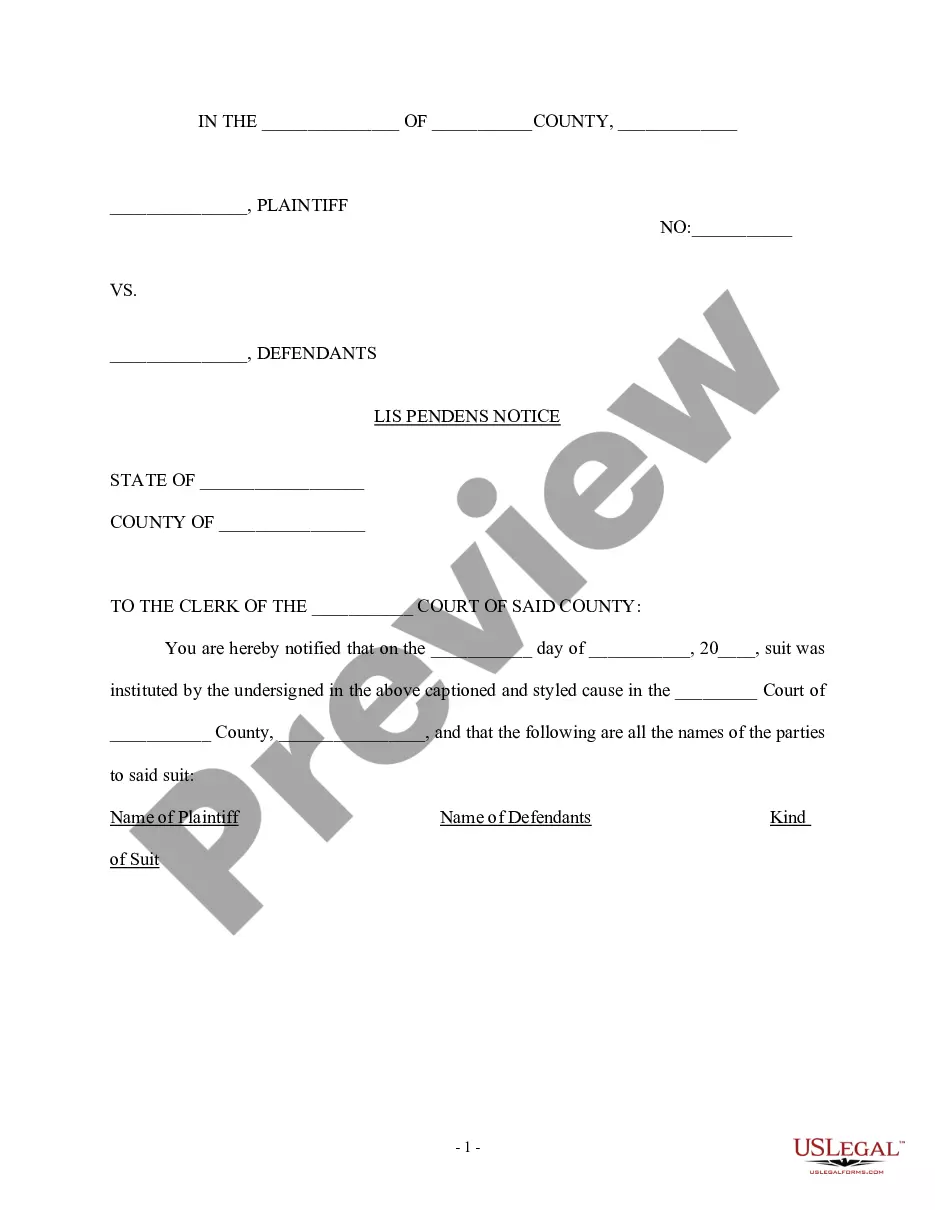
A notice of lis pendens must contain the following: a. The names of the parties. b. The date of the institution of the action, the date of the clerk's electronic receipt, or the case number of the action. c. The name of the court in which it is pending. d. A description of the property involved or to be affected. e.
Section 48.23 provides that the notice must contain the names of all of the parties, the name of the court in which the action is instituted, a description of the property involved or affected, a description of the relief sought as to the property, and one of the following: the date of the institution of the action, ...
A judgment is valid for 10 years after it is issued, and it can be enforced at any time within that time period. There are ways for a creditor to extend a judgment past that time, so if properly renewed, a creditor can seek to enforce the judgment and collect for many years even after the initial ten-year window.

