Lis Pendens Requirements In Houston
Description





Form popularity
FAQ
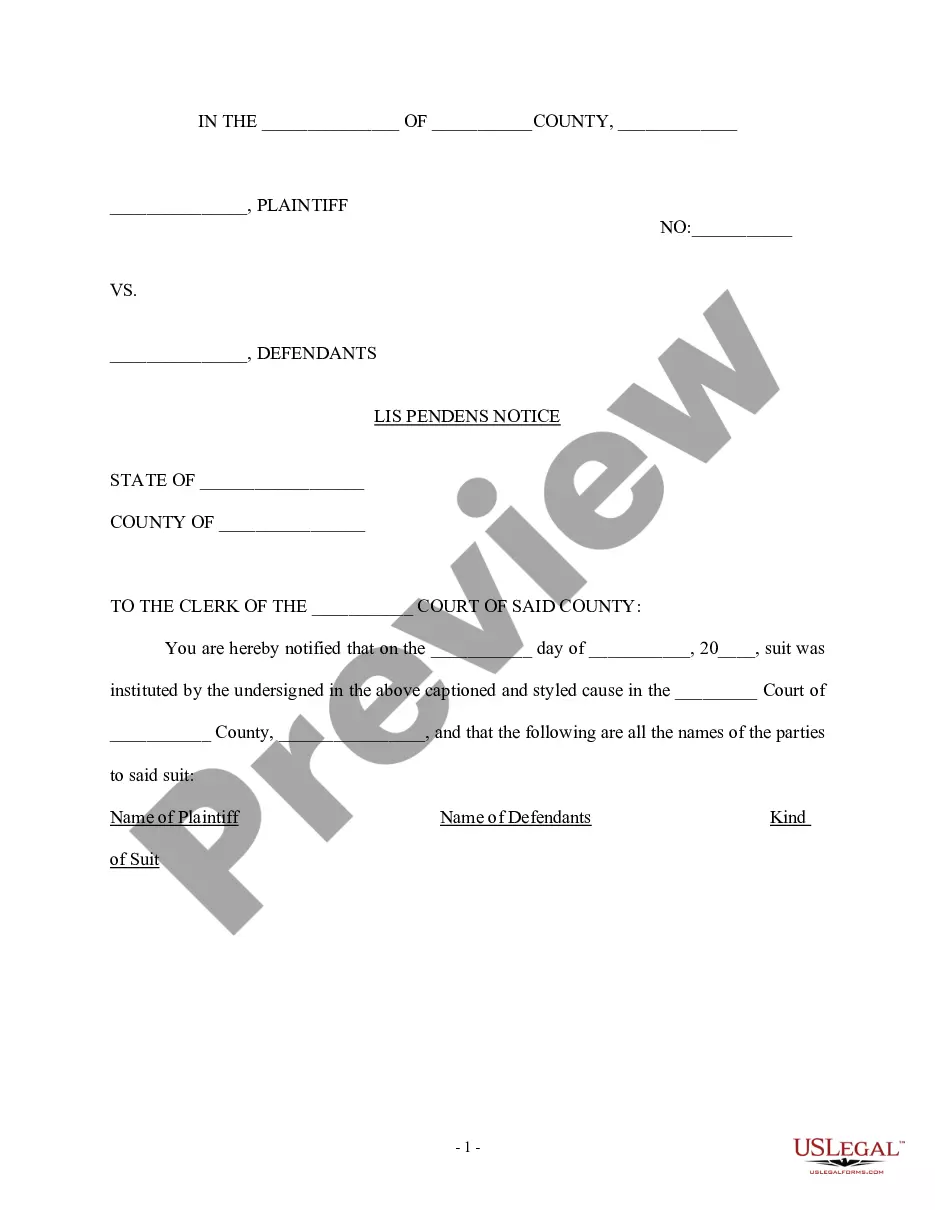
Lis Pendens Texas and Property Code Property Code Section 12.007(a) allows the party seeking relief to file a Lis Pendens during the pendency of an action involving title to real property, the establishment of an interest in real property, or the enforcement of an encumbrance against real property.
(b) The party filing a lis pendens or the party's agent or attorney shall sign the lis pendens, which must state: (1) the style and number, if any, of the proceeding; (2) the court in which the proceeding is pending; (3) the names of the parties; (4) the kind of proceeding; and (5) a description of the property ...
If someone has filed a Lis Pendens notice (which alerts others that there is a pending lawsuit involving a property), any party involved in the lawsuit can: Ask the court to remove the notice (e.g. Motion to Expunge). Notify all affected parties at least 20 days before the court hearing.
A judgment lien lasts for ten years. Generally, to file a judgment lien, an abstract of judgment must be issued by the justice court. Some justice courts have a form available on their website to request an abstract of judgment.
A lis pendens has no life of its own apart from the lawsuit that underlies it. If there is no lawsuit, there can be no valid lis pendens. “A lis pendens operates only during the pendency of the underlying suit, and only as to those matters that are involved in the suit.
A judgment is valid for 10 years after it is issued, and it can be enforced at any time within that time period. There are ways for a creditor to extend a judgment past that time, so if properly renewed, a creditor can seek to enforce the judgment and collect for many years even after the initial ten-year window.
A Lis Pendens Can be Removed, Foreclosed or “Expunged”, Even if it was Validly Recorded. Under California law, a lis pendens may be expunged by filing a motion with the court based upon a showing that: the claimant has not made a real property claim in their underlying lawsuit, or.
What is a lis pendens? (CCP § 405.21) A lis pendens – also called a notice of pendency of action – is a special type of legal document filed with a county recorder. Though its use is limited to lawsuits involving real property claims, its effect is powerful.
There is no specific time frame for how long a lis pendens is valid. Rather, a lis pendens is valid until it is expunged or the underlying case is resolved. If not expunged, a lis pendens is often removed as part of a settlement agreement reached between the parties.
To file a Lis Pendens in Texas, the party initiating the lawsuit must follow procedures outlined in the Texas Property Code. This includes submitting a declarative affidavit to the county clerk's office where the property is located. The affidavit must generally contain: Names of the parties involved.

