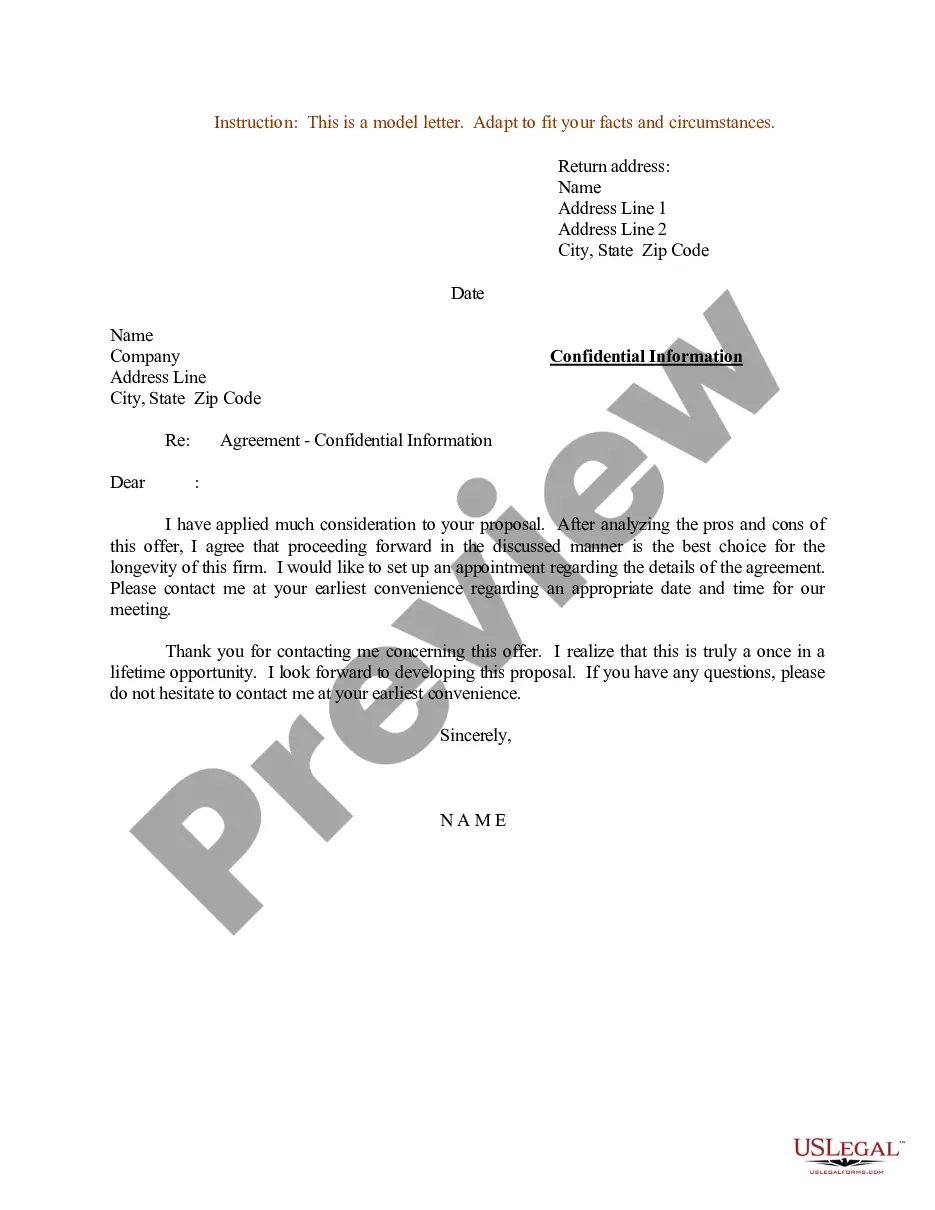
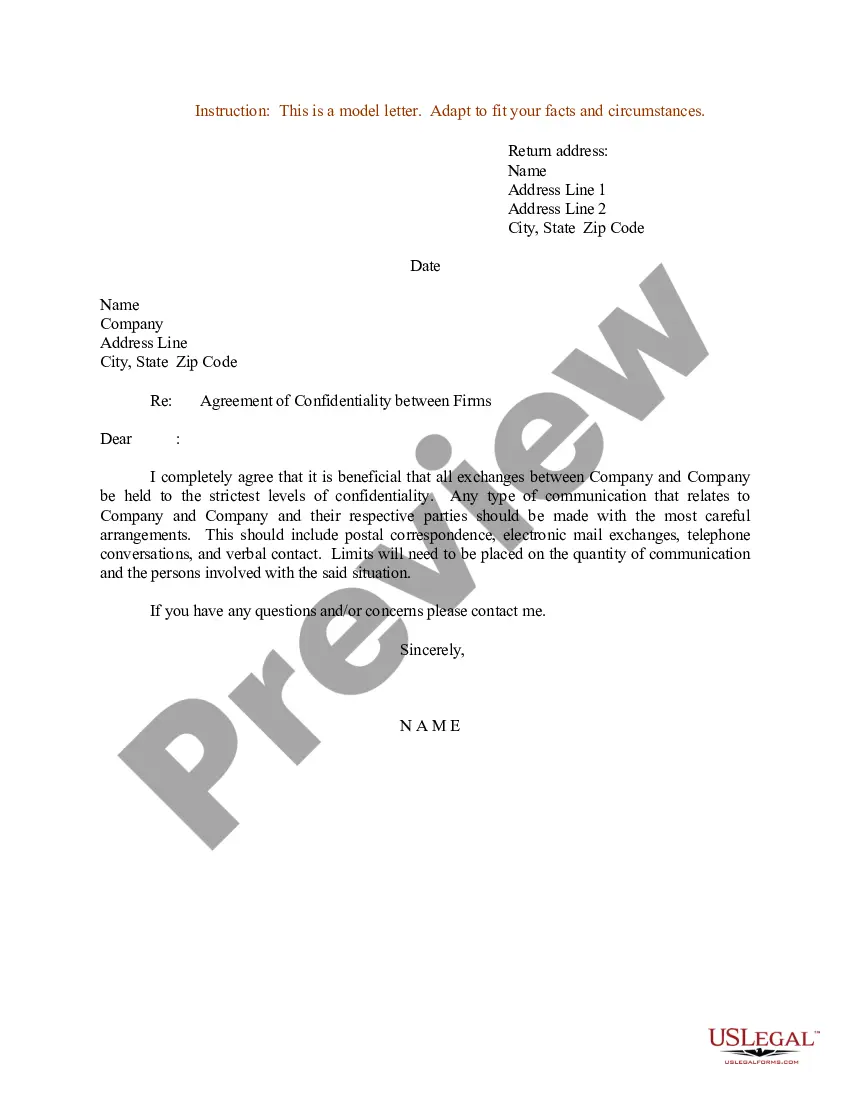
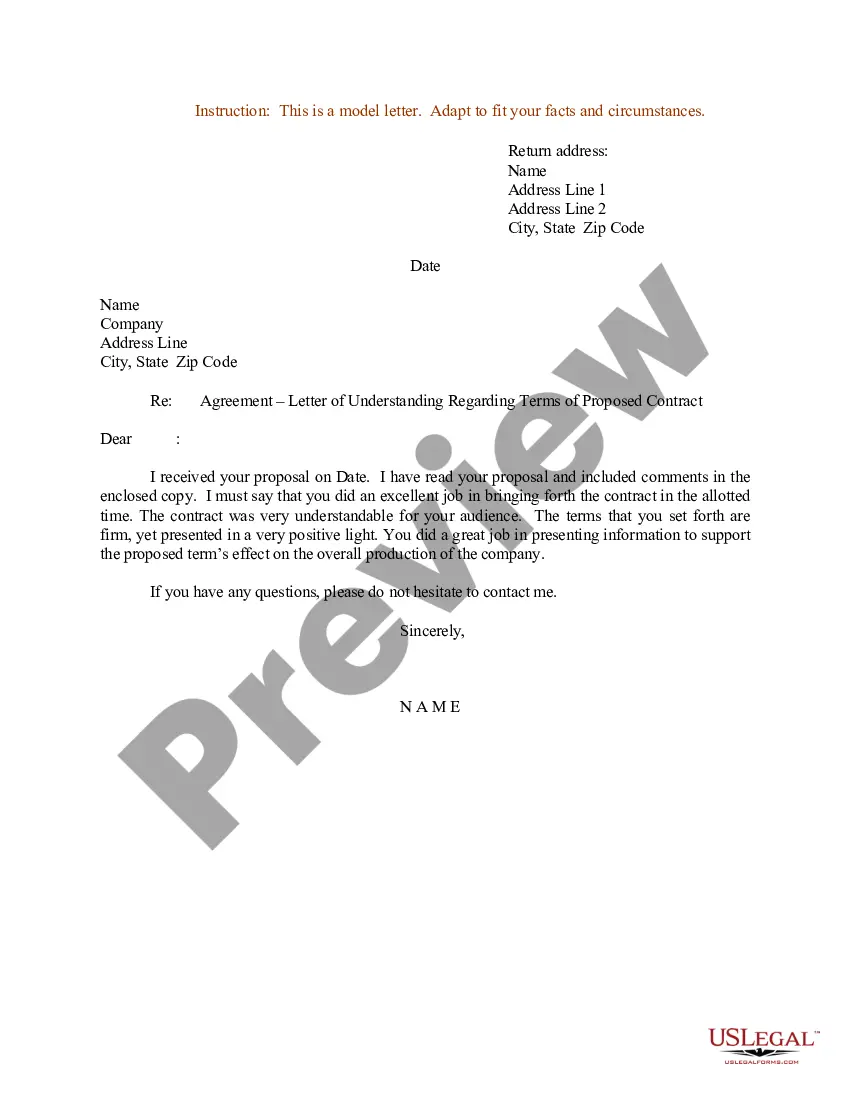
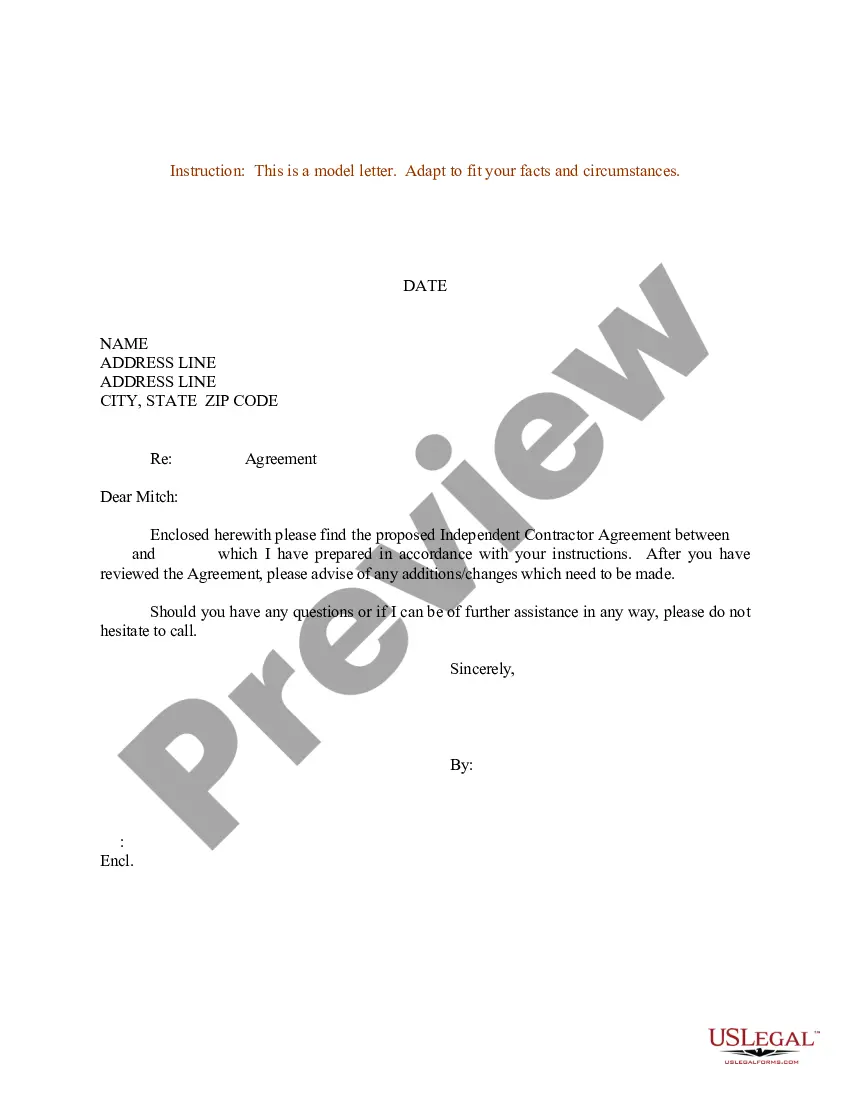
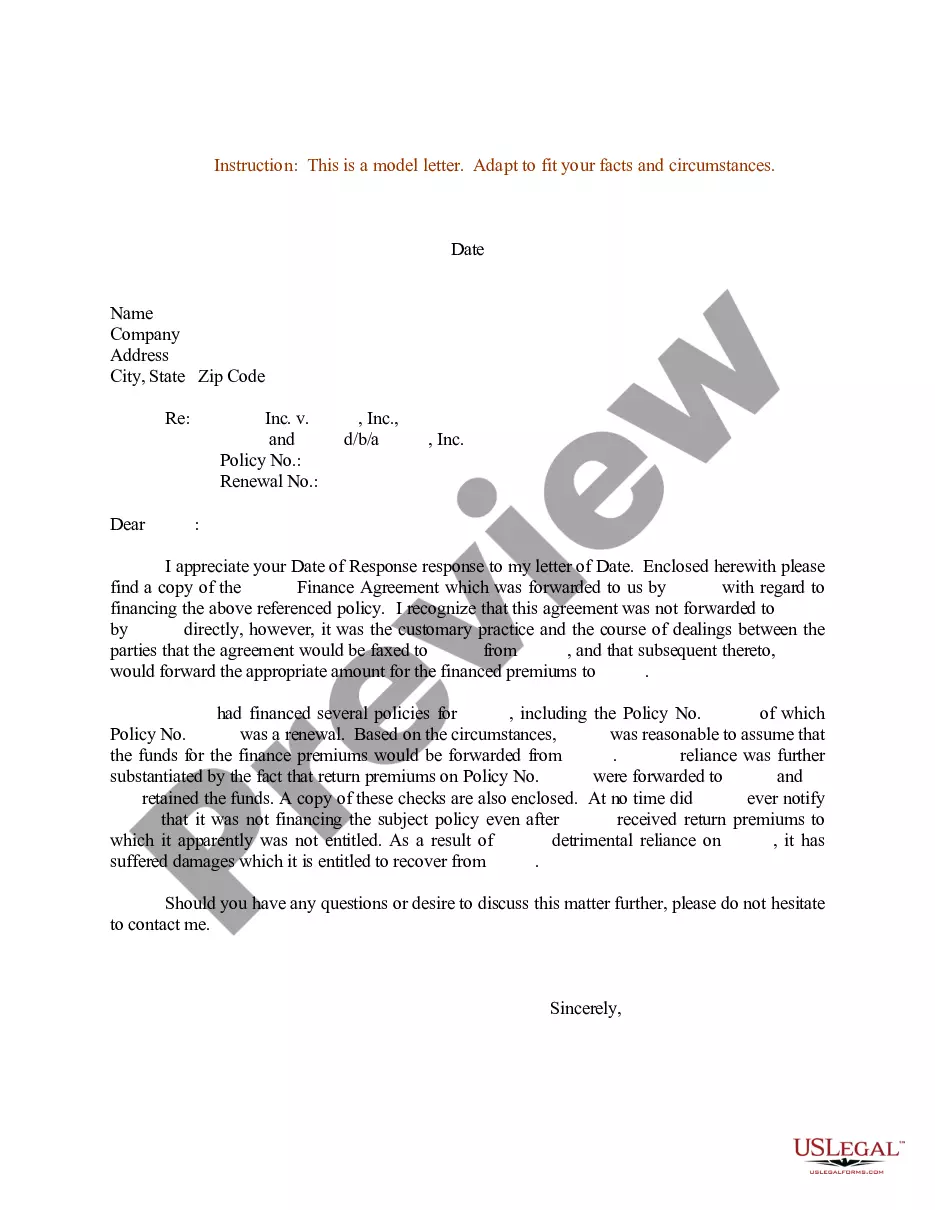
Private And Confidential Letter Sample For Job Application In Georgia
Description





Form popularity
FAQ
How Do You Write A Job Application Letter? Read the job advertisement details. Review professional letter formats. Write a clear heading. Address the letter to the right person. Begin by expressing interest in the job. Describe your eligibility for the job. Highlight your attributes. End the letter with a thank you.
Simply send your cover letter as the body of an email. Explain that you are conducting a confidential job search, that you're incredibly interested in the role, and that after reading the job description you are sure it's a position that you are a good fit for.
How to write a cover letter for a confidential job posting Create a professional letter header. You can start your letter by creating a professional header. Use a formal salutation. Write an opening paragraph. Add body paragraphs. Add a conclusion and closing. Research the company.
How to write a job application letter Research the company and position. Application letters must be unique to the company and position you're applying for. Start by expressing your interest in the position. Mention your qualifications and experience. Describe your personality. Appreciate the reader. Close the letter.
For example, you may write: "This letter and its enclosures are confidential and intended for the exclusive use of the addressee. If you are not the intended recipient, please notify the sender immediately and destroy this letter and its enclosures.
1 Answer 1 You simply say, ``I agreed to keep my employer's business confidential when I went to work for them. It's important to me to be trustworthy.'' If you are firm and polite about this, you will identify yourself as someone who is business-savvy.
Start With A Salutation You start your personal letter with a salutation. So, your salutation defines how you will approach the conversation. It is the time when you get connected with your recipient. So, if you are writing a formal letter, using a formal tone, such as Dear, respected, is recommended.
How to write an application letter Research the company and job opening. Use a professional format. State the position you're applying for. Explain why you're the best fit for the job. Summarize your qualifications. Mention why you want the job. Include a professional closing.
If you don't know the recipient's name, begin your cover letter with a generic salutation such as ``Dear Hiring Manager'' or ``To Whom It May Concern.'' While it's ideal to address the letter to a specific individual, using a generic greeting is acceptable when the recipient's name is unknown.
When a user needs to print confidential data, watermarks are a powerful, visual aid that reminds users of the need to properly handle, protect and dispose of printed material. Obvious examples of watermarks include shaded text phrases like “Top Secret”, “Confidential”, and “Internal Use Only”.