Texas Partition Agreement With Spouse In Illinois
Description




Form popularity
FAQ
In Texas, there is no presumption that each party owns separate property. However, spouses do have equal ownership rights to their respective properties.
Even if only one spouse's name is on the deed, any property bought during the marriage is presumed to be community property, unless it was bought with separate property funds. The spouse claiming it as separate property must prove it in court.
In Texas, like in many other states, postnuptial agreements provide a valuable tool for couples to clarify their financial rights and responsibilities during marriage—and address potential issues that may arise in the future (i.e., what happens if the parties divorce).
The answer is yes and the usefulness of a Rule 11 agreement as a final judgment is important to remember. Here's why: If a Rule 11 agreement operates as a final judgment, then a trial court retains jurisdiction to enforce the agreement well after the underlying lawsuit has been dismissed.
In short, yes, you should have an attorney to represent you in a postnuptial agreement for several reasons: To be sure you are treated fairly in the agreement. To have the agreement upheld, as a court is much more likely to say it is a valid contract if both parties were represented by counsel when they entered into it.
Aside from child custody agreements, there is a freedom to contract in almost any way a couple sees fit. As a result, most content in a postnup in Texas will be legally enforced unless it breaks the law in some way. Similarly, a postnup will not be enforced if there is proof of fraud or duress in its creation.
Examples of marital property include the marital home, retirement accounts, and vehicles. Illinois is an equitable division state, so marital property does not have to be split evenly. Marital property is property owned by both parties. This type of property is split during the property division phase of a divorce.
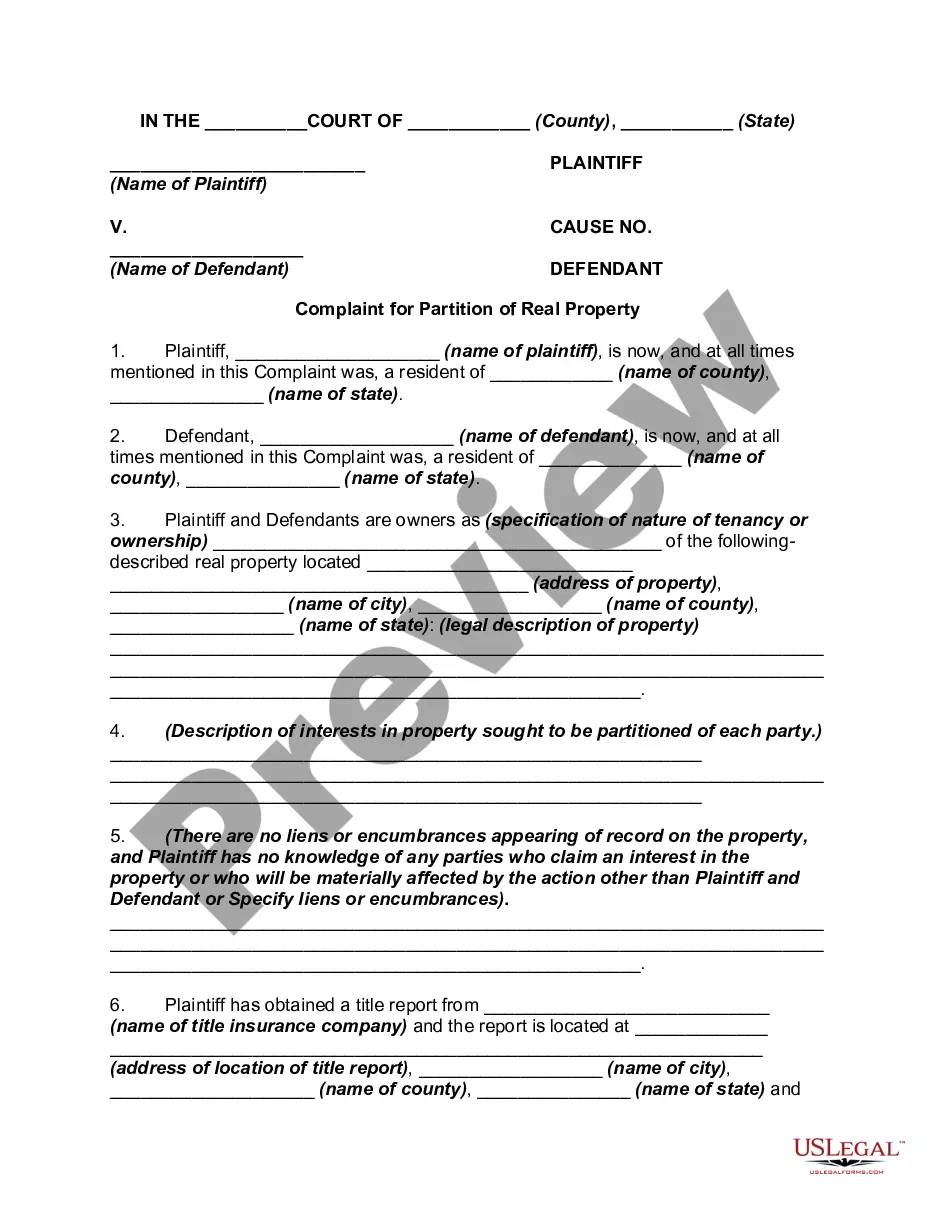
A partition action must be initiated with a verified complaint filed in the circuit court of the county where the land is located. 735 ILCS 5/17-101. The verified complaint needs to include a particular description of the premises sought to be divided.
