Partition Agreement In India In Nevada
Description


Get your form ready online
Our built-in tools help you complete, sign, share, and store your documents in one place.
Make edits, fill in missing information, and update formatting in US Legal Forms—just like you would in MS Word.
Download a copy, print it, send it by email, or mail it via USPS—whatever works best for your next step.
Sign and collect signatures with our SignNow integration. Send to multiple recipients, set reminders, and more. Go Premium to unlock E-Sign.
If this form requires notarization, complete it online through a secure video call—no need to meet a notary in person or wait for an appointment.
We protect your documents and personal data by following strict security and privacy standards.

Make edits, fill in missing information, and update formatting in US Legal Forms—just like you would in MS Word.

Download a copy, print it, send it by email, or mail it via USPS—whatever works best for your next step.

Sign and collect signatures with our SignNow integration. Send to multiple recipients, set reminders, and more. Go Premium to unlock E-Sign.

If this form requires notarization, complete it online through a secure video call—no need to meet a notary in person or wait for an appointment.

We protect your documents and personal data by following strict security and privacy standards.
Looking for another form?


Form popularity
FAQ
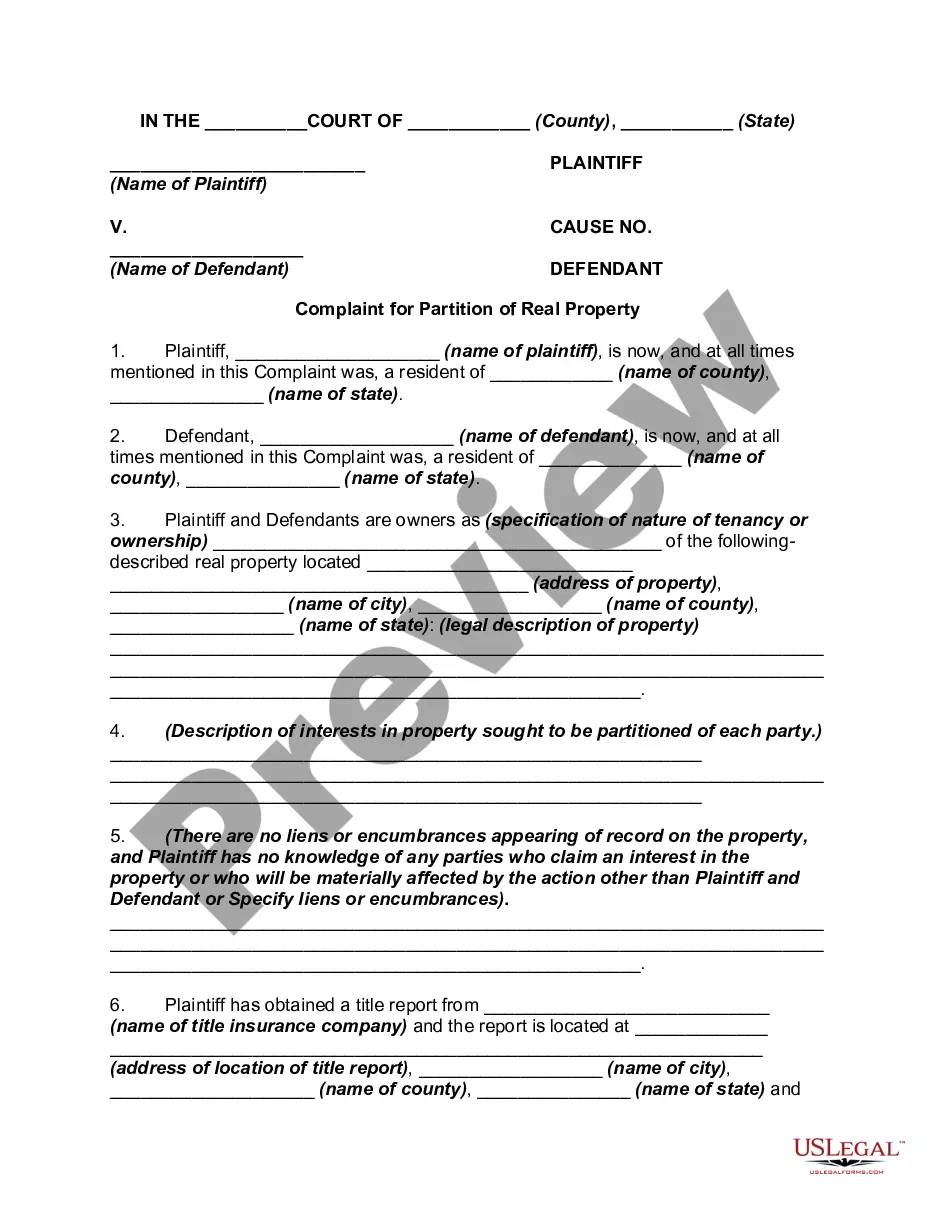
A partition lawsuit is a legal action that allows co-owners of a property to seek a court order to divide or sell the property when they cannot reach an agreement. Partition actions are typically used in cases of joint tenancy, tenancy in common, or other forms of co-ownership.
In India, joint property is generally divided based on the principle of equitable distribution, meaning assets are divided fairly rather than equally. The court considers factors like financial contributions, duration of the marriage, and future financial needs of each spouse.
The first step to a partition action is to petition the court for a partition of the property. In order to petition the court, a litigant must file a legally valid complaint for partition. As noted above, the litigant must be a co-owner of the subject property in order to have standing to file a partition complaint.
Anyone who co-owns real property can file a petition for a partition action. State laws give property owners who share ownership of real property the right to file a partition lawsuit and request a forced sale of the property.
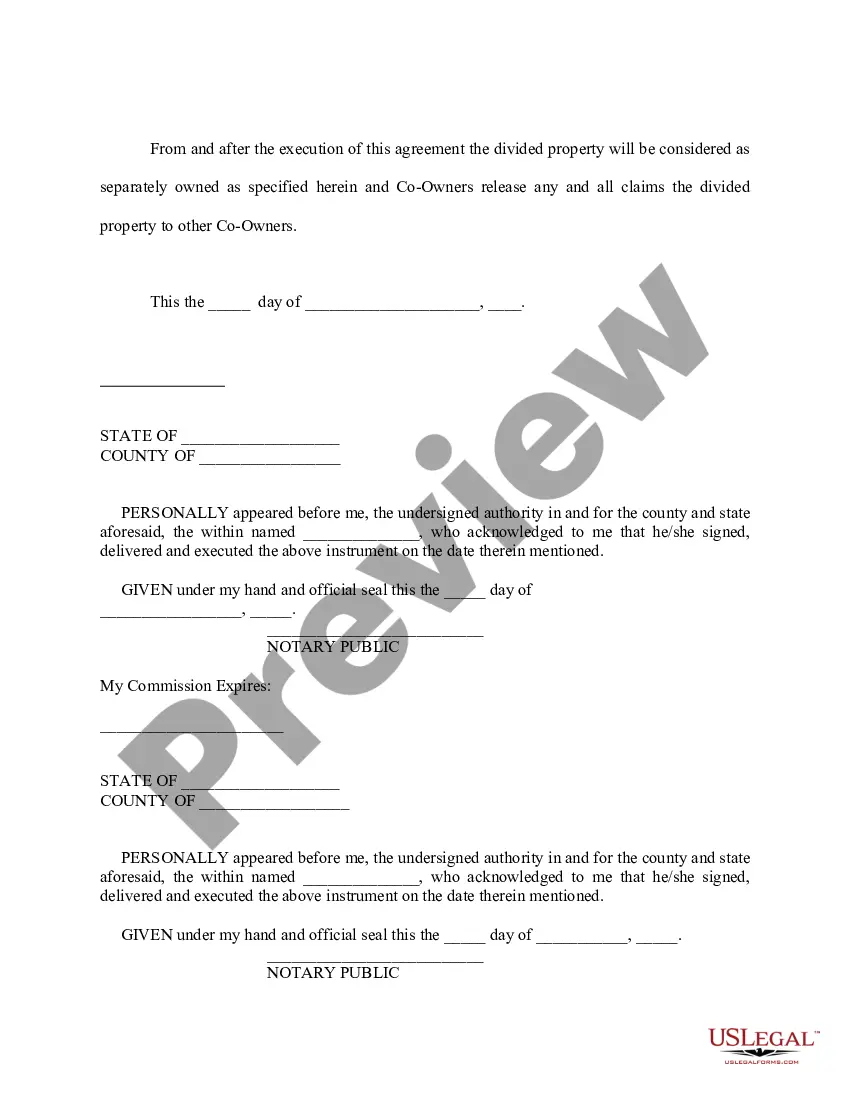
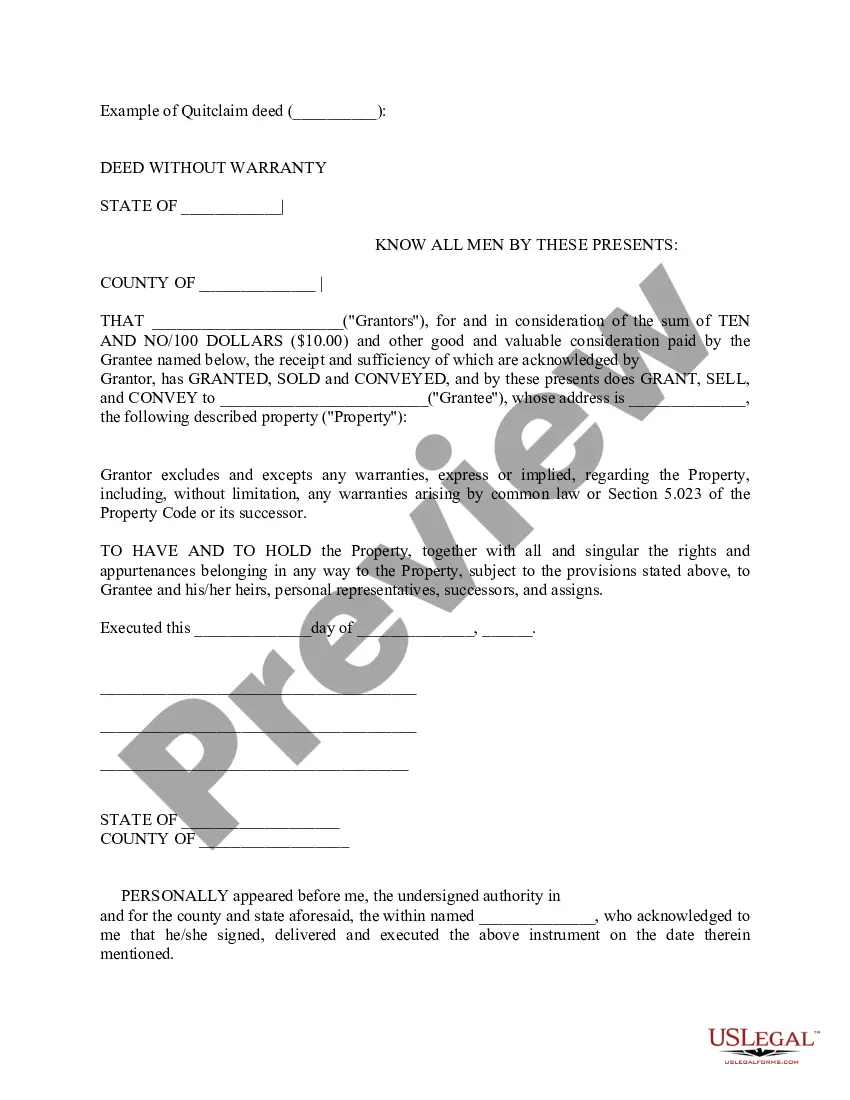
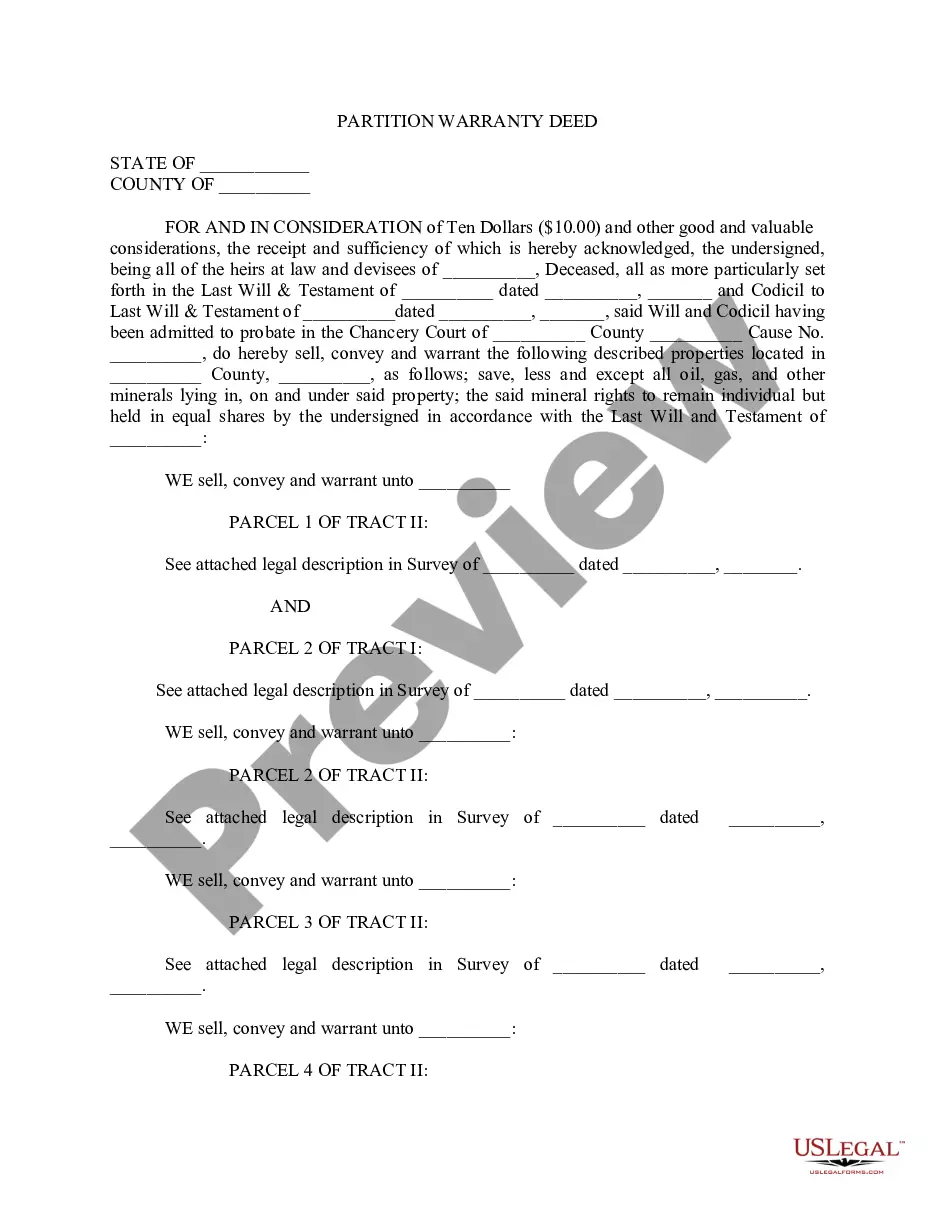
A partition deed is a legal document used to divide jointly-owned property among co-owners. It allows each owner to gain an individual and identifiable portion of the property. Partition deeds are commonly used when families or groups jointly own property and want to establish clear boundaries and ownership rights.
(1) Any two or more persons claiming or being liable as partners and carrying on business in, 1India may sue or be sued in the name of the firm (if any) of which such persons were partners at the time of the accruing of the cause of action, and any party to a suit may in such case apply to the Court for a statement ...
To ensure a smooth and efficient partition of land and property, follow these steps: Initiate Open Communication. Start by having an open and honest discussion with other co-owners. Gather Essential Documents. Consult a Legal Expert. Draft a Partition Deed or File a Partition Suit. Follow Court Procedures.
Any or all of the co-owners of a property can file a partition suit. The co-owners can be legal heirs also if it is a family property. Anyone having a share in the property which is intended to be partitioned can file the suit.
If a son has passed away untimely, his property heir is the mother of the son. If a man passes away without any will, his property has equal parts for his wife, mother, and children. If the mother does not have a will present after she dies, the property rights devolve to other children she may have.
