Partition Agreement Of Property In Suffolk
Description


Get your form ready online
Our built-in tools help you complete, sign, share, and store your documents in one place.
Make edits, fill in missing information, and update formatting in US Legal Forms—just like you would in MS Word.
Download a copy, print it, send it by email, or mail it via USPS—whatever works best for your next step.
Sign and collect signatures with our SignNow integration. Send to multiple recipients, set reminders, and more. Go Premium to unlock E-Sign.
If this form requires notarization, complete it online through a secure video call—no need to meet a notary in person or wait for an appointment.
We protect your documents and personal data by following strict security and privacy standards.
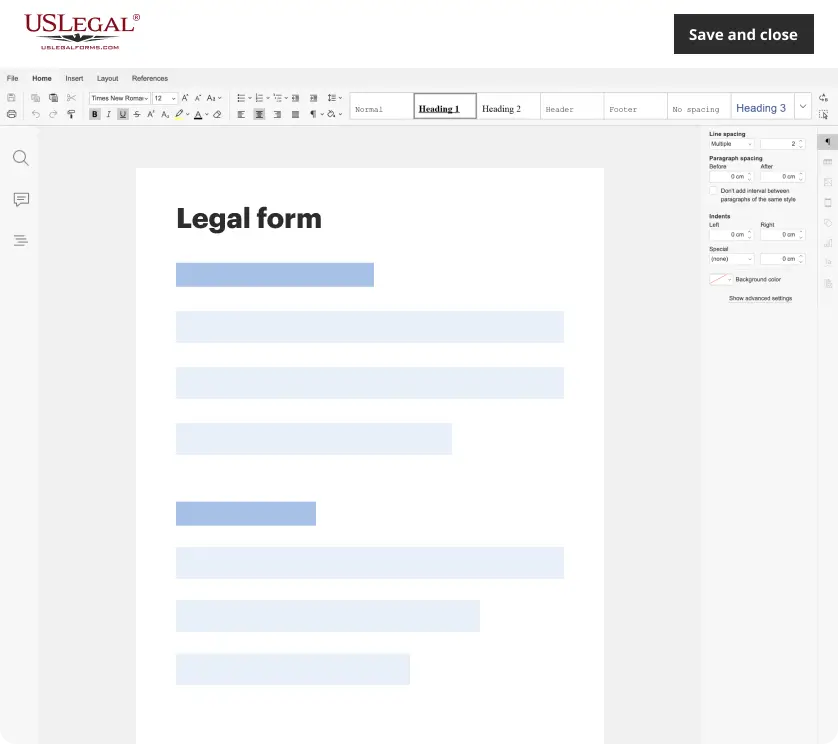
Make edits, fill in missing information, and update formatting in US Legal Forms—just like you would in MS Word.
Download a copy, print it, send it by email, or mail it via USPS—whatever works best for your next step.
Sign and collect signatures with our SignNow integration. Send to multiple recipients, set reminders, and more. Go Premium to unlock E-Sign.

If this form requires notarization, complete it online through a secure video call—no need to meet a notary in person or wait for an appointment.
We protect your documents and personal data by following strict security and privacy standards.
Looking for another form?
Form popularity
FAQ
The length of a partition action can vary depending on the complexity of the case and whether the co-owners are able to reach an agreement. In general as with any litigation, the process can take several months to a year or more.
The purpose of the Act is to preserve a family's wealth, including the value of Mom's house, for the next generation and to provide due process protection for the heirs of a decedent from a potential forced partition action and resulting below market sale.
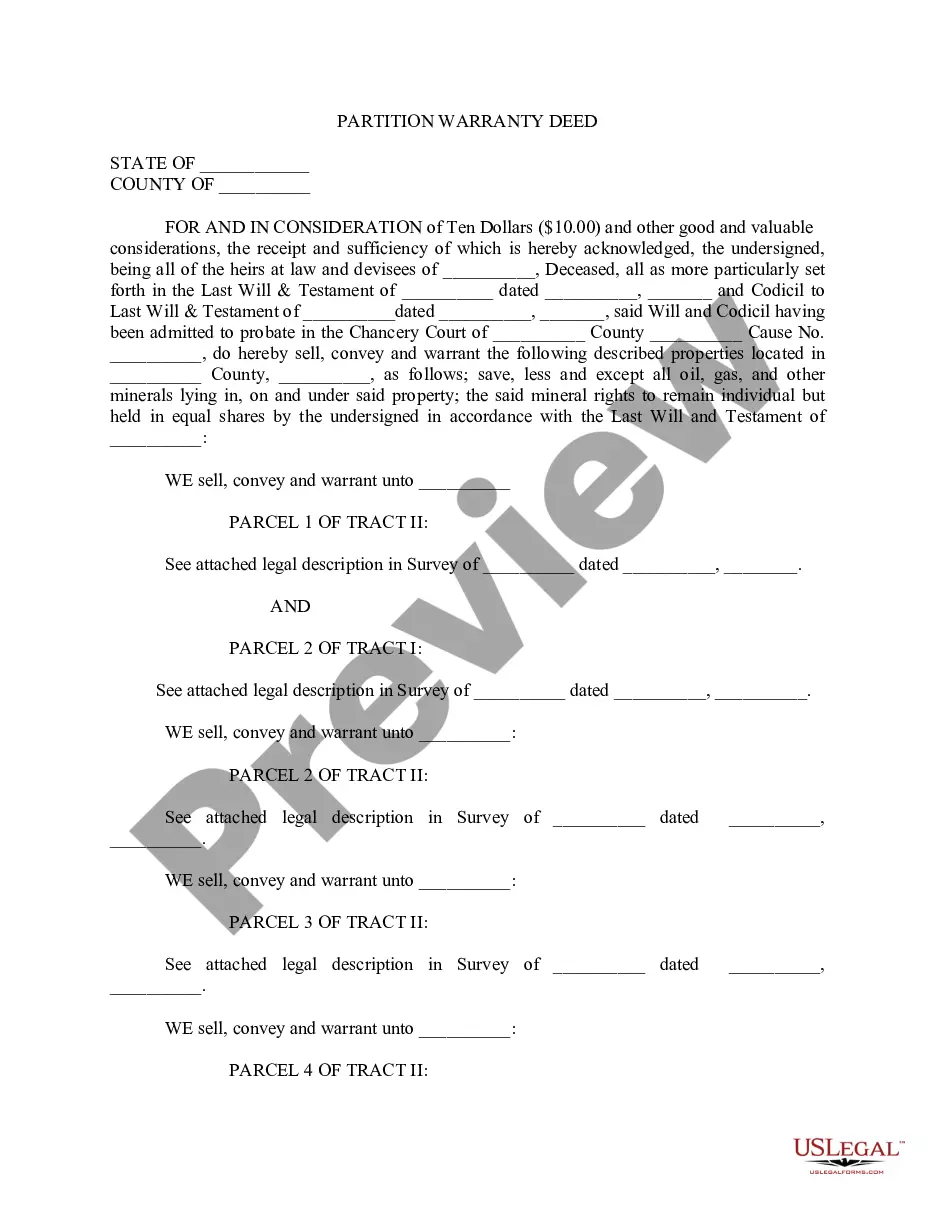
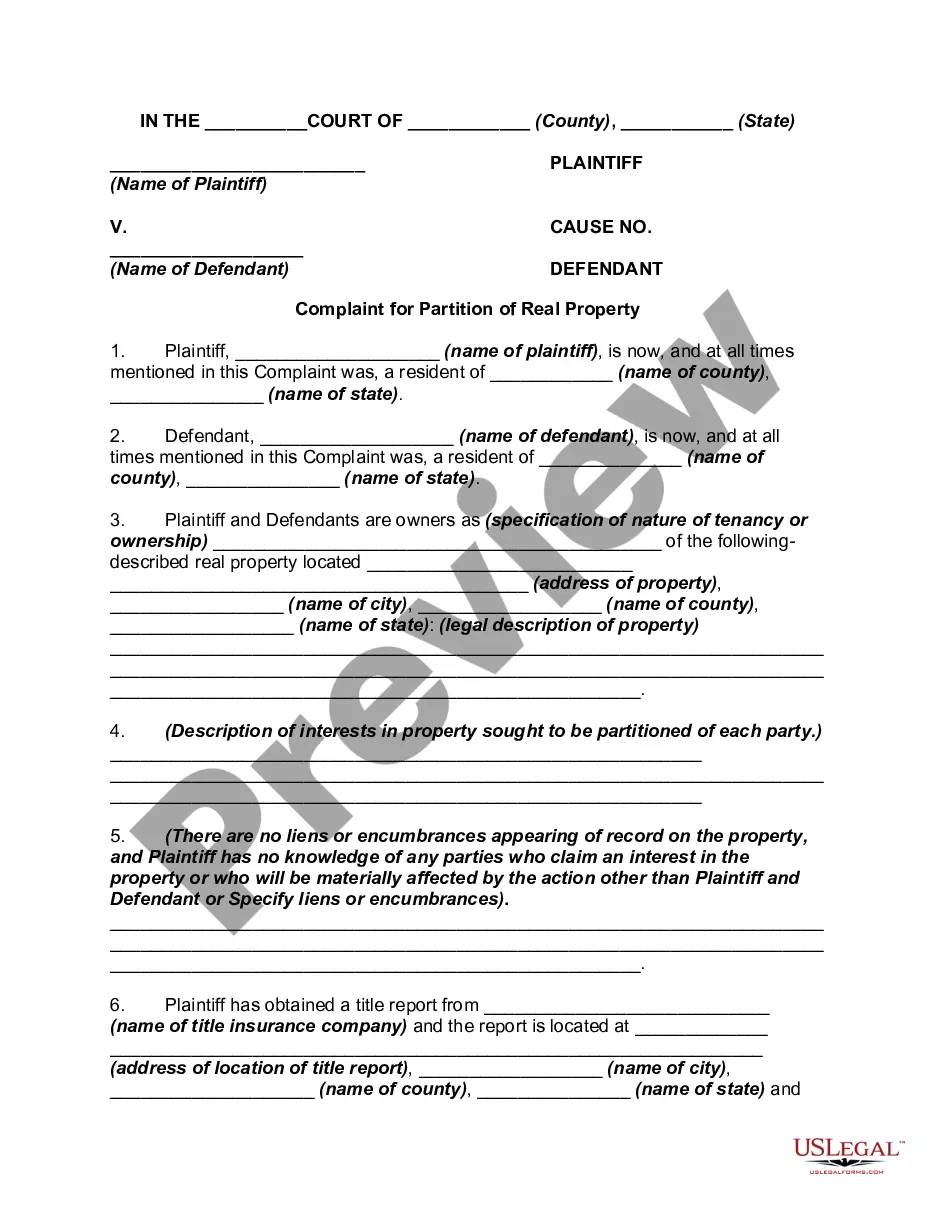
To initiate a partition action, the petitioner must file a complaint with the appropriate court that describes the property involved. The complaint must also include the ownership shares and interests of all co-owners as well as any other property co-owned by the parties. NY Real Prop Actions L § 905.
Partition of Property Among Family Members It ensures that all legal heirs, including daughters, receive an equal share of the inherited property. This Act was amended in 2005 to grant daughters equal coparcenary rights in their father's ancestral property.
If you co-own property such as a home, building or vacant land with someone in New York and have come to find this co-ownership situation unbearable, undesirable or unaffordable you can under New York State's RPAPL Article 9 Partition law bring a partition action and force your co-owner to either sell the property or ...
