Deferred Compensation Plan Vs 401k In Bexar
Category:
State:
Multi-State
County:
Bexar
Control #:
US-00418BG
Format:
Word;
Rich Text
Instant download
Description
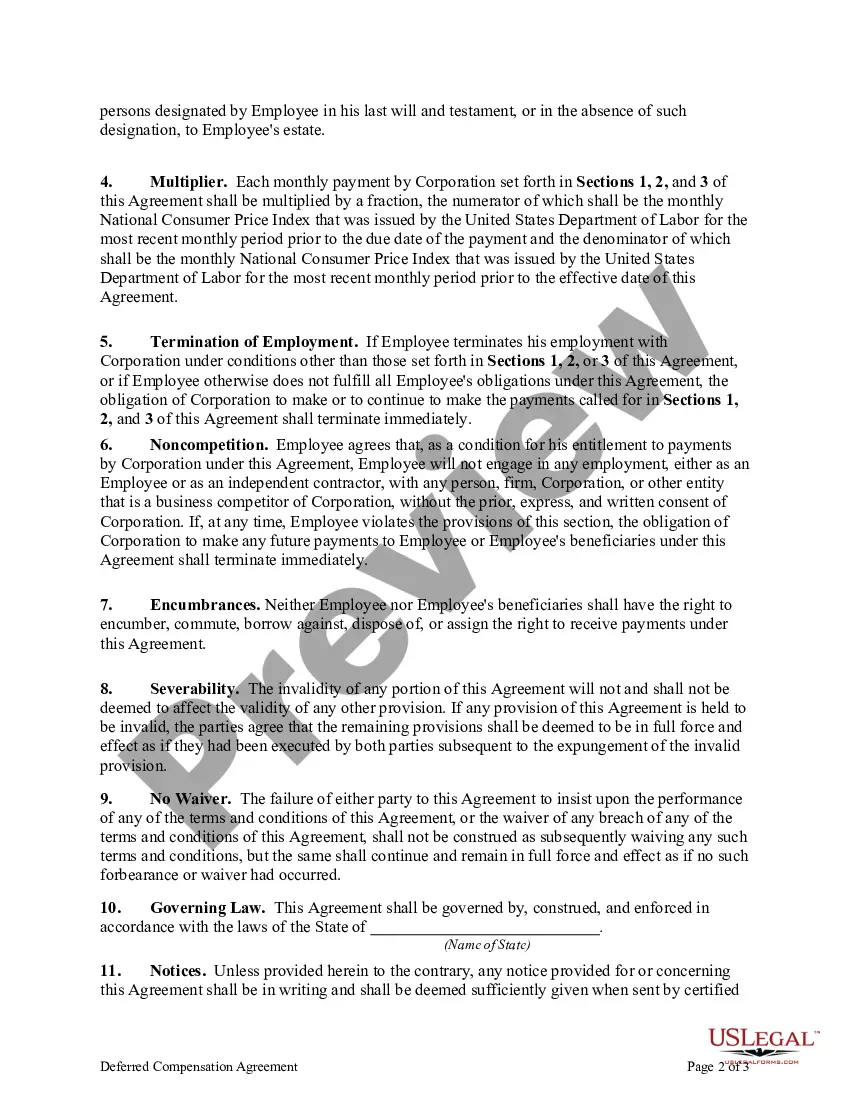
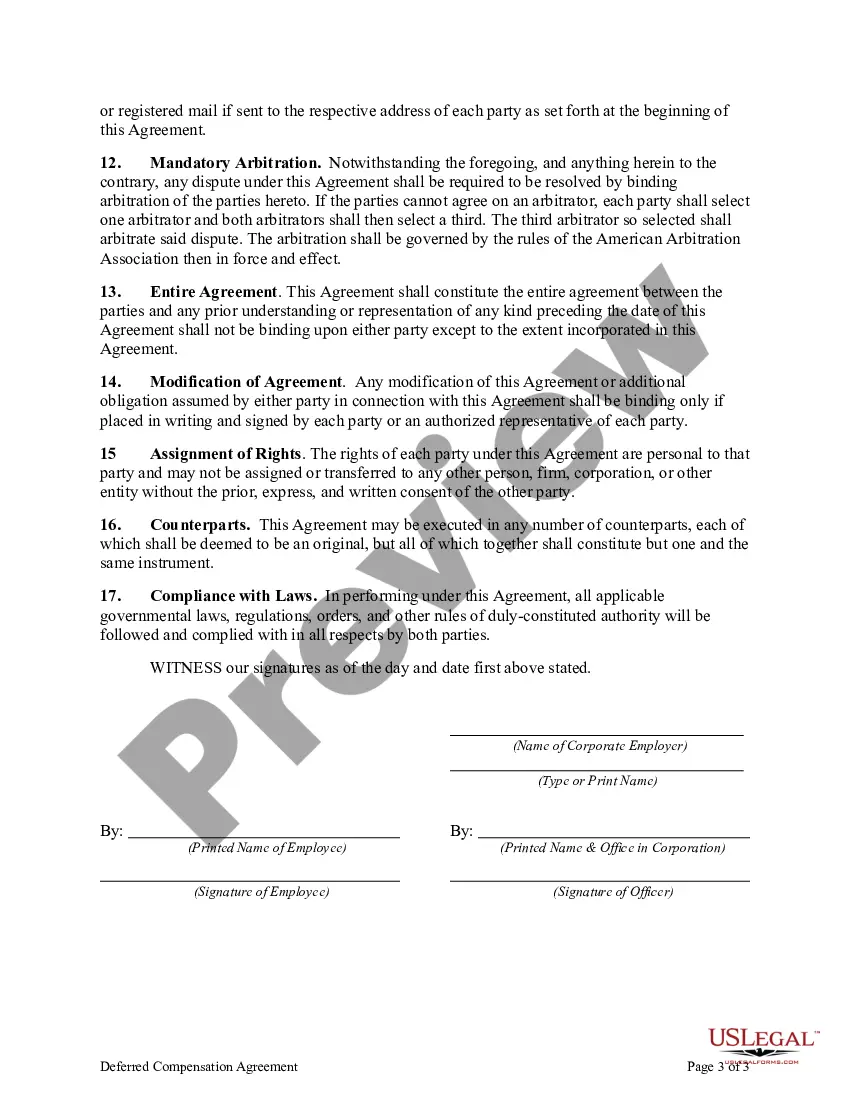
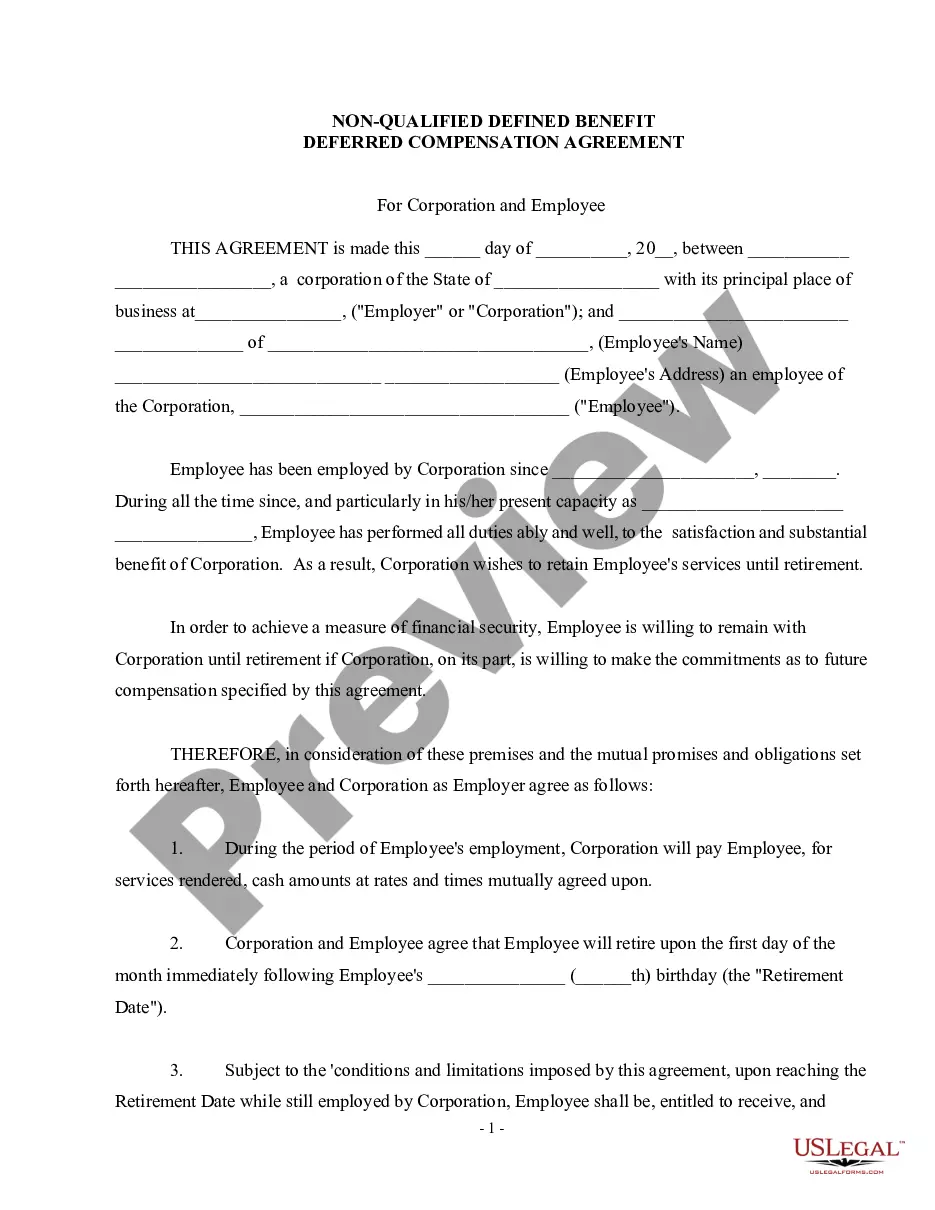
The Deferred Compensation Agreement is a formal contract between a corporation and an employee, providing for post-retirement income or pre-retirement death benefits that exceed standard pension plans. Unlike a 401(k) plan, which involves employee contributions and tax benefits under certain conditions, a deferred compensation plan is primarily employer-funded, offering more flexible retirement benefit arrangements. This agreement outlines critical provisions, such as payment amounts upon retirement, conditions surrounding employee death, termination of service, and noncompetition clauses that are essential for both parties. Users should pay attention to the specified retirement age and monthly payment calculations based on the Consumer Price Index. This form is useful for attorneys, partners, owners, associates, paralegals, and legal assistants involved in corporate financial planning or employment law, as it helps structure agreements that protect both the employer’s interests and the employee’s benefits. When filling out the form, it's important to customize sections thoughtfully to reflect the specific terms agreed upon and to ensure compliance with local laws. Editing should focus on clarity and precision, minimizing legal jargon to accommodate varying levels of familiarity with legal documents among users.
Free preview