High Risk Activity Form Air Force Reddit In Santa Clara
Description

Form popularity
FAQ
1. Build a fire. Play with knives. Whether your child carries a pocketknife camping or helps cut veggies in the kitchen, he'll get a jump start on learning positive risk taking skills. Take something apart. Make a new friend. Climb a tree. Cross the street. Stay home alone. Volunteer.
High-risk work and workplaces are those that pose a greater degree of risk of harm to members as a result of the working environment. For example, where you are in an unconventional workplace or space, working alone, or using hazardous equipment with little or no safeguards or training.
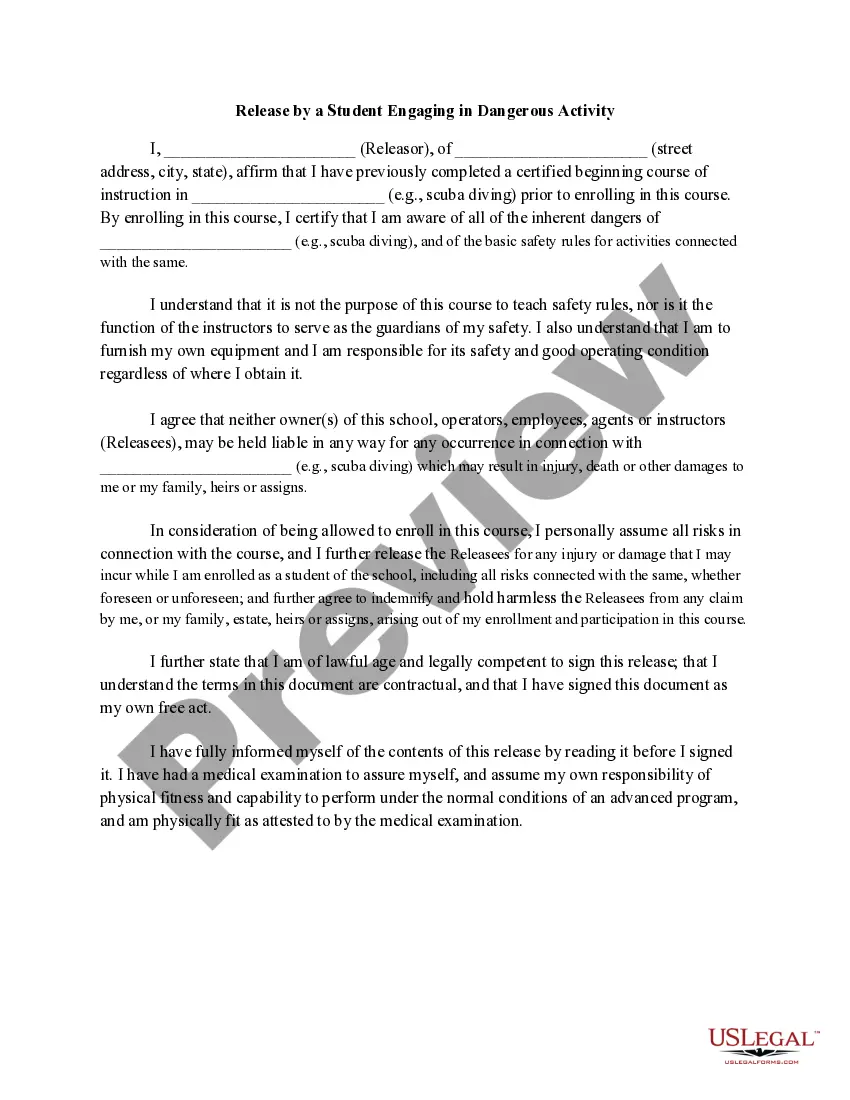
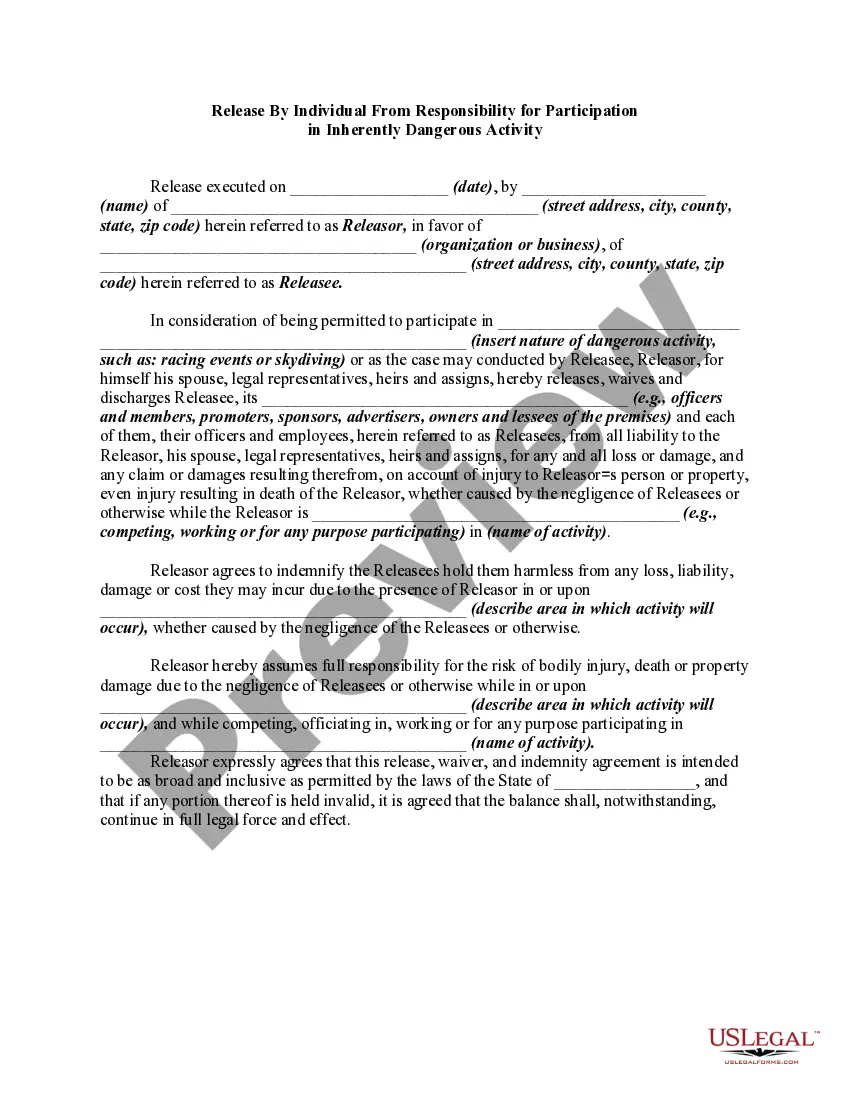
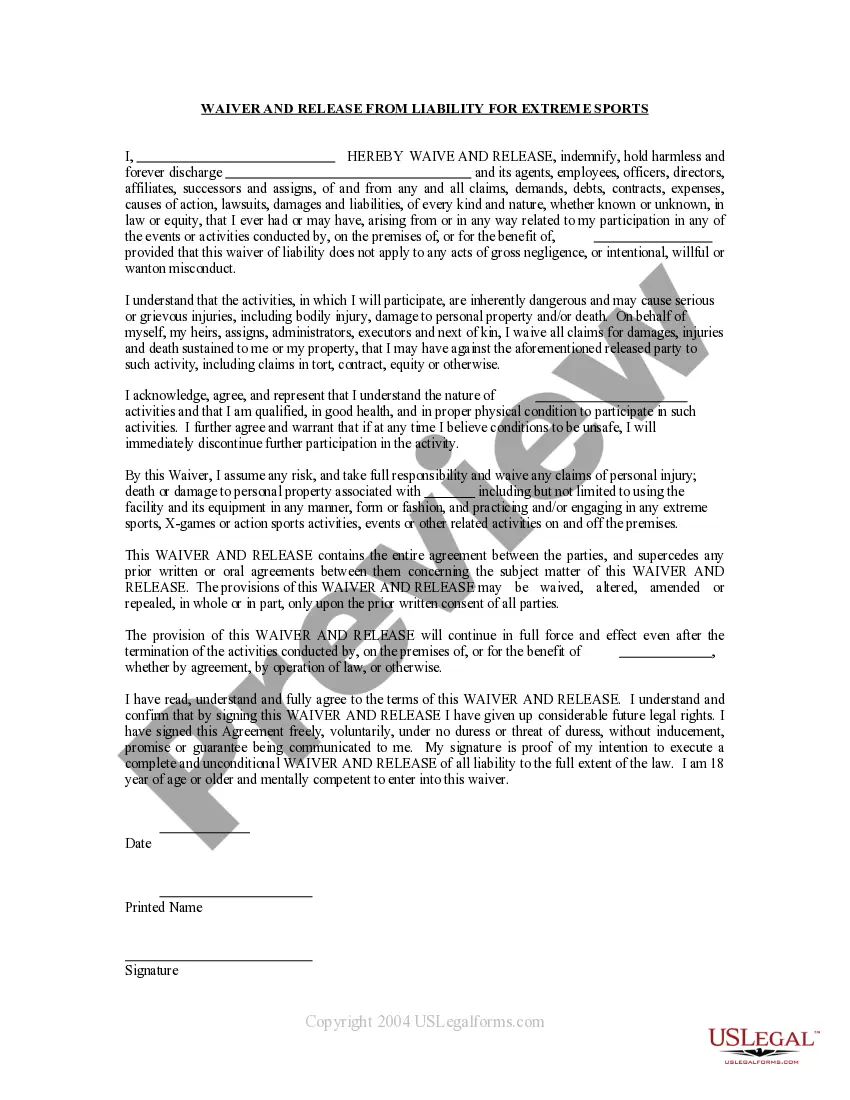
Supervisors must discuss the requirement for personnel who plan on engaging in high- risk activities such as flying civil aircraft, hang gliding, sky diving, parasailing, white-water rafting, motorcycle and auto-racing, scuba diving, bungee jumping, ATV's, helicopter flying, dirt biking, hot air ballooning, hunting, ...
Examples of high risk activities include experiential exercises, relationship building discussions, bonding activities, or confronting and resolving a group issue.
High risk activities are activities that have higher stakes or consequences for an individual or group. Whatever happens during the activity may affect the group's dynamic and development after the activity is over.
High-risk behaviors are defined as acts that increase the risk of disease or injury, which can subsequently lead to disability, death, or social problems. The most common high-risk behaviors include violence, alcoholism, tobacco use disorder, risky sexual behaviors, and eating disorders.
Risk Assessment ATV OperationsVolleyballUltimate Frisbee/Speedball Heli & Cat Skiing Football Hang Gliding and Paragliding Triathalons Motorcycle Racing Spearfishing Skydiving Scuba Diving/Snorkeling Rock Climbing3 more rows
What is a high risk activity? High risk activities have the significant potential for adverse safety outcomes if not planned and carried out in a systematic and integrated manner. Careful consideration must be given to the risks associated with the activity and the methods available to manage those risks.
Hazards information Asbestos. Confined spaces. Demolition work. Dusts. Electrical safety. Excavation work. Fatigue. Hazardous chemicals.
Supervisors must discuss the requirement for personnel who plan on engaging in high- risk activities such as flying civil aircraft, hang gliding, sky diving, parasailing, white-water rafting, motorcycle and auto-racing, scuba diving, bungee jumping, ATV's, helicopter flying, dirt biking, hot air ballooning, hunting, ...
