Long Term Lease For House In Minnesota
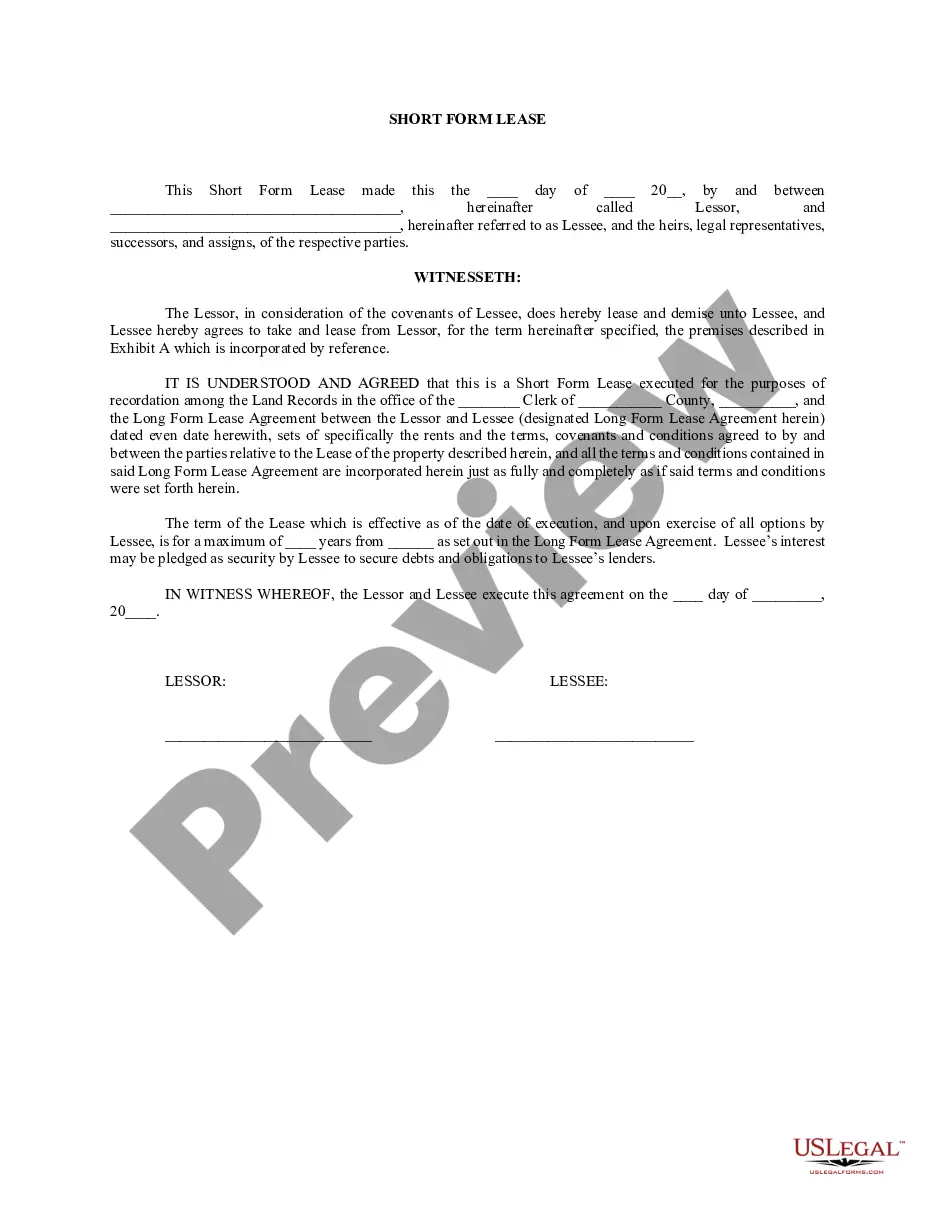
Description






Form popularity
FAQ
The lease length can differ based on your location, property type, needs, and the current state of the market. Residential leases are shorter, typically around 6 months to a year. Commercial leases, depending on various factors, can range from 3 years to 10 or more.
The maximum lease term for a residential property would, technically, be the lifetime of a signatory to the lease.
In the law of several US states, a 99-year lease will always be the longest possible contract for realty by statute, but many states have enacted shorter terms and some allow infinite terms.
Do Leases need to be notarized in Minnesota? No, Lease Agreements don't need to be notarized in Minnesota. Once there is an agreement between the Landlord, or lessor, and Tenant, or lessee, the Lease is binding. Once the Lease is signed by both parties, it's legally binding and fully enforceable.
The main difference between leasing and renting a property is the length of the contract. Leasehold is usually granted for at least 21 years and can last as long as 999 years.
Effective January 1, 2024, landlords cannot file an eviction action in court for non-payment of rent unless they first give the tenant a detailed written notice of an intention to file 14 days before filing. Minn.
In the law of several US states, a 99-year lease will always be the longest possible contract for realty by statute, but many states have enacted shorter terms and some allow infinite terms.
Minnesota is a fairly landlord-friendly state with few rent control laws. It does not require notice before evicting tenants. Make sure to always check local area laws, along with state laws, to ensure you're fully educated.
However, while Minnesota doesn't have state-wide rent control policies, it does allow local governments to establish control laws for rent if they're approved through elections. Overall, no home rule charter city, town, or county can impose these policies unless they're approved after an election.
