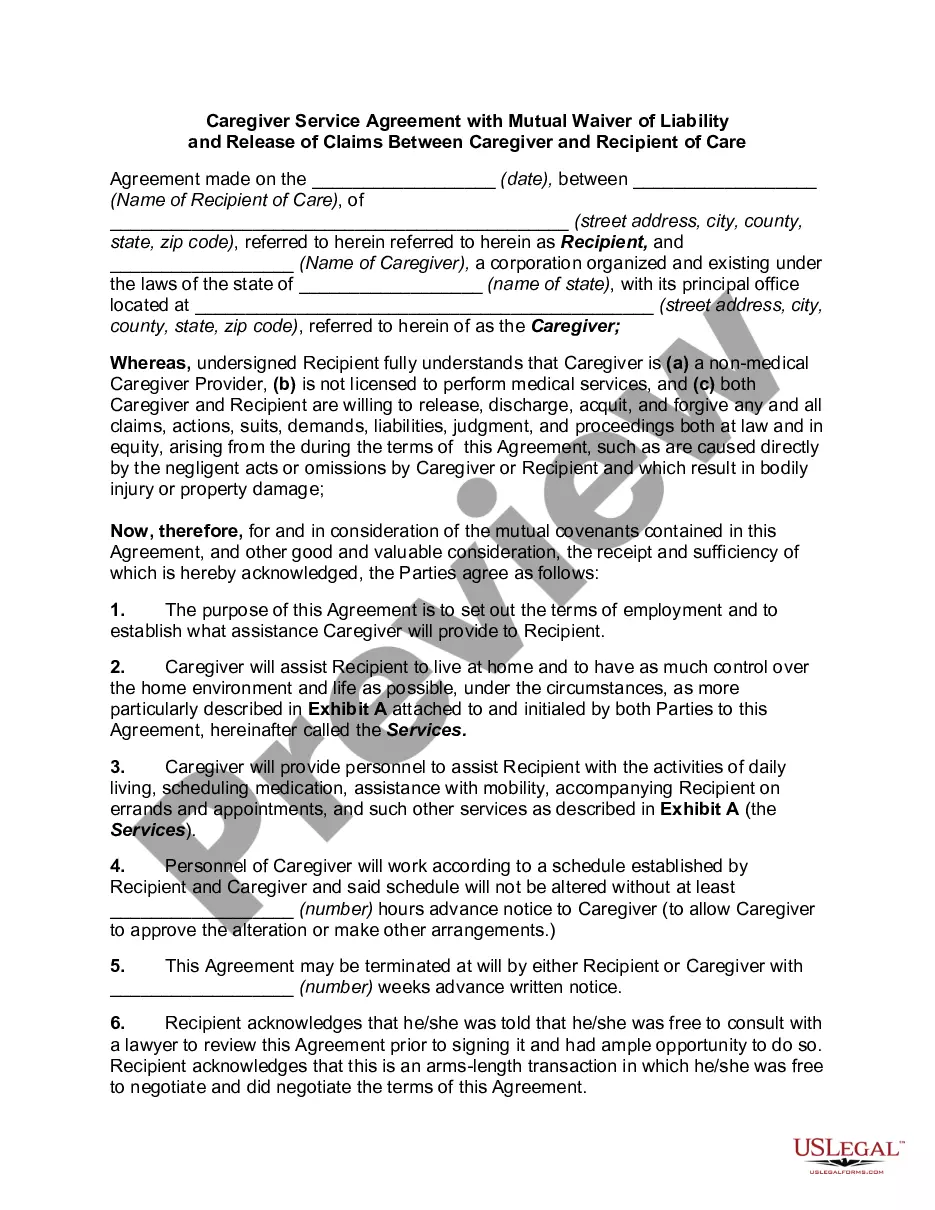
Illinois Caregiver Application Without Experience In Philadelphia
Description







Form popularity
FAQ
How to write a cover letter for a care worker with no experience Review the job description and employer. Choose a cover letter format. Provide contact information and an introduction. Highlight your relevant experience and unique skills. Write a strong closing statement. Include a call to action.
Anyone in the state of Pennsylvania can become an in-home caregiver.To become a state-certified caregiver, you can complete an 8-hour caregiver certification course and pass an exam. This type of course covers basic training, including infection control, communication skills, and emergency procedures.
Home Health Aide: A home health aide has three options. The first option is they must complete 75 hours of training, including 16 hours of clinical instruction. Every year, they are required to have 12 hours of continuing education. They also need to pass a criminal background check and child abuse clearance.
Dear Hiring Manager's Name, I'm writing to express my strong interest in the caregiver role for your son. With over ten years of experience providing individual care to people of all ages and conditions, I am confident I can be a valuable addition to his care team.
Personal Aide/Caregiver: An in-home caregiver in Pennsylvania is required to complete an 8 hour course and pass an exam to become a certified caregiver. The course covers basic training such as infection control, communication skills, and emergency procedures.
In conclusion, there are 4 types of caregivers: family caregivers, professional caregivers, volunteer caregivers, and informal caregivers. Each caregiver faces unique challenges, including physical and emotional exhaustion, financial strain, and balancing personal and caregiving responsibilities.
If you have no professional care experience, you can volunteer at a nursing home or assisted-living facility to gain experience and the necessary skills for the job. You can also pursue a postsecondary certificate as a home health aide (HHA) or certified nursing assistant (CNA).
Qualifications of a Caregiver A valid driver's license. Bilingual in a language spoken in your region. CPR certification. CNA certification. Ability to pass a background check. Ability to assist with ADLs (assisting with eating, toileting, bathing, dressing)
Diploma in Caregiving Your learners will tackle practical, legal, and even ethical issues concerned with taking care of the elderly and sick. Lesson include personal care, emotional needs, stress management, cultural differences, nutrition, fall safety, understanding dementia, and more.
