Consignment Form Of Retailing In Wake
Description


Form popularity
FAQ
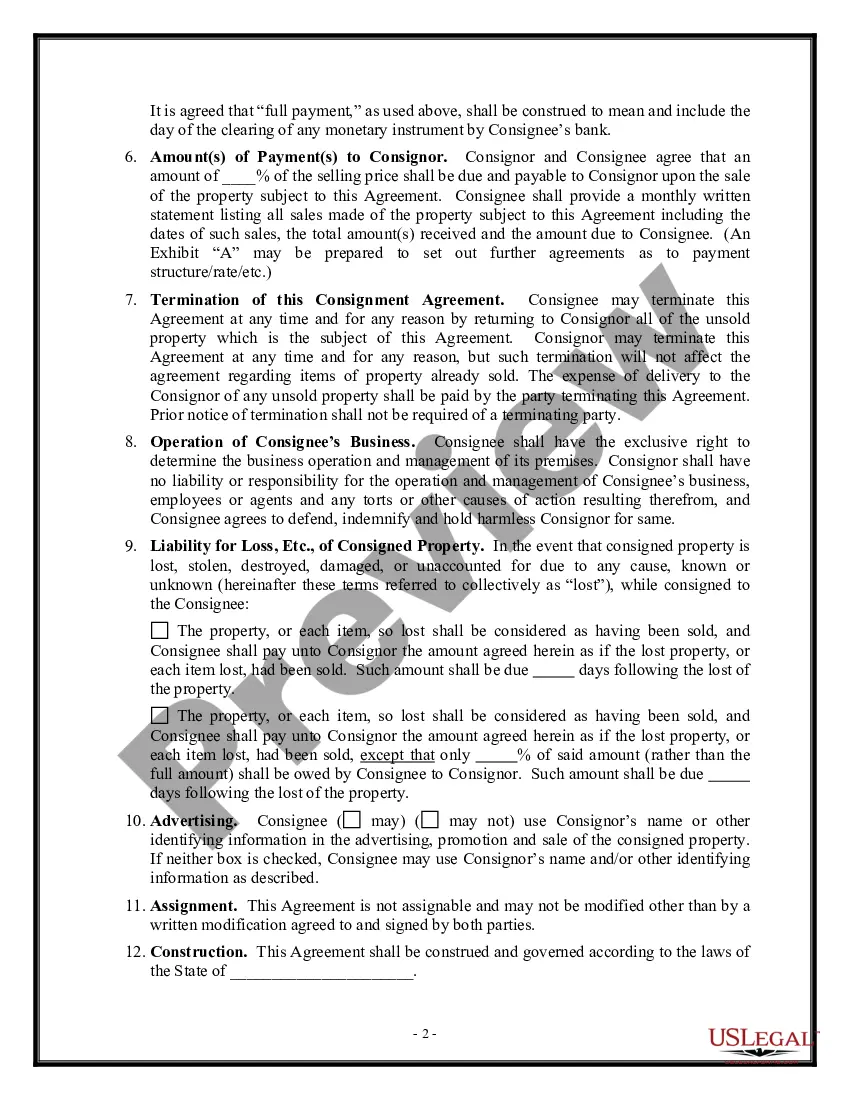
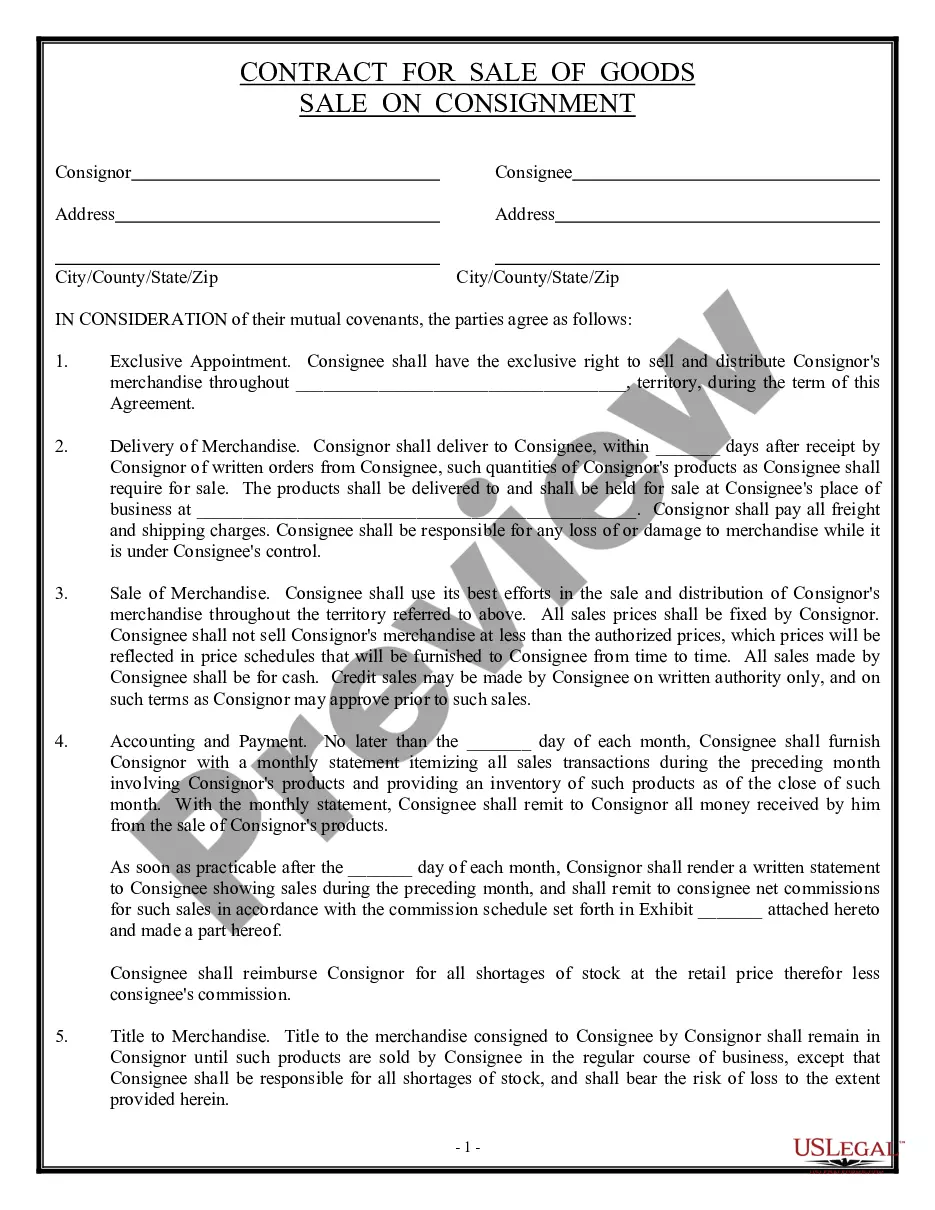
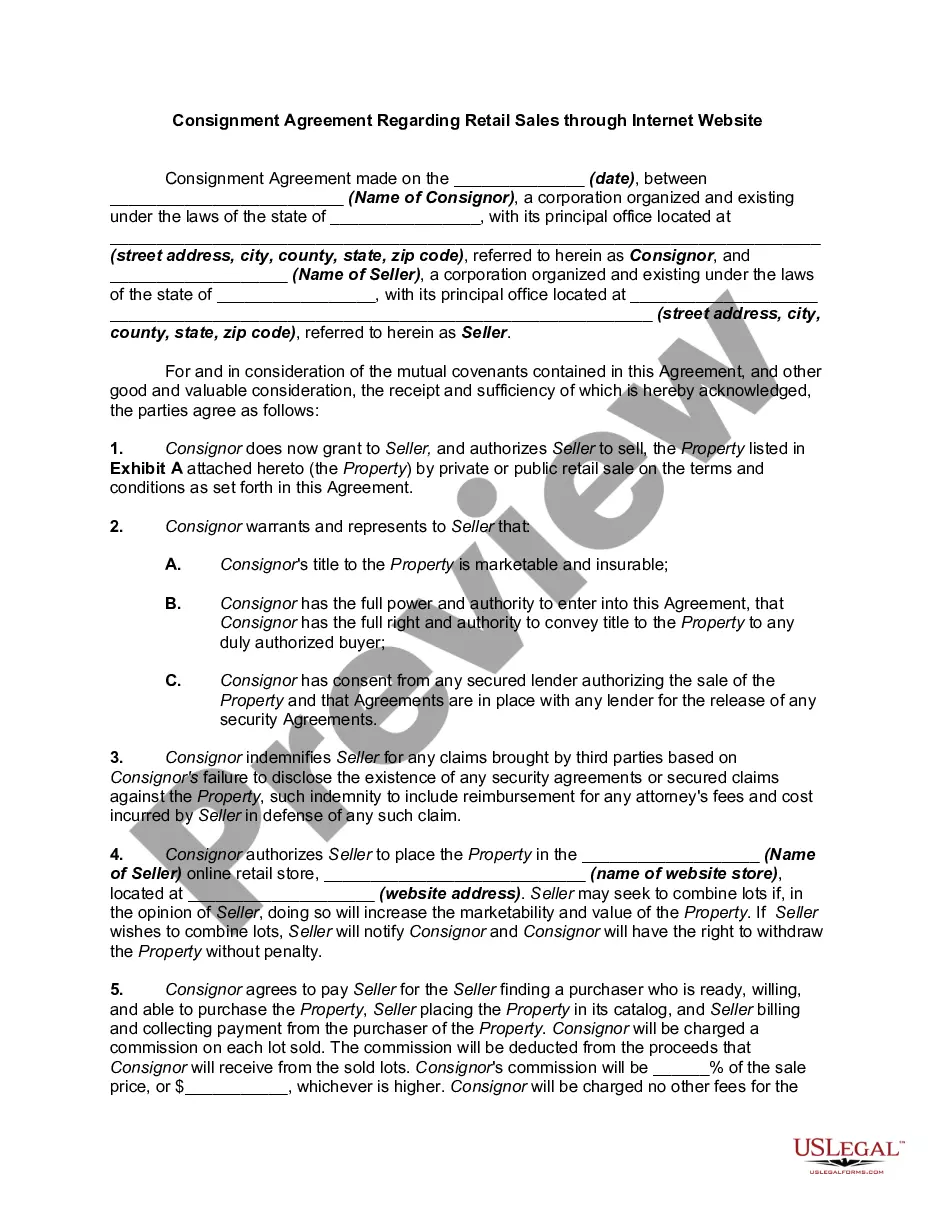
Consignment is not the same as selling goods. A consignment is an agreement between the owner of goods and the consignor. The consignee stores and sells goods on behalf of the consignor and earns a profit. A sale, on the other hand, is a simple transaction, with goods being traded between two parties.
Selling goods on consignment is described as a situation whereby goods are shipped to a dealer who pays you, the consignor, only for the merchandise which sells. The dealer, referred to as the consignee, has the right to return to you the merchandise which does not sell and without obligation.
This kind of arrangement is called Consignment. Definition. The contract or an agreement of sending several goods by the producers or manufacturers of a place to their agents for the sale is known as a consignment. Types of Consignment. Outward Consignment. Inward Consignment. Consignment Processing. Sale. Features of a Sale.
“Consignment only” refers to a unique selling arrangement, where you retain ownership of your item until it sells. You entrust your goods to a store or platform (the consignee) to market and sell on your behalf. This model is especially popular in fashion, art, and antiques.
Types of Commission:- 1) Ordinary Commission. The term commission simply denotes ordinary commission. 2) Del-credere Commission. To increase the sale and to encourage the consignee to make credit sales, the consignor provides an additional commission generally known as del-credere commission. 3) Over-riding Commission.
This kind of arrangement is called Consignment. Definition. The contract or an agreement of sending several goods by the producers or manufacturers of a place to their agents for the sale is known as a consignment. Types of Consignment. Outward Consignment. Inward Consignment. Consignment Processing. Sale. Features of a Sale.
There are several types of consignees in logistics: Ultimate consignee. The final recipient of the goods, often the buyer or end-user. Intermediate consignee. An entity that receives the shipment temporarily before forwarding it to the ultimate consignee. Notify party.
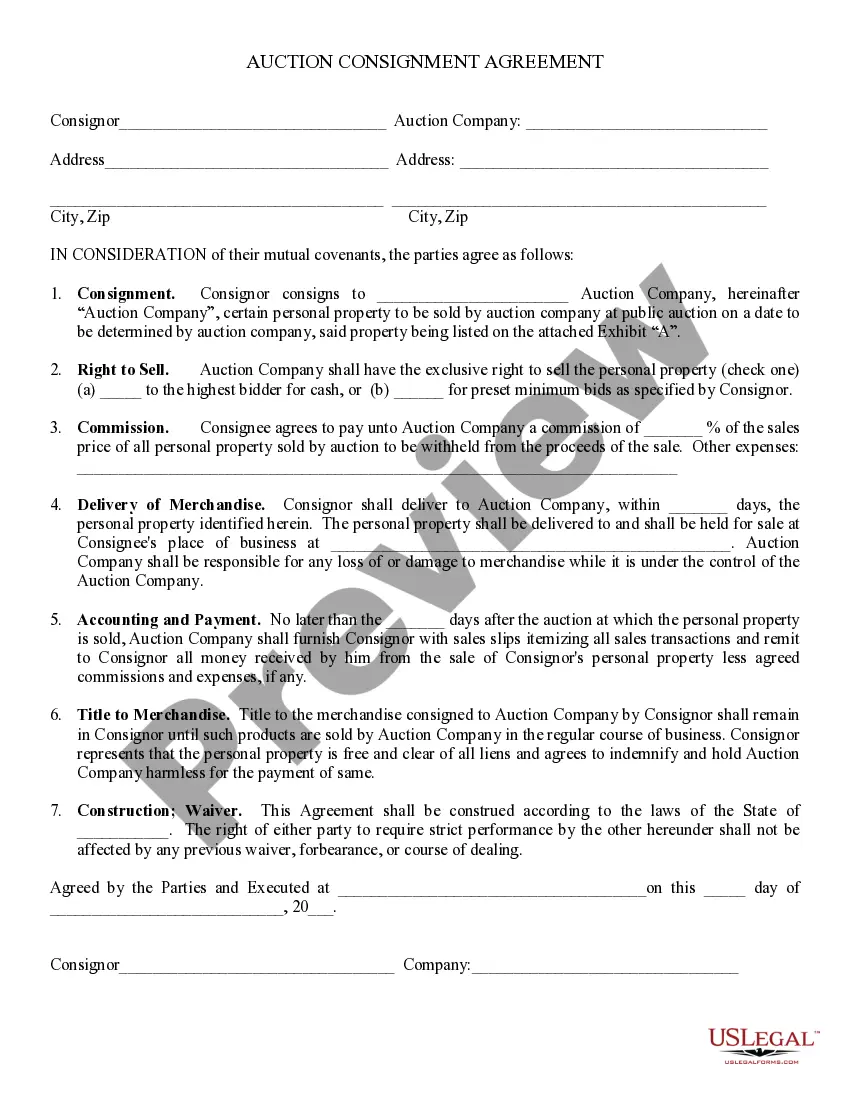
Following the auction consignment company's receipt of your items, they will begin to photograph and catalog them. With your items organized, the marketing process can begin. Item Viewing: Through the marketing efforts of the auction consignment company, interest will grow in your items.
