Contract Contractor Building Format In Los Angeles
Description




Form popularity
FAQ
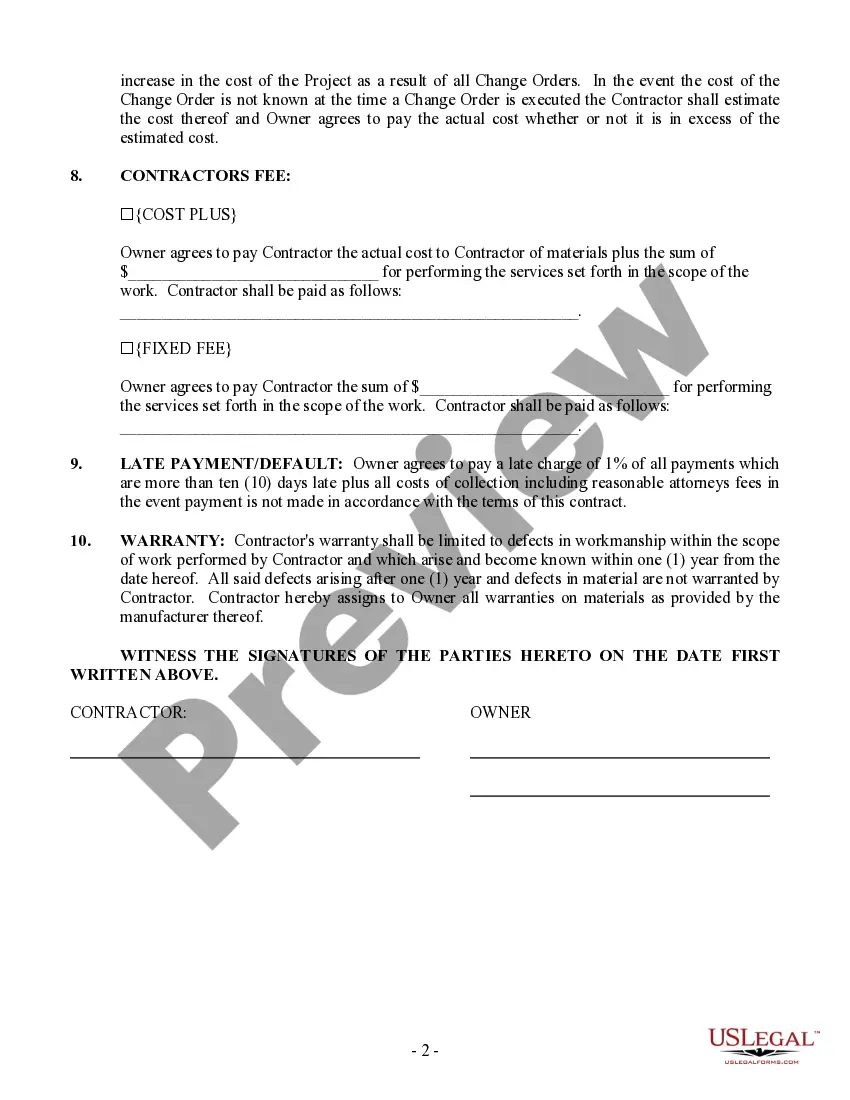
Lesson Summary. A contract is a legal agreement between two or more parties in which they agree to each other's rights and responsibilities. Offer, acceptance, awareness, consideration, and capacity are the five elements of an enforceable contract.
To be legally enforceable, an agreement must contain all of the following criteria: An offer and acceptance; Certainty of terms; Consideration; An intention to create legal relations; Capacity of the parties; and, Legality of purpose.
A legally enforceable contract must include an offer, acceptance, consideration, capacity, legality, and mutual assent.
How to Write a Contractor Agreement Outline Services Provided. The contractor agreement should list all services the contractor will provide. Document Duration of the Work. Specify the duration of the working relationship. Outline Payment Terms. Outline Confidentiality Agreement. Consult with a Lawyer.
What is a standard form contract? While many contracts are entirely purpose made, standard form contracts consist of standardised, pre-written terms and conditions. Because standard form contracts are familiar to people in an industry, they often function effectively without the need for much negotiation.
In California, the relationship between businesses and independent contractors is subject to strict legal standards. As of January 1, 2025, having a written contract with certain types of independent contractors is required by law.
Independent contractors don't need a license to operate in the state of California, but they may have other requirements based on where they build their business. Still others will vary based on the kind of work you do.
How To Get a Contractor's License in California in 6 Steps Identify the license classification you need. Meet the basic licensing requirements. Fill out the licensing application. Complete a background check. Pass the California contractor licensing exam. Submit bonding & insurance documents.
Residential contractor licenses A residential license is required for all residential projects that exceed $75,000. Residential property includes home improvements or the new building of one to four-unit family dwellings.
