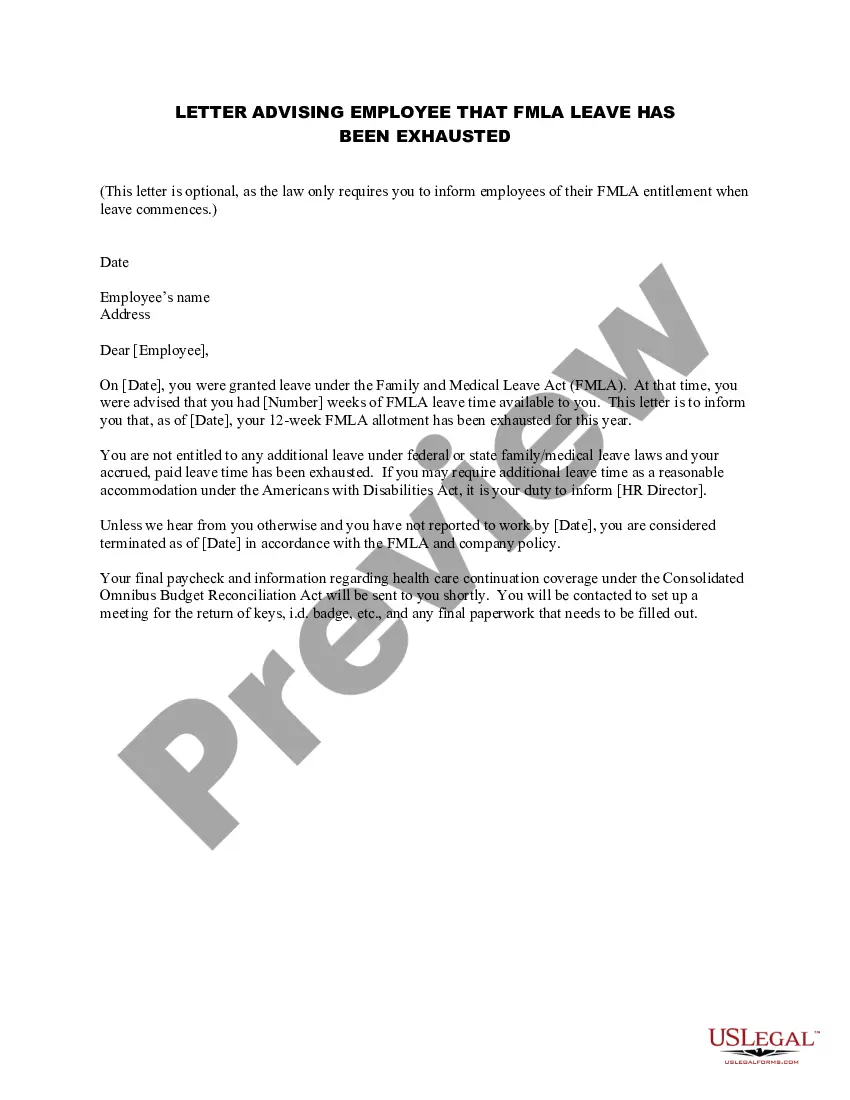
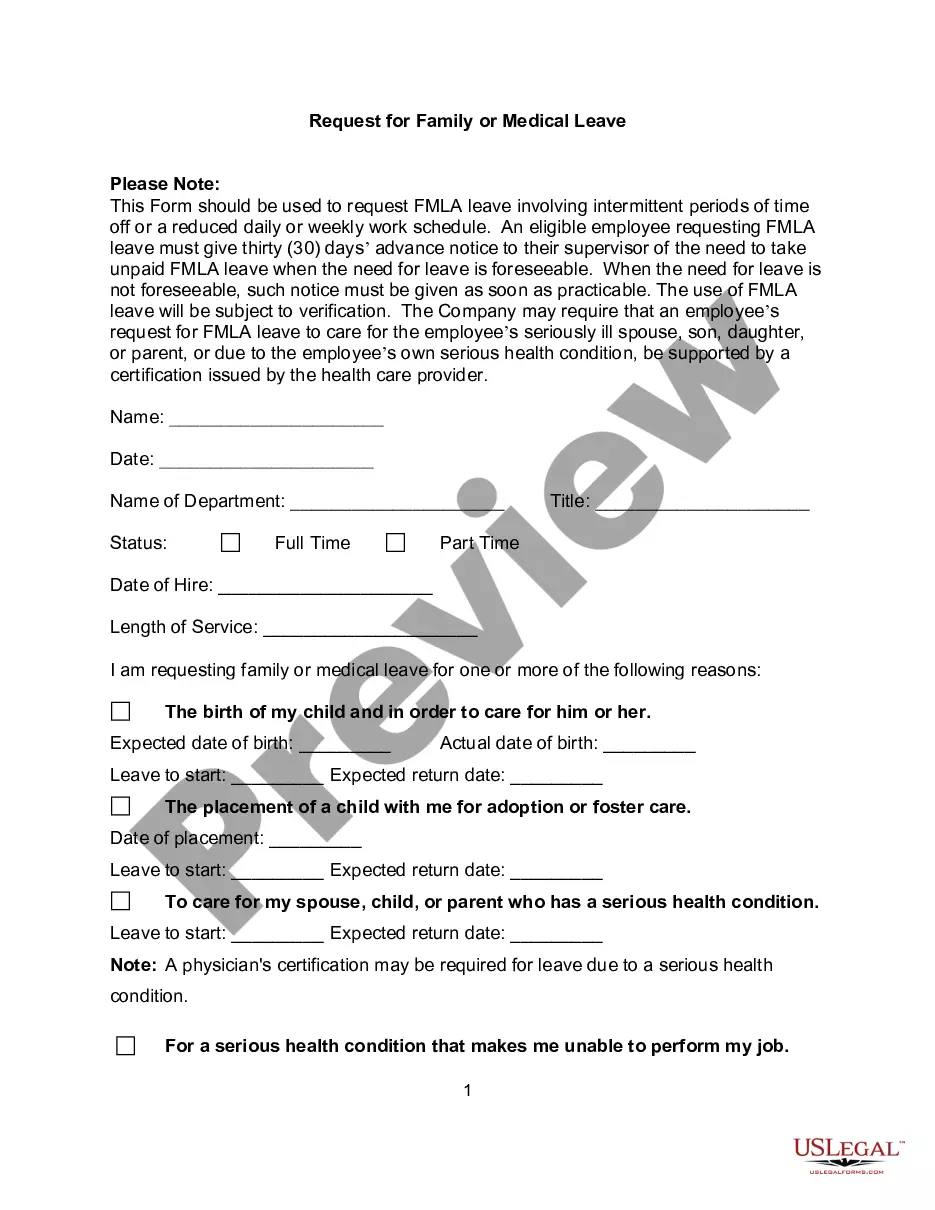
Fmla Exhausted Letter To Employee
Description
Get your form ready online
Our built-in tools help you complete, sign, share, and store your documents in one place.
Make edits, fill in missing information, and update formatting in US Legal Forms—just like you would in MS Word.
Download a copy, print it, send it by email, or mail it via USPS—whatever works best for your next step.
Sign and collect signatures with our SignNow integration. Send to multiple recipients, set reminders, and more. Go Premium to unlock E-Sign.
If this form requires notarization, complete it online through a secure video call—no need to meet a notary in person or wait for an appointment.
We protect your documents and personal data by following strict security and privacy standards.

Make edits, fill in missing information, and update formatting in US Legal Forms—just like you would in MS Word.

Download a copy, print it, send it by email, or mail it via USPS—whatever works best for your next step.

Sign and collect signatures with our SignNow integration. Send to multiple recipients, set reminders, and more. Go Premium to unlock E-Sign.

If this form requires notarization, complete it online through a secure video call—no need to meet a notary in person or wait for an appointment.

We protect your documents and personal data by following strict security and privacy standards.
Looking for another form?


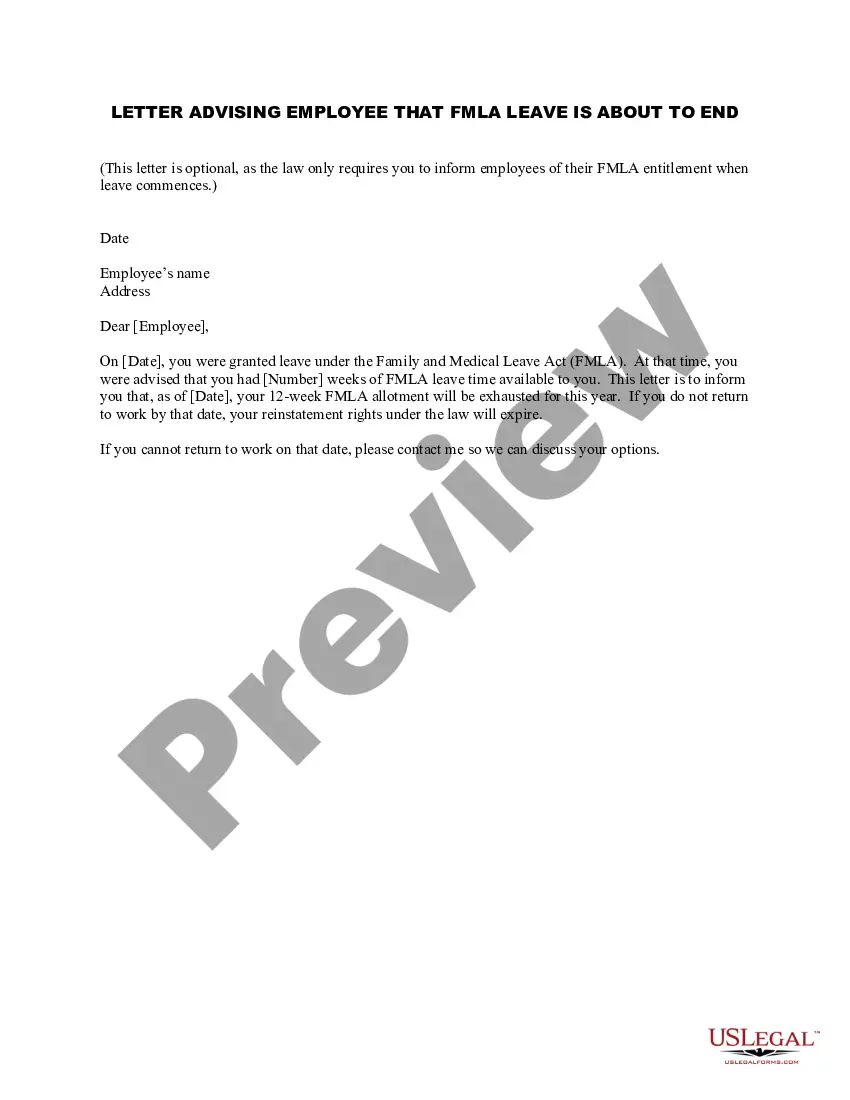
How to fill out Letter Advising Employee That FMLA Leave Has Been Exhausted?
The Fmla Exhausted Letter directed to Employee found on this website is a reusable official template crafted by expert attorneys in compliance with federal and state laws and guidelines.
For over 25 years, US Legal Forms has delivered individuals, businesses, and legal practitioners with upwards of 85,000 validated, state-specific documents for various business and personal needs. It is the fastest, easiest, and most dependable method to acquire the documentation you require, as the service ensures bank-grade data security and anti-malware safeguards.
Select the format you desire for your Fmla Exhausted Letter to Employee (PDF, DOCX, RTF) and download the template onto your device.
- Search for the document you require and examine it.
- Browse through the sample you searched and preview it or review the form description to confirm it aligns with your needs. If it doesn't, utilize the search bar to find the correct one. Click Buy Now when you have located the template you need.
- Register and Log In to your account.
- Choose the pricing plan that fits your needs and create an account. Use PayPal or a credit card for a fast payment. If you already possess an account, Log In and verify your subscription to proceed.
- Obtain the fillable document.
Form popularity
FAQ
Key Takeaways On How To Write A Waiver Choose a waiver template. Determine the type of activity or service. State the purpose of the waiver. Identify the risks. Include a title. Include customer information. Include waiver terms. Include a statement of understanding.
What to Include in a Release of Liability Form Releasor: Full name of the releasor. Releasee: Full name of the releasee. Effective date: The date the waiver takes effect. Incident: Details of the injury, debt, or accident. Compensation: The total that must be paid in exchange for signing the waiver.
Examples of waivers include the waiving of parental rights, waiving liability, tangible goods waivers, and waivers for grounds of inadmissibility. Waivers are common when finalizing lawsuits, as one party does not want the other pursuing them after a settlement is transferred.
To build a waiver of liability: Choose a waiver template. Determine the type of activity or service. State the purpose of the waiver. Identify the risks. Include a title. Include customer information. Include waiver terms. Include a statement of understanding.
The liability release form, also known as the waiver form, contains a legally binding agreement between two parties, stating that one of them (the releasor) promises not to sue the other side (the releasee) for past, current, or future damages, losses, or injuries.
Waiver of Liability Statement Issued as Required by Payer Policy. This modifier indicates that an ABN is on file and allows the provider to bill the patient if not covered by Medicare. Use of this modifier ensures that upon denial, Medicare will automatically assign the beneficiary liability.
How Do You Write a Release Form? The first step in writing is identifying all parties involved, including the releaser and the release. Specify the activity or event in detail, such as a photo shoot, a video production, or a performance. Clearly specify what is being released, whether liability, claims, or damages.
A release and waiver agreement is an enforceable promise not to pursue legal action in exchange for compensation. The releasee gives money or some other form of compensation to the releasor, who then agrees not to press charges, sue, or take any other legal action against the releasee.